
Denver International Airport is one of the world’s busiest and most recognizable travel hubs, but its fame extends far beyond flights and terminals. The airport has become synonymous with the Denver Airport Conspiracy, a collection of strange and fascinating theories that continue to intrigue travelers worldwide.
From unsettling murals and hidden tunnels to rumors of underground bunkers and extraterrestrial bases, these stories have circulated since the airport opened in 1995. While most of the claims lean more toward imagination than fact, the mystery surrounding Denver International Airport adds an unforgettable layer of intrigue to its global reputation.
Recommended – 10 Best Hikes Near Denver You Absolutely Must Experience!
Recommended – What Are the Most Unique Things to Do in Denver? (No. 5 Will Surprise You!)
| Feature | Fact |
|---|---|
| Full Name | Denver International Airport (DIA) |
| Opened | 1995 |
| Location | 25 miles northeast of downtown Denver |
| Known For | Size, art, murals, and conspiracy lore |
| Conspiracy Myth Themes | Tunnels, New World Order, aliens, statues |
Why Does Denver Airport Have So Many Conspiracy Theories?
Long before DIA’s first flight, rumors and fascination began during construction. Delays, budget overruns, a remote location, and bold artwork created fertile ground for speculation. Airports are big, technical, and complex – and DIA’s story was no different.
Travelers often feel a mix of excitement and eeriness when they arrive – especially when they first see the larger-than-life sculptures, vivid murals, and deep underground tunnel system. That blend of mystery and art creates a perfect storytelling playground for legendary rumors that have grown over decades.
Popular Denver Airport Conspiracy Theories
1. Secret Underground Tunnels & Hidden Bunkers
The Myth: A massive underground bunker exists beneath the airport – possibly for elites, governments, or even a post-apocalyptic survival plan.
The Reality: DIA does have underground tunnels, but they are built for operational needs like automated baggage transport and transit systems – not secret bases.
While the tunnels are extensive, there’s no verified proof of hidden bunkers intended for elites, aliens, or secret societies. The idea often first gained traction because the tunnel system is not commonly seen by most travelers.
2. Runways Form a Swastika Shape
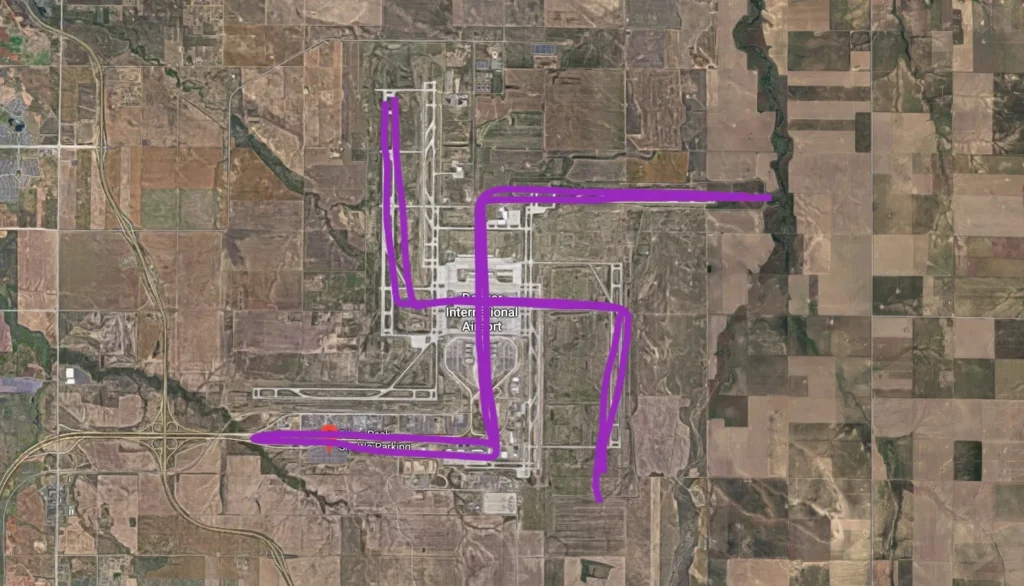
The Myth: Viewed from above, the airport’s runways look like a swastika – a sign of occult meaning.
The Reality: The runway layout is purely functional and designed for aircraft safety in varying wind conditions – not symbolic secret messaging.
Airport engineers routinely design runways using geometric patterns that maximize takeoff and landing efficiency. Any resemblance to symbols is coincidental.
3. New World Order & Freemason Symbols
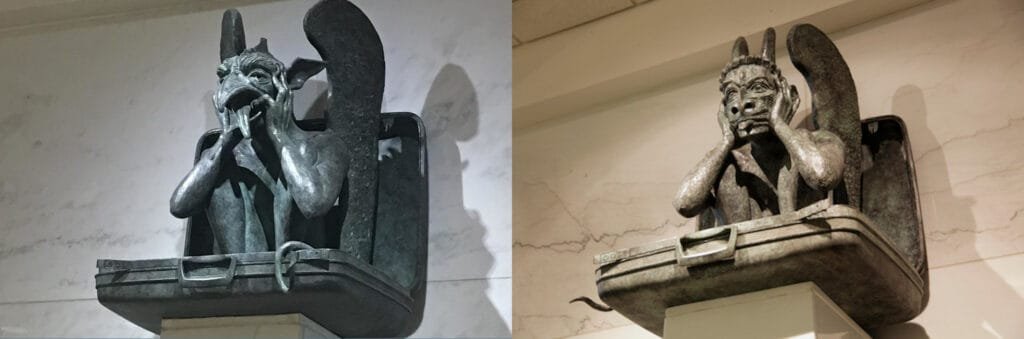
The Myth: A stone plaque with Masonic symbols suggests that the airport was built by secret societies or a “New World Order.”
The Reality: There is a dedication stone at the airport that includes a square and compass symbol sometimes associated with Freemasons. This has sparked rumors, but there is no credible proof that secret societies run DIA.
Public buildings often include symbols from a range of civic groups with no hidden agendas attached.
4. Blucifer – The Cursed Horse Sculpture
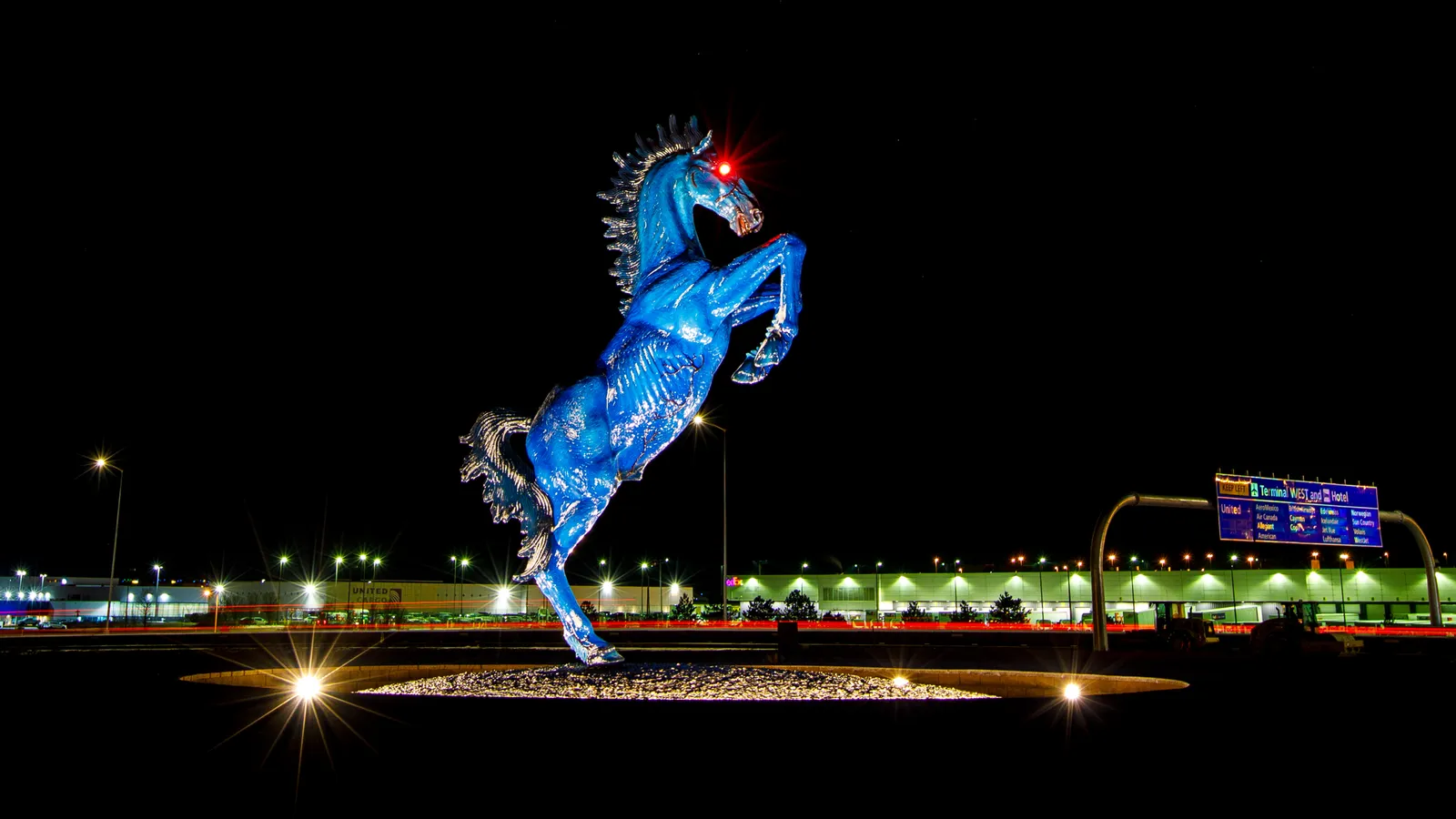
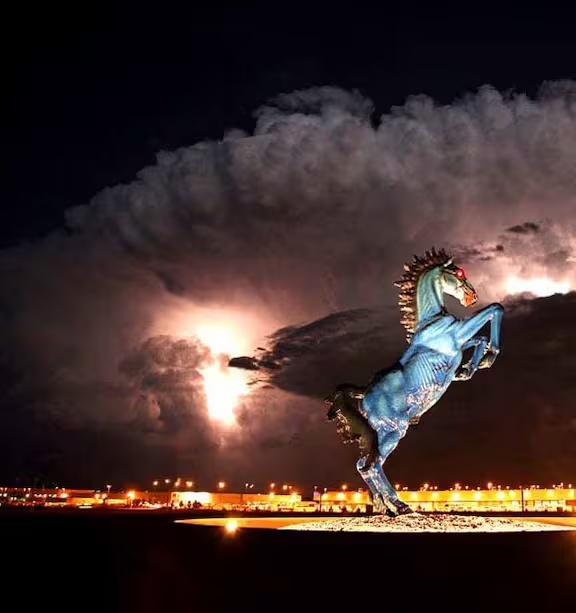
The Myth: The massive blue mustang statue with glowing red eyes outside Denver International Airport – nicknamed “Blucifer” – is cursed and sinister.
The Reality: Blue Mustang is simply a striking work of art. The tragic part is true: the sculptor, Luis Jiménez, was killed in an accident involving the piece during construction, and his family finished the work in tribute.
Its dramatic presence makes it unforgettable – and unforgettable often becomes legend.
5. Murals That Predict Apocalypse
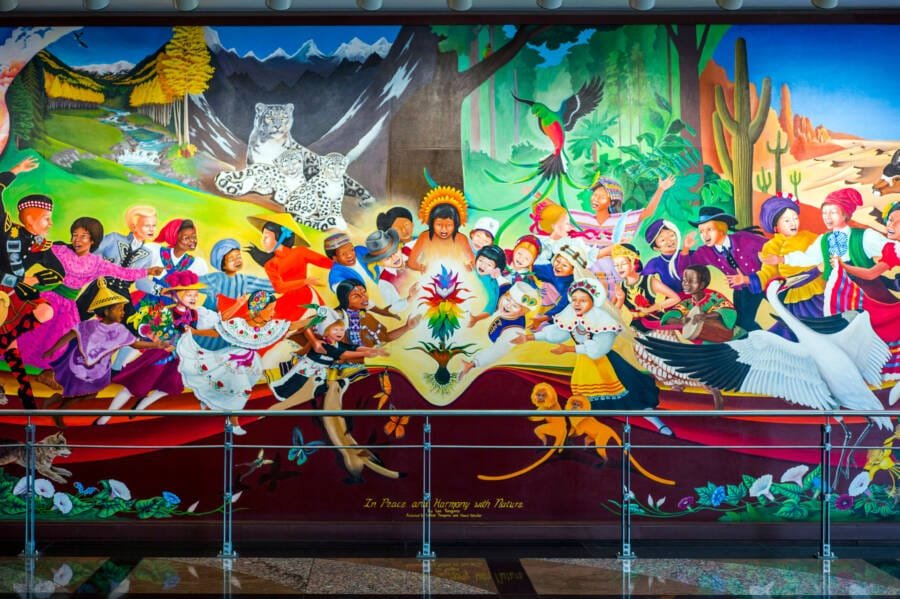
The Myth: Vivid murals inside the airport depict war, chaos, or end-of-world themes.
The Reality: The murals were created as artistic reflections of peace, conflict and hope, not literal predictions of doom. The deeper meaning is often misinterpreted online.
Art can be provocative, and when paired with mystery, it ignites imagination.
What Official Sources Say
Airport management has acknowledged these myths and even created exhibits and events around them – sometimes with humor. Denver International Airport has hosted screenings and public engagements tied to the conspiracy lore.
Rather than sanitizing or denying everything, the airport embraces the curiosity – encouraging travelers to enjoy the experience without taking every rumor seriously.
Tourism & Travel Insight
For travelers curious about the lore, DIA is a fascinating place to explore – not because of conspiracy theories, but because of how art, architecture, and public imagination come together.
Don’t fear the myths. Most DIA conspiracy stories are urban legends — fun to read about, but not based on solid evidence.
Explore art with context. DIA’s public art reflects local culture and community themes, not hidden secrets.
Visit observant places. If curious, look up airport tours or public art exhibits when planning your trip.
Good to Know
| Conspiracy Claim | True or False? | Notes |
|---|---|---|
| Underground Illuminati bunker | False | Tunnels are operational systems. |
| Runways form secret symbols | False | Practical aviation design. |
| Airport is Alien base | False | No verified evidence. |
| Murals predict apocalypse | Misinterpreted | Artistic expression. |
| Blucifer statue cursed | Misconstrued | A powerful sculpture with tragic history. |
A Traveler’s View of Denver Airport Conspiracy Lore
Denver International Airport’s conspiracy stories are part of its global celebrity – and part of what makes it fascinating to visitors. But when the facts are separated from rumor, a richer, more interesting story emerges: one of art, community identity, and technological achievement.
Conspiracy lore should be enjoyed as folklore – intriguing and entertaining – while the real airport continues to serve millions of travelers every year without any secret bunkers, hidden governments, or alien laboratories.
FAQs — Denver Airport Conspiracy
1. Are the Denver Airport conspiracy theories real?
No. Most theories – including secret bunkers, alien bases, or Illuminati headquarters — are urban legends and myths that grew from DIA’s unusual art, tunnels, and media attention, not documented evidence.
2. Why do people say there are secret tunnels under the airport?
There are underground tunnels, but they were built for practical purposes like moving baggage and connecting concourses. The idea that they hide bunkers for elites or aliens is not supported by credible evidence.
3. What’s the story behind the famous “Blucifer” sculpture?
The large blue horse statue with glowing red eyes is called Blue Mustang by artist Luis Jiménez. Its LED eyes honor the artist’s father’s neon-sign work, and the tragic accident involving the artist during its construction added to the legends, but it’s simply public art – not a cursed omen.
4. Do the murals at Denver Airport show secret messages or apocalypse themes?
Rumors suggest that murals depict apocalyptic scenes or “new world order” symbolism, but the artist Leo Tanguma’s intent was to portray war, peace, harmony, and hope, not secret doctrines.
5. Why do people think the runways form a secret symbol?
Some have claimed that the runways resemble a swastika or other occult mark from above. In reality, the layout is designed for aviation safety and optimal operation, not hidden messaging.
6. Has Denver Airport ever addressed these conspiracies?
Yes. Denver Airport has embraced the mystique and even featured exhibits like “Conspiracy Theories Uncovered” that explain myths and art context in a fun, educational way.
7. Is there any connection to the Freemasons or secret societies at DEN?
A dedication plaque includes a Freemason-like symbol and the phrase “New World Airport Commission,” but this was a creative name tied to early publicity and has no verified link to secret societies controlling the airport.
8. Are there any guided tours about these conspiracies at the airport?
While there isn’t a full official “secret” tour, the airport’s art installations, exhibits, and signage make it fun for curious travelers to explore conspiracies from a cultural and artistic perspective.
9. Should travelers be worried about the myths?
Not at all. These stories are part of local folklore and travel culture. Most travelers find DIA’s art, design, and atmosphere intriguing and welcoming rather than scary or threatening.
10. What’s the best way to enjoy Denver Airport’s art and culture?
Walk through the terminals, look for public art pieces and murals, and read the placards explaining installations; it’s a unique way to experience DIA beyond flights.