

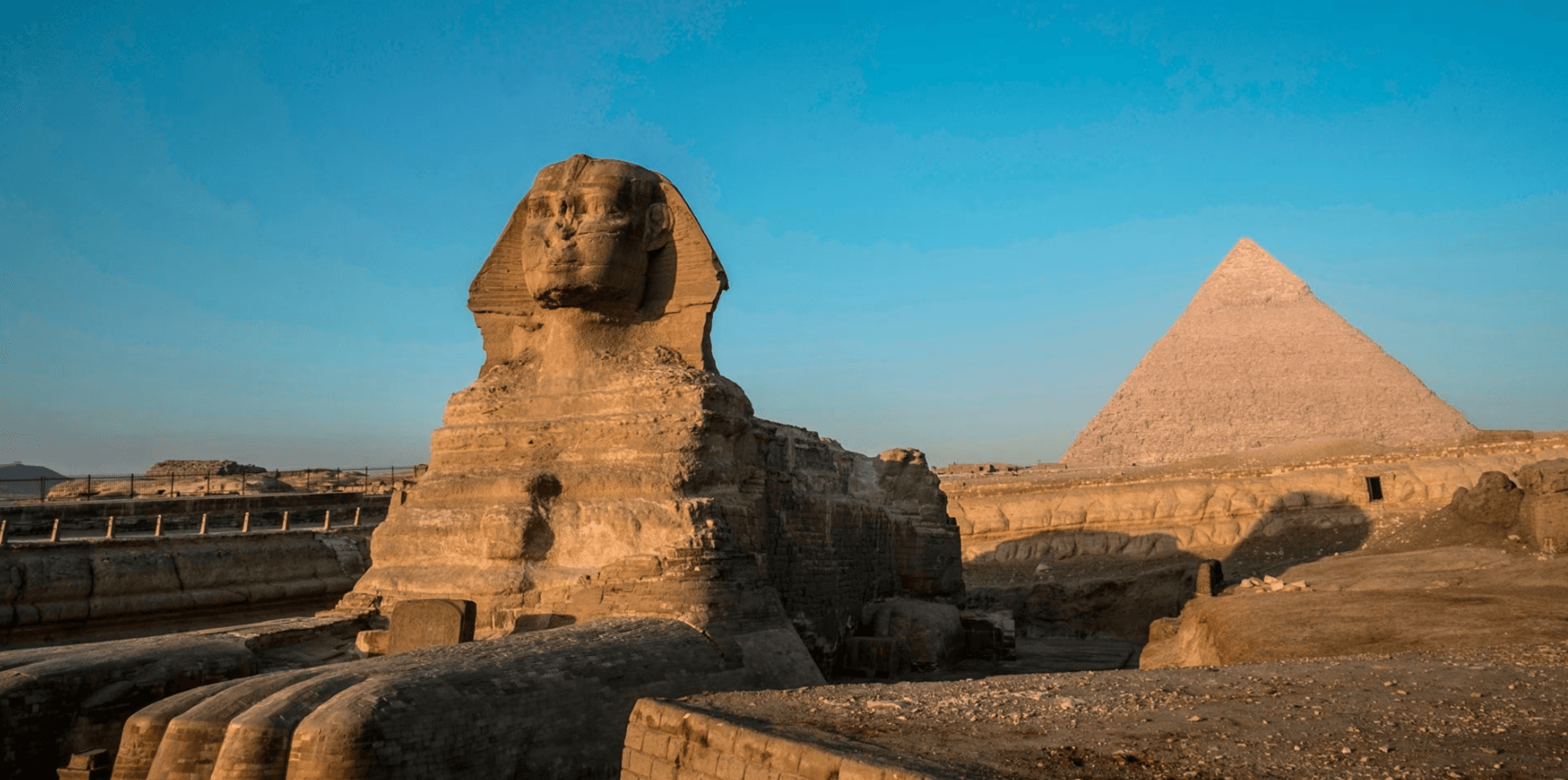
Standing proudly on the desert plateau just outside Cairo, the pyramids of Giza in Egypt represent one of the greatest architectural achievements in human history. Built more than 4,500 years ago, these monumental structures continue to fascinate historians, archaeologists, and travelers from around the world.
The site is home to three massive pyramids constructed during Egypt’s Fourth Dynasty, along with temples, tombs, and the legendary Great Sphinx of Giza. Together, they form one of the most iconic archaeological landscapes on Earth. Recognized as a UNESCO World Heritage Site, the pyramids remain the only surviving structure of the Seven Wonders of the Ancient World.
Today, millions of travelers visit the pyramids of Giza in Egypt each year to witness their immense scale and mysterious origins. Whether exploring ancient chambers or gazing across the golden Sahara, the experience offers a profound connection to one of the world’s oldest civilizations.
Also Read – Neuschwanstein Castle: The Fairytale Fortress That Captivates Millions
Where Are the Pyramids of Giza Located?
The famous pyramids of Giza in Egypt are located on the Giza Plateau, approximately 13 kilometers southwest of Cairo. The plateau overlooks the fertile Nile Valley while stretching into the vast Sahara Desert.
This strategic location allowed ancient Egyptian rulers to build monumental tombs visible from miles away. The plateau also contains workers’ villages, burial grounds, and temples that reveal insights into the society that constructed these ancient wonders.
The Three Main Pyramids of Giza
The pyramid complex consists of three main royal pyramids built for powerful pharaohs.
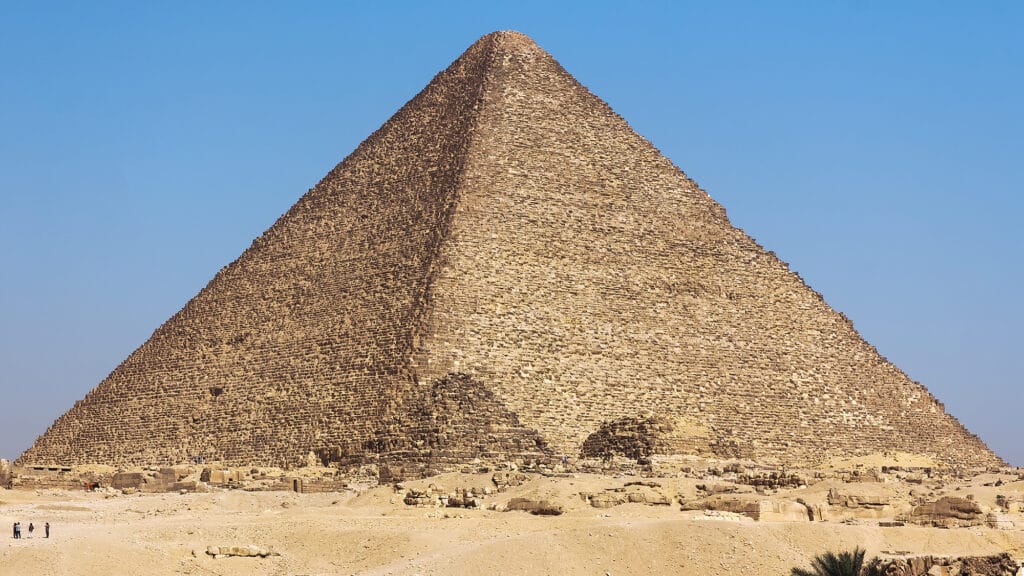
1. The Great Pyramid of Khufu
The largest structure among the pyramids of Giza in Egypt is the Great Pyramid of Khufu, also known as the Pyramid of Cheops.
Key facts include:
- Originally 146.6 meters tall
- Constructed using approximately 2.3 million limestone blocks
- Built around 2560 BCE
For nearly 3,800 years, the Great Pyramid remained the tallest man-made structure on Earth. Its precise alignment with the cardinal directions continues to impress modern engineers.
Inside the pyramid are remarkable features including the King’s Chamber, Queen’s Chamber, and the Grand Gallery, an impressive corridor leading deep into the monument.
This post contains affiliate links. If you choose to book through them, a small commission may be earned at no additional cost to you. Your support genuinely helps keep the blog running and allows continued creation of high-quality travel guides. Thank you for being here and supporting this journey.
Also Read – Rainbow Mountains: The Ultimate Travel Guide to Peru’s Colorful Wonder
2. The Pyramid of Khafre
The second-largest monument among the pyramids of Giza in Egypt is the Pyramid of Khafre, built for Pharaoh Khafre.
Although slightly smaller than Khufu’s pyramid, it appears taller because it stands on higher ground. The pyramid still retains part of its original smooth limestone casing at the top, offering a glimpse of how all pyramids once looked.
The pyramid complex also includes the Great Sphinx, believed to represent the face of Pharaoh Khafre.
3. The Pyramid of Menkaure
The smallest of the three main pyramids of Giza in Egypt is the Pyramid of Menkaure.
Standing at around 65 meters, this pyramid was built for Pharaoh Menkaure around 2510 BCE. Despite its smaller size, the pyramid complex includes three smaller pyramids believed to be tombs for royal family members.
The Great Sphinx of Giza
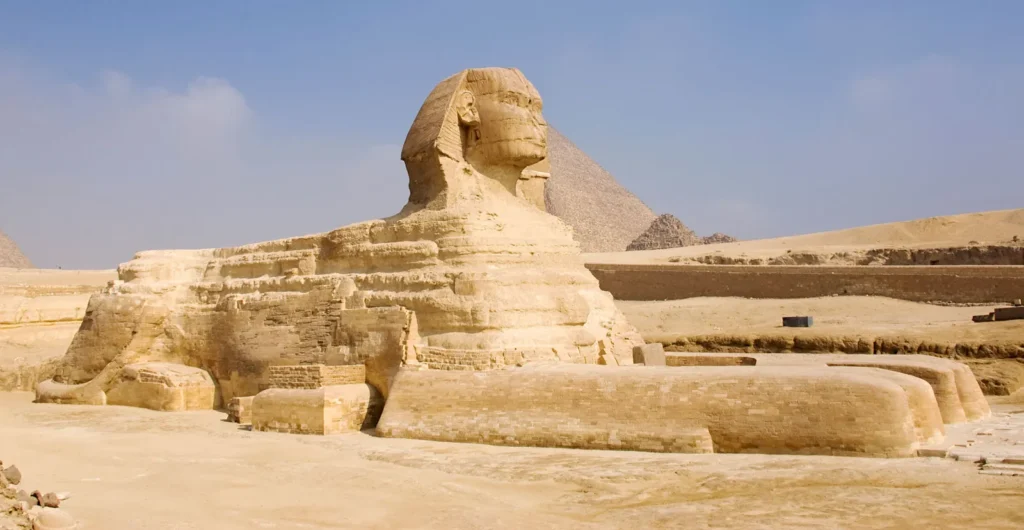
Guarding the entrance to the pyramid complex is the legendary Great Sphinx of Giza, one of the most recognizable monuments in the world.
The statue features:
- A lion’s body symbolizing strength
- A human head representing royal authority
Carved from a single limestone rock, the Sphinx measures approximately 73 meters long and 20 meters high.
For centuries, the monument was buried under desert sand before being excavated by archaeologists in the 19th century.
How Were the Pyramids Built?
The construction of the pyramids of Giza in Egypt remains one of the greatest engineering mysteries of ancient history.
Most historians believe that tens of thousands of skilled workers, engineers, and craftsmen collaborated on the project. Massive limestone blocks were quarried nearby and transported using sledges across carefully constructed ramps.
Recent archaeological discoveries reveal that the workers were not slaves, as once believed, but rather paid laborers and artisans who lived in organized communities near the pyramid complex.
Best Time to Visit the Pyramids of Giza
The experience of visiting the pyramids of Giza in Egypt varies greatly depending on the season.
| Season | Experience |
|---|---|
| October – April | Pleasant temperatures for sightseeing |
| May – September | Extremely hot desert climate |
Early morning visits are highly recommended to avoid crowds and enjoy cooler temperatures.
Tips for Visiting the Pyramids
Travelers planning to explore the pyramids of Giza in Egypt should consider the following tips:
- Visit early morning for fewer crowds
- Wear comfortable walking shoes
- Bring sun protection and water
- Consider a guided tour to understand the historical significance
- Explore nearby museums and archaeological sites
Many visitors also enjoy camel rides across the desert for iconic views of the pyramids against the Sahara landscape.
10 Astonishing Secrets of the Pyramids of Giza in Egypt
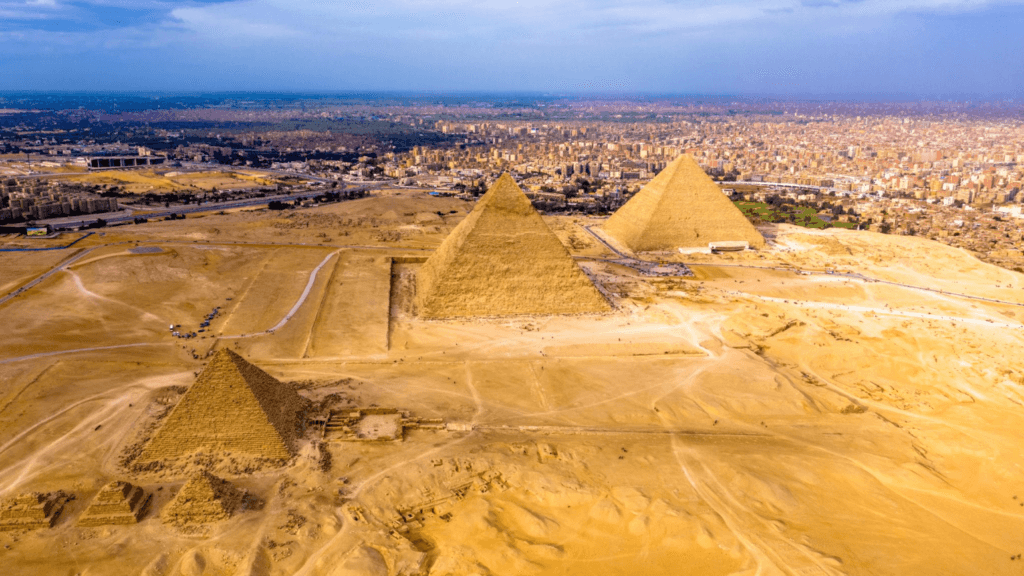
The Pyramids of Giza continue to amaze historians and scientists because many aspects of their construction and purpose remain mysterious. Here are ten fascinating secrets behind these ancient monuments.
1. Perfect Alignment With the Cardinal Directions
The Great Pyramid of Khufu is aligned almost perfectly with the four cardinal directions—north, south, east, and west. The margin of error is incredibly small, showing an advanced understanding of astronomy and geometry by ancient Egyptian builders.
2. Built With Over 2 Million Stone Blocks
Archaeologists estimate that the largest pyramid contains about 2.3 million limestone blocks, each weighing between 2 and 15 tons. Some granite blocks inside the chambers weigh up to 80 tons, making their transportation an extraordinary engineering challenge.
3. The Only Remaining Ancient Wonder
The pyramids are the only surviving structure among the Seven Wonders of the Ancient World, making them one of the most historically significant monuments ever built.
4. The Missing Pyramidion
Experts believe the Great Pyramid originally had a gold-covered capstone, called a pyramidion, that reflected sunlight and made the monument shine brilliantly across the desert landscape.
5. Workers Were Skilled Laborers
Contrary to popular myths, the pyramids were not built by slaves. Archaeological discoveries reveal organized workers’ villages where skilled craftsmen, engineers, and laborers lived while constructing the pyramids.
6. Ancient Interior Passages
Inside the Great Pyramid are mysterious corridors including the Grand Gallery, an impressive sloping passage leading to the King’s Chamber. The purpose of some smaller shafts and hidden passages is still debated.
7. Advanced Engineering Precision
The base of the Great Pyramid is almost perfectly level, with variations of less than a few centimeters. Achieving such accuracy thousands of years ago remains a remarkable engineering accomplishment.
8. The Great Sphinx Mystery
Near the pyramids stands the famous Great Sphinx of Giza, a massive limestone statue with a lion’s body and human head. The exact identity of the face and the reason for the missing nose remain historical mysteries.
9. Hidden Chambers Still Being Discovered
Modern scanning technologies such as cosmic-ray imaging have revealed previously unknown voids and chambers inside the pyramids. Researchers continue to study these spaces to understand their purpose.
10. Mathematical and Astronomical Connections
Some researchers believe the layout of the three pyramids mirrors the pattern of stars in Orion’s Belt, which was associated with Egyptian beliefs about the afterlife and the god Osiris.
Why the Pyramids of Giza Still Fascinate the World?
Even after thousands of years, the pyramids in Egypt continue to inspire wonder and curiosity. Their immense scale, mathematical precision, and cultural significance highlight the extraordinary capabilities of ancient Egyptian civilization.
More than just monumental tombs, the pyramids represent a powerful symbol of human ambition, engineering brilliance, and spiritual belief. Standing before these ancient giants, visitors experience a rare moment where history, mystery, and imagination converge.
For anyone fascinated by ancient civilizations, the pyramids of Egypt remain one of the most unforgettable destinations on Earth.