
Ireland is not a place you rush—it’s a country you move through slowly, letting the landscapes, stories, and rhythm shape your journey. When planning a trip to Ireland, the biggest challenge is not what to see, but what to leave out. With limited time, a carefully structured route becomes essential.
A well-designed Ireland itinerary 7 days allows travellers to experience the perfect balance of vibrant cities, rugged coastlines, and historic landmarks. Within one week, it is entirely possible to explore Dublin, journey along the Wild Atlantic Way, and experience iconic sites like the Cliffs of Moher and Ring of Kerry.
This guide provides a detailed, realistic, and experience-driven itinerary—crafted for first-time visitors who want both highlights and meaningful travel moments.
Also Read – Best Time to Visit Dublin Ireland – A Complete Seasonal Guide
Why 7 Days Is Ideal for Ireland?
Seven days strikes a rare balance—it gives enough time to move beyond Dublin while still keeping the journey smooth and enjoyable. A well-planned ireland itinerary 7 days allows travellers to experience both the cultural heartbeat of the cities and the raw beauty of the countryside without feeling overwhelmed. Experts widely agree that one week is ideal to cover key highlights like Dublin, Galway, and parts of the west coast while still leaving room for spontaneous stops.
Why 7 days works perfectly:
- Covers Dublin, Galway, and scenic regions like Kerry or Clare
- Lets you experience both urban life and rural landscapes
- Keeps driving distances realistic, avoiding travel fatigue
- Allows time for unplanned stops—villages, viewpoints, cafés
- Offers flexibility to personalise routes (coast, castles, or culture)
A shorter trip limits you to just one region, while longer stays can feel logistically heavy. Seven days gives you a true introduction—just enough to explore deeply, yet still leave you wanting more.
Also Read – Ireland Excursions from Dublin – 12 Best Dublin Ireland Tours
This post contains affiliate links. If you choose to book through them, a small commission may be earned at no additional cost to you. Your support genuinely helps keep the blog running and allows continued creation of high-quality travel guides. Thank you for being here and supporting this journey.
Ireland Itinerary 7 Days – Day-by-Day Plan
Day 1: Arrival in Dublin – First Impressions
Begin your journey in Dublin, Ireland’s capital and cultural heart. Most international flights arrive here, making it the natural starting point for planning a trip to Ireland.
Spend your first day exploring:
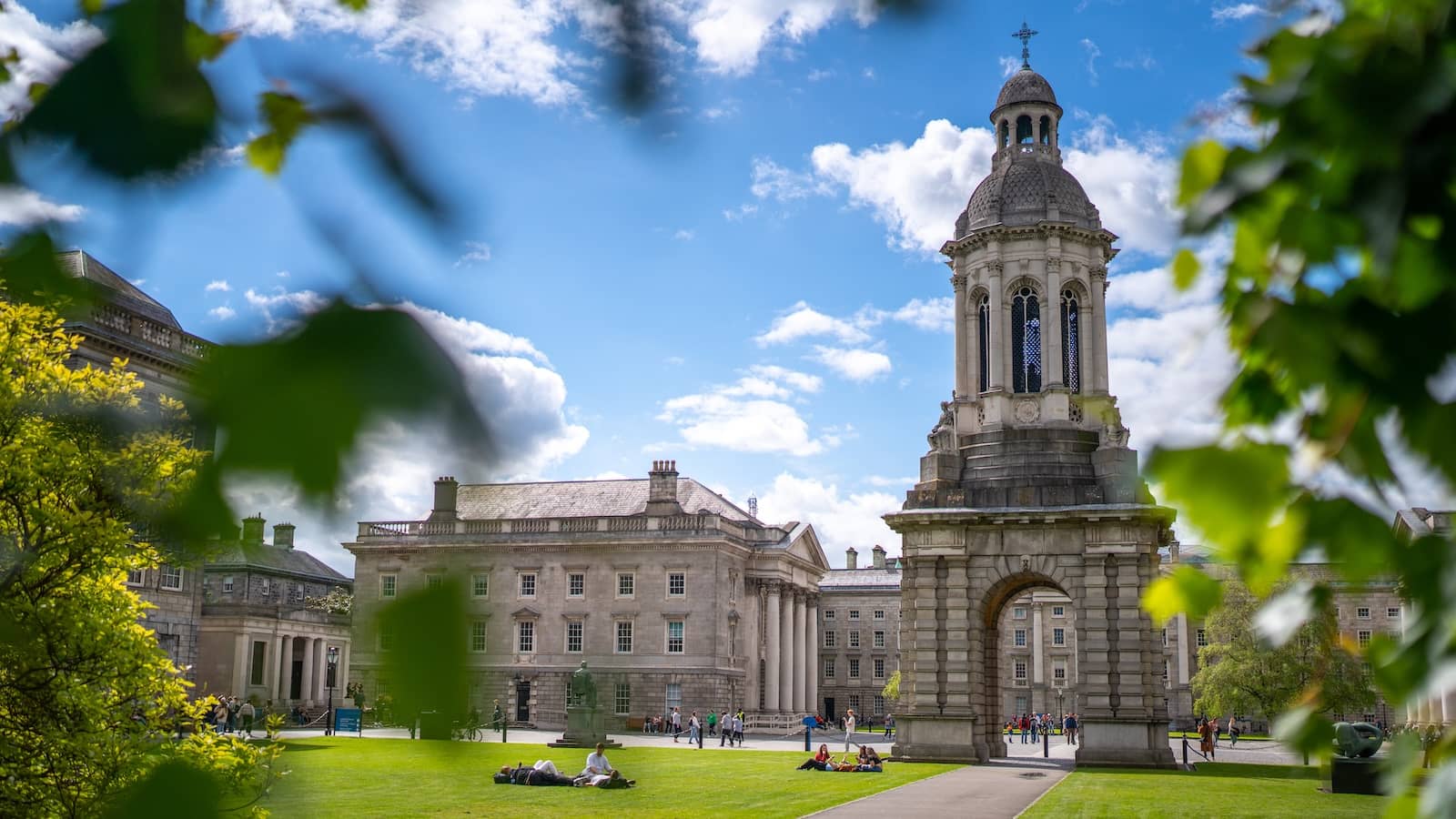
- Trinity College, where the 9th-century Book of Kells and the stunning Long Room library offer a deep dive into Ireland’s academic and artistic heritage
- Walk through the cobbled campus past the Campanile and historic squares once visited by writers like Oscar Wilde
- Dublin Castle’s State Apartments and Christ Church Cathedral’s medieval crypt
- St. Stephen’s Green, ideal for a slow afternoon walk among landscaped gardens
- Grafton Street for buskers, cafés, and local shopping
Make the most of your first day:
- Start early at Trinity to avoid crowds
- Join a short guided walking tour for context
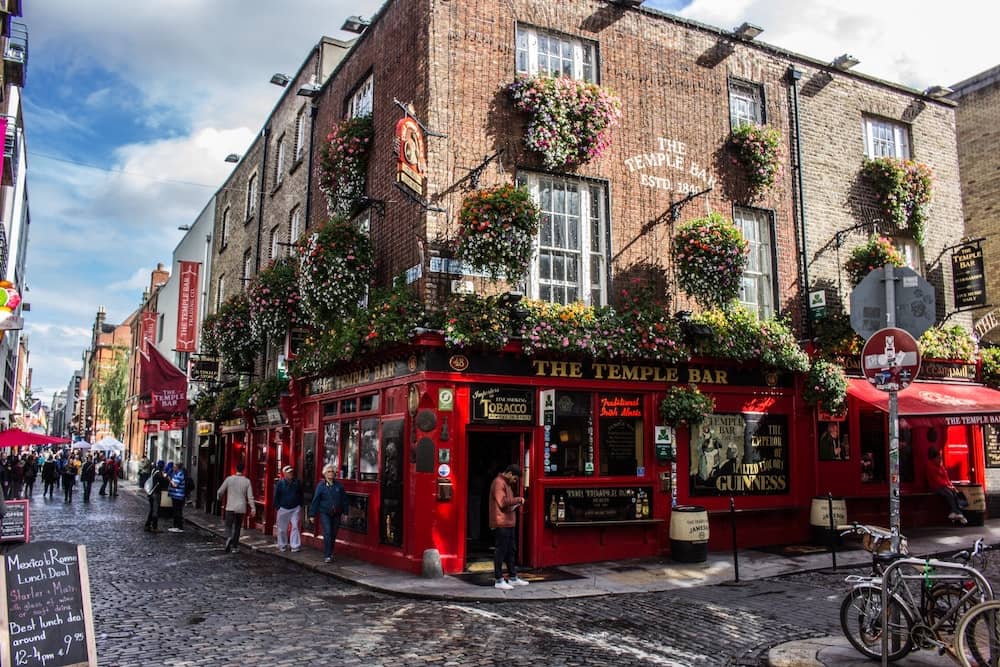
- End the evening in Temple Bar with live trad music
This day sets the tone—easy-paced, walkable, and full of layered history.
Day 2: Dublin to Galway – Crossing Ireland
On day two, travel west to Galway, often described as Ireland’s cultural capital. The journey typically takes around 2.5–3 hours by train or car, passing through Ireland’s central plains dotted with stone walls, grazing sheep, and small rural towns.
Make the most of the journey:
- Stop briefly in Athlone, located on the River Shannon, for coffee or a short riverside walk
- Observe the gradual landscape shift—from Dublin’s urban sprawl to open countryside
- Consider a train ride for scenic comfort, especially along the western approach
Once in Galway:
- Wander the Latin Quarter, filled with independent boutiques, street performers, and colourful façades
- Visit Eyre Square and continue toward Shop Street, the city’s lively pedestrian hub
- Enjoy live traditional music in pubs like The Quays or Tig Coili
When planning a trip to Ireland, this transition marks a defining moment—the atmosphere becomes more relaxed, creative, and deeply connected to Irish culture.
Day 3: Cliffs of Moher & The Burren
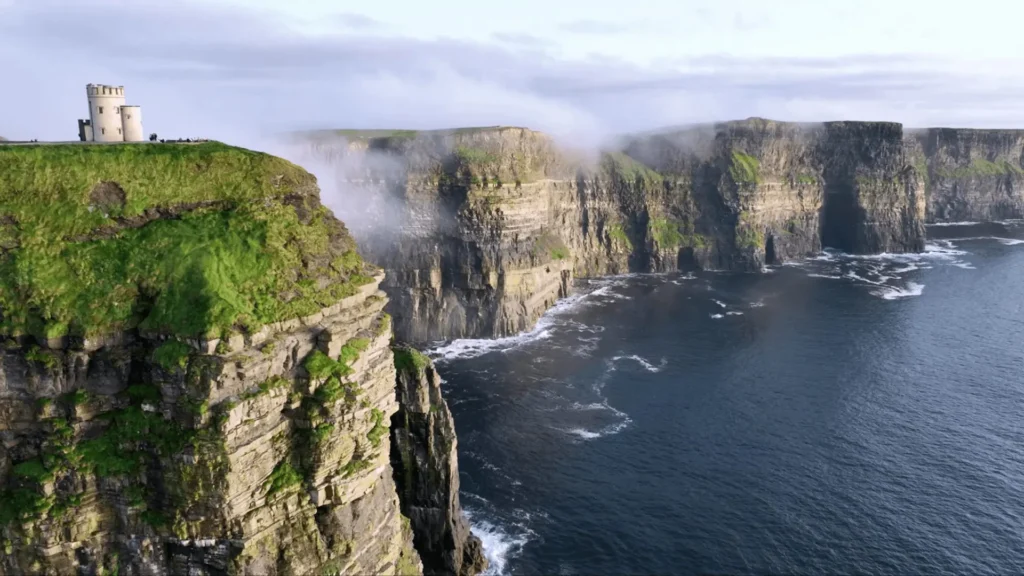
This is one of the most unforgettable days in any Ireland itinerary 7 days, combining raw Atlantic scenery with ancient landscapes. The Cliffs of Moher stretch for 14 km and rise to over 214 metres, offering sweeping views across Galway Bay and the Aran Islands.
What to explore along the route:
- The Burren, a vast limestone region shaped over millions of years, known for its rare flora and unique karst terrain
- Poulnabrone Dolmen, a Neolithic portal tomb dating back over 5,000 years, standing isolated on the rocky plateau
- Coastal stretches of the Wild Atlantic Way, with dramatic viewpoints and photo stops
At the cliffs:
- Walk along the cliff paths toward O’Brien’s Tower
- Visit the eco-designed visitor centre built into the hillside
- Watch seabirds like puffins along the cliff edges
Return to Galway in the evening, where the contrast between wild landscapes and vibrant city life becomes truly memorable.
Day 4: Galway to Killarney – Into Kerry
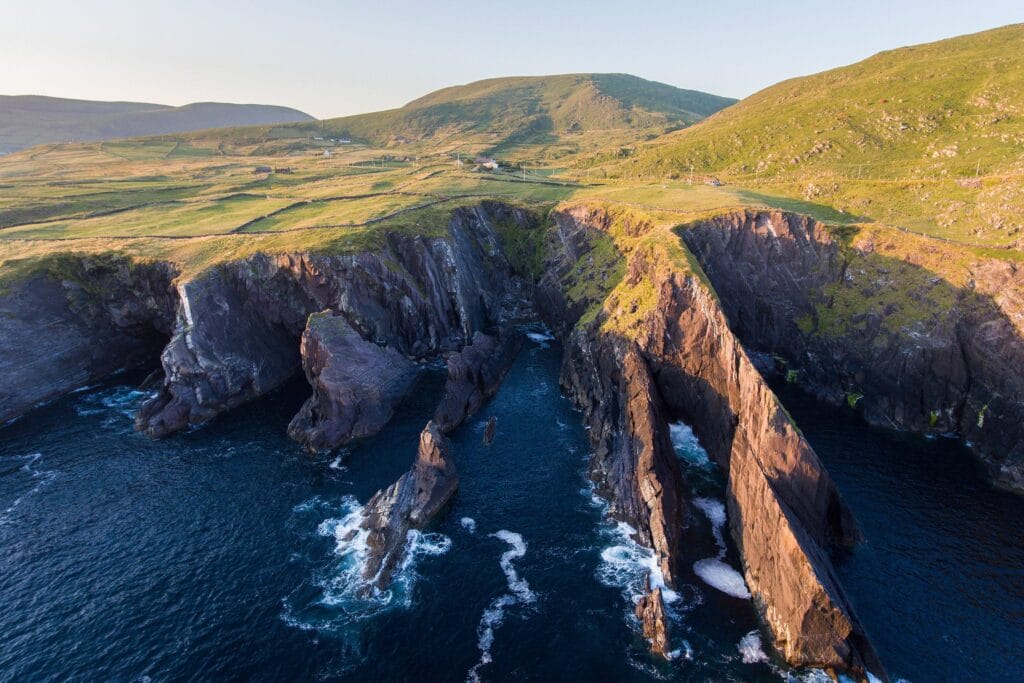
Travel south toward County Kerry, one of Ireland’s most scenic regions, where landscapes become more dramatic and immersive. This stretch is a key moment when planning a trip to Ireland, as the journey transitions into rugged mountains, lakes, and Atlantic coastline.
What to experience along the way:
- Drive through Limerick or Adare village, known for its thatched cottages and historic charm
- Arrive in Killarney, the gateway to Kerry and a hub for exploring the southwest
In Killarney:
- Explore Killarney National Park, spanning over 10,000 hectares with lakes, waterfalls, and ancient oak forests
- Visit Muckross House & Gardens, set beside Muckross Lake with views of the surrounding mountains
- Walk to Torc Waterfall or cycle through scenic park trails
Why this day stands out:
- Slower pace compared to earlier travel days
- Deep connection with Ireland’s natural landscapes
- Ideal base for the next day’s scenic drives
This day introduces the raw, untouched beauty that defines Ireland’s southwest.
Day 5: Ring of Kerry or Dingle Peninsula
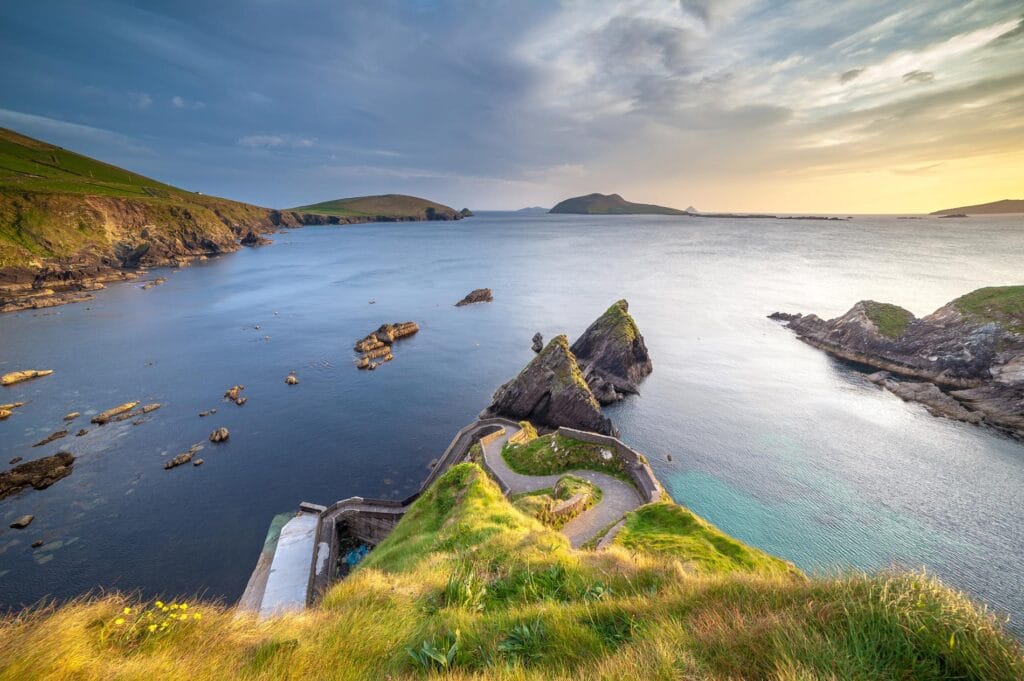
Day five is dedicated to one of the most scenic journeys in Ireland and a defining highlight when planning a trip to Ireland. Both routes showcase the Wild Atlantic Way at its most dramatic.
Option 1: Ring of Kerry
- A 179 km circular route around the Iveragh Peninsula
- Pass through towns like Kenmare, Sneem, and Waterville
- See beaches like Derrynane and mountain views along the MacGillycuddy’s Reeks
- Stops include Torc Waterfall, Gap of Dunloe, and ancient stone forts
Option 2: Dingle Peninsula
- A 48 km stretch into the Atlantic with rugged cliffs and Gaelic culture
- Drive the Slea Head route for coastal views and early Christian ruins
- Visit Dingle town for seafood and traditional music
What both routes offer:
- Coastal drives with constant photo stops
- Historic ruins, forts, and cultural landmarks
- Authentic villages and local experiences
This day delivers Ireland at its most cinematic—wild, raw, and unforgettable.
Day 6: Cork, Blarney Castle & Return Journey
Day six marks the transition back toward Dublin, but it’s far from a simple return—it’s a journey filled with heritage, flavour, and scenic countryside. This stage is essential in any ireland itinerary 7 days, adding cultural depth to the trip.
Morning in Cork:
- Start at Blarney Castle, climbing the narrow spiral staircase to kiss the Blarney Stone, perched high on the battlements
- Wander through Blarney Gardens, including the Poison Garden and Rock Close with ancient stone formations
Explore Cork city:
- Visit the English Market, one of Ireland’s oldest covered markets, known for artisan produce and local delicacies
- Walk along the River Lee, crossing small bridges and exploring colourful streets
Travel back toward Dublin:
- The journey is around 260 km and takes roughly 2.5–3 hours by train or car
- Consider stops in towns like Cashel (Rock of Cashel) or Kilkenny
This day blends history, food, and travel—bringing variety before the final return.
Day 7: Return to Dublin & Departure
The final day is about slowing down and absorbing the last moments of your journey. After days of movement, this part of your ireland itinerary 7 days allows time to reflect and revisit the city with a different perspective.
How to spend your last day:
- Walk along the River Liffey early in the morning for a quieter side of Dublin
- Visit Grafton Street for last-minute shopping, street performances, and cafés
- Stop by St. Stephen’s Green or Merrion Square for a relaxed stroll
Optional experiences:
- Quick visit to the Guinness Storehouse or a museum if missed earlier
- Enjoy a final Irish breakfast or coffee in a local café
Departure tips:
- Arrive early at Dublin Airport, especially during peak travel months
- Allow time for tax refunds or last-minute purchases
This final day gently closes the journey—leaving space to reflect on the landscapes, stories, and moments that made the trip unforgettable.
Travel Tips for Planning a Trip to Ireland
1. Transport Options
- Car rental: Best for flexibility and rural areas
- Trains/buses: Reliable for major routes
- Driving is on the left side
2. Weather Preparation
- Always carry waterproof clothing
- Expect changing weather throughout the day
3. Accommodation Strategy
- Book early in summer
- Mix hotels, B&Bs, and guesthouses
4. Packing Essentials
- Comfortable walking shoes
- Layers for changing temperatures
- Travel adapter (UK/Ireland plug type)
Best Time for This Itinerary
The ideal window for this route is between late May and September, when conditions are most reliable for exploring both cities and coastal landscapes. During this period, the ireland itinerary 7 days benefits from longer daylight hours—often up to 16–18 hours in summer—allowing more time for driving, sightseeing, and outdoor experiences.
What to expect by season:
- May–June (best overall): Temperatures range from 9°C to 15°C, with lower rainfall and clearer skies—perfect for hiking in Killarney or walking the Cliffs of Moher
- July–August (peak season): Warmest months (16°C–20°C), ideal for coastal drives like the Ring of Kerry, but busier and more expensive
- September (shoulder favourite): Mild temperatures around 10°C–17°C, fewer crowds, and great conditions for photography and scenic walks
When planning a trip to Ireland, spring (April–May) and early autumn (September–October) offer the best balance—pleasant weather, manageable crowds, and a more relaxed travel experience.
Why This Route Works
This Ireland itinerary 7 days follows a logical loop:
- Starts and ends in Dublin
- Moves west for landscapes
- Travels south for variety
- Returns efficiently
It avoids unnecessary backtracking and balances travel time with exploration.
Final Thoughts
When planning a trip to Ireland, it’s natural to focus on famous landmarks—but what stays with you are the moments in between. It’s the quiet drive through misty hills, the sound of waves crashing against distant cliffs, and the unexpected conversations in a small village pub where strangers feel like friends. Irish culture is deeply rooted in community, storytelling, and shared experiences, often coming alive through music and conversation in everyday places .
A carefully crafted Ireland itinerary 7 days becomes more than a route—it becomes a collection of feelings. The laughter, the stillness, the warmth of people—it all lingers long after the journey ends. Ireland doesn’t just give you memories; it gives you a sense of belonging that quietly stays with you, long after you’ve left its shores.