
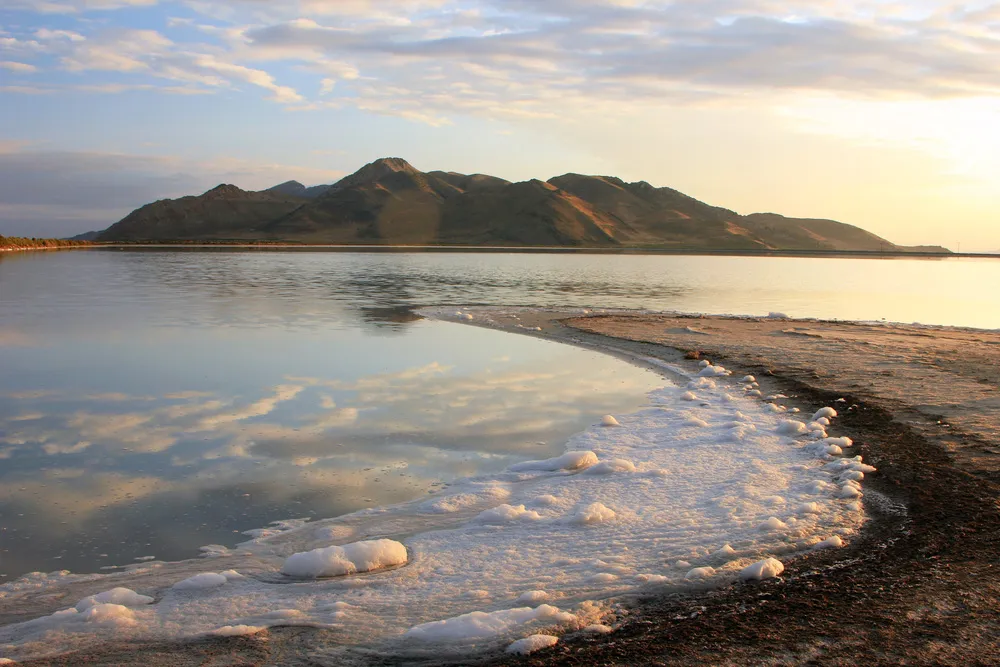
The Great Salt Lake, Utah, sits in northern Utah. It is a big saltwater lake with no outlet. Water comes from rivers like Bear, Weber, and Jordan. Then evaporate and leave salt behind. So the lake gets very salty over time—much saltier than the ocean.
This Great Salt Lake is a leftover from the old, huge Lake Bonneville. That ancient lake covered a big area long ago. Now Great Salt Lake has changed in size a lot. Some years it grows with more rain and snow. In other years, it shrinks from dry weather, and people use river water upstream. Size goes up and down. Salinity changes, too.
Great Salt Lake shapes nature here strongly. Brine shrimp and flies live in salty water. They feed millions of migratory birds that stop there (important for birds to fly north-south). The lake helps the weather. It makes lake-effect snow for the mountains. That snow is good for skiing and water supply. Historically, old people use the area. Now minerals pull out from the lake for jobs. And visitors come to see unusual places. Float easily because salt pushes you up like a buoy. But the lake faces a problem now with low water. An exposed bed can make dust. Still, it remains one of North America’s strange natural spots travelers see today.
What Makes the Great Salt Lake Different from Other Lakes
Great Salt Lake salinity makes it special among lakes in the USA. This saltwater lake in Utah stands out because it is much saltier than regular lakes and even the ocean.
No Outlet, Only Evaporation
The Great Salt Lake has no river flowing out to sea. Water comes in from rivers but only leaves by evaporation. Minerals stay behind and build up over time. So salinity gets higher and higher. This is why the Great Salt Lake is salty compared to most lakes.
Why Salinity Changes Year to Year
Salinity is not the same everywhere. The northern part is usually saltier than the south because railroad causeways block water mixing. It also depends on rain and snow. When the lake level is high, salinity goes down. When low like recent years, salt concentrates more.
Compare quickly:
- Great Salt Lake: 5-27% salt (change a lot)
- Ocean water: about 3.5% salt
- Dead Sea: around 34% salt (the saltiest)
This big difference makes floating easy, like you on an air mattress without effort. (feels very strange the first time) Visitors love this unique feeling.
Read More– 15 Best Hikes in St George, Utah for Red Rock Views, Easy Walks, and Hidden Trails
How does the Size and Water Level of the Great Salt Lake constantly change?
Great Salt Lake water levels have changed a lot over the years. The Great Salt Lake’s size goes big or small quickly because it is not deep. People who visit Utah see this lake differently every time it depends on rain and snow.
Why Shallow Lakes Change Faster
This lake’s average depth is only about 16 feet. Max depth around 33 feet. So small changes in water from rivers or rain make a big difference in size. Like spilling water on a flat table – it spreads far. Deep lakes do not do that.
| Level | Year Example | Surface Area (sq miles) | Elevation (feet) | Approx Depth |
| High | 1986-87 | 3,300 | 4,212 | deeper |
| Low | 2022 | 950 | 4,189 | very shallow |
Great Salt Lake water levels drop or rise fast from climate change. Dry years have less river inflow and more evaporation. Wet years of snow melt bring a lot of water. Shallow makes it sensitive. (One foot change moves the shore far.) Now the lake has been lower than usual for many years. Visit different seasons and see how you change yourself.
From Lake Bonneville to Today — The Geological Story Beneath the Water
Lake Bonneville covered a big part of Utah a long time ago. Great Salt Lake history starts there. This ancient lake was a huge freshwater body, deep over 1000 feet and stretching across northwest Utah, some of Nevada and Idaho.
It forms during the Ice Age when more rain and snow fill the basin. Then around 18,000 years ago, lakes reached high points and spilt over to the north, causing massive floods. Water drops fast.
After that, the climate gets warmer and drier. Evaporation takes more water than comes in. The lake shrinks slowly. Salts that were in the freshwater stay behind and concentrate. No outlet means salts build up, turning the water salty. Like a big bowl where water leaves only by evaporating.
What Remained After Bonneville Drained
Bonneville is gone now, but pieces are left in lower spots (these hold water still).
- Great Salt Lake – the main salty remnant, the biggest one today.
- Utah Lake – freshwater, south of Salt Lake Valley.
- Sevier Lake – often dry or shallow, further south.
Also Bonneville Salt Flats come from an old lake bed. Shorelines on mountains show old levels, like bathtub rings.
The Lake’s Split Personality — North vs South Arms
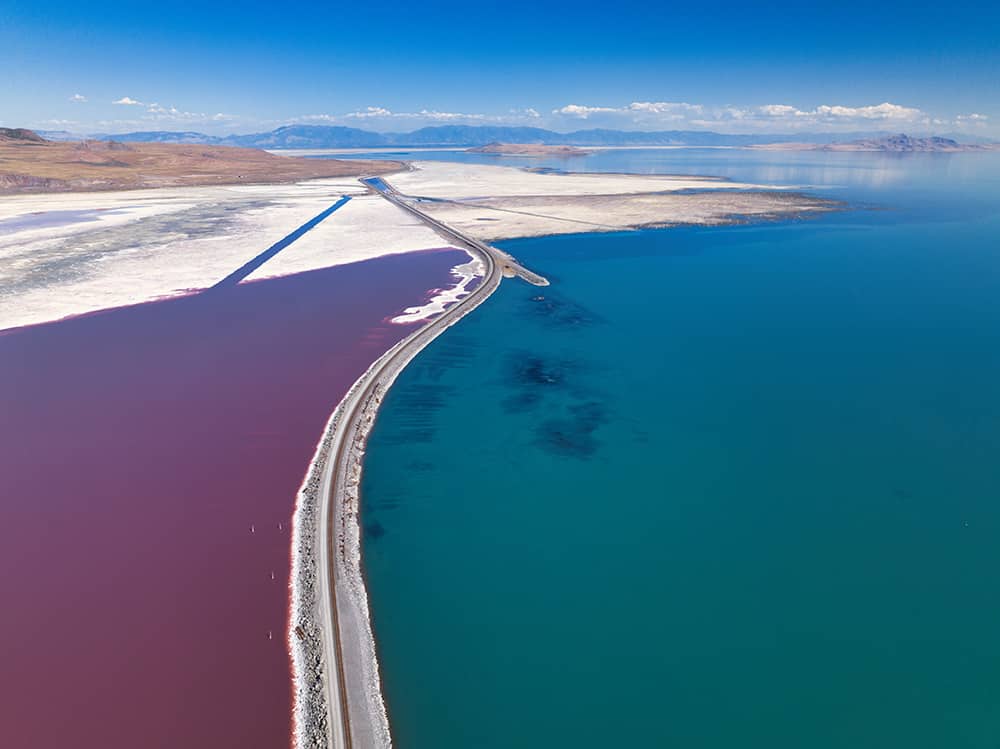
The Great Salt Lake has this split look because of the railroad causeway, the Lucin Cutoff. Built long ago, it blocks most water flow between the north and south arms. So salinity changes a lot on each side, and colours too.
Why the North Arm Looks Pink
The north arm gets almost no fresh river water. Salt builds up high, like twice the south. This lets special algae and bacteria grow, ones that love extreme salt (halophiles mostly). They make the water turn pink or red, like strawberry milk on bad days.
How Rivers Affect the South Arm
All main rivers – Bear, Weber, Jordan – flow into the south arm. Fresh water keeps salinity lower here. Green or blue-green algae thrive instead. Water stays more blue or green, supporting brine shrimp and birds better. The causeway keeps these differences sharp, easy to see from the air.
Life That Thrives Where Fish Cannot
The Great Salt Lake has brine shrimp and Great Salt Lake wildlife that thrive where normal fish cannot live.
The water here is much saltier than the ocean. Fish die quickly from too much salt. No predators around. So brine shrimp and brine flies grow in huge numbers. They eat algae that bloom in salty water. Simple like that.
Brine Shrimp and the Food Chain
Brine shrimp, great salt lakes, are small crustaceans. They handle high salt well. Feed on green algae mostly. Brine flies eat algae too, and their larvae stick on lake bottom rocks. Both multiply fast. No fish eat them. This makes the food chain short and strong.
Why Birds Depend on the Lake
Millions of migratory birds stop here every year. Eared grebes, phalaropes, and avocets come feed heavily. They eat thousands of brine shrimp daily (one grebe can take 30,000 a day). Double body weight quickly. Then fly long distances safely. Great Salt Lake wildlife supports birds from the whole hemisphere. Important stop on the flyway. Without these shrimp and flies, many birds struggle badly. This ecosystem is unique. Worth seeing when visiting Utah.
Antelope Island and the Human Experience of the Lake
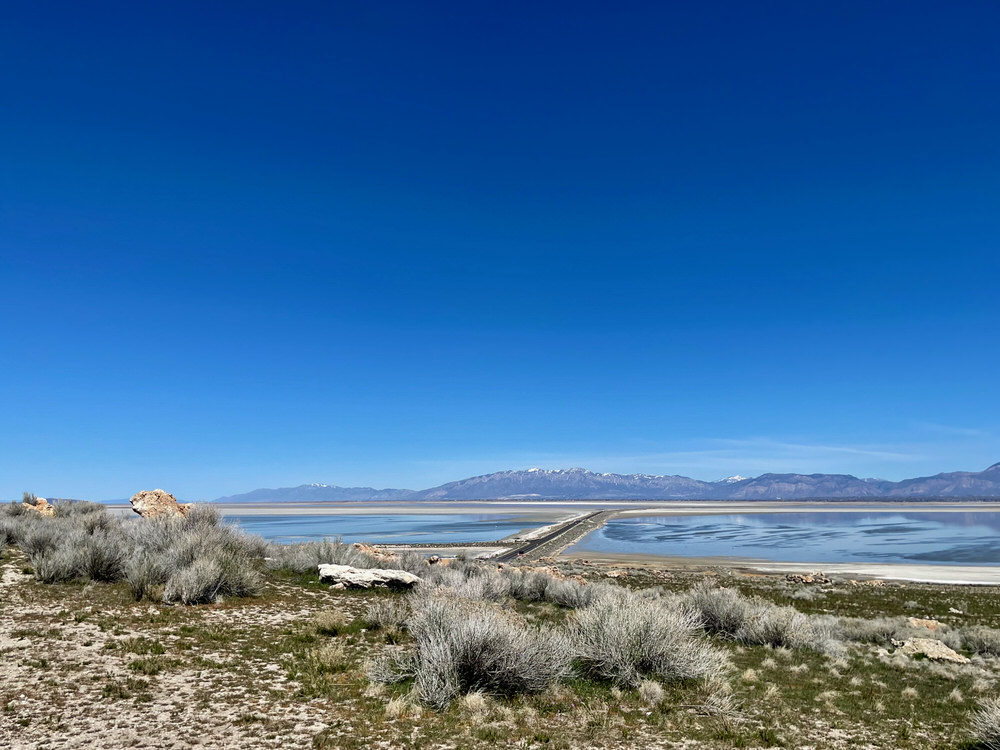
Antelope Island in the Great Salt Lake is the best way to feel the real lake up close. You drive over a causeway from near Salt Lake City and reach this big island quickly. No need for a boat or long travel. Here, you get the full picture of the Great Salt Lake without hard effort.
Why Most Visitors Start Here
Most people come to Antelope Island first because it is easy to reach. Just one hour from the city, and the causeway makes access simple. Then you see beaches, open views of salty water and mountains around. It feels like the lake surrounding you is complete. (Bring bug spray in summer.)
What Makes the Island Ecologically Unique
The island has fresh springs and grasslands, but sits in a super salty lake. So wildlife live free – big bison herds, pronghorn, deer and millions of birds stop migrating here. The salty shores mix with island life like nowhere else. Views from the hills show the strange flat lake that reflects the sky, almost like a mirror on dry days. This mix makes human experience special and grounded.
Read More– Stone Mountain Park, Georgia: What It Is, What’s Inside, and How to Plan a Visit Properly
Why Floating Works — The Science Behind Buoyancy Here
Floating in the Great Salt Lake feels effortless because the water there has high salt. Salt makes water denser than normal fresh water or even the ocean. Human body density is around the same as fresh water, so in a regular lake, you need to kick to stay up. But Great Salt Lake buoyancy comes from that extra density.
Salt Density and the Human Body
More salt means heavier water for the same volume. The Great Salt Lake’s salt level changes a lot, sometimes 5% up to 27%. That pushes the body up strongly. You lie back and float easily, like on an air mattress (but natural). The northern part of the lake is saltier and floats better there.
Myth: You cannot sink at all in salty water.
Fact: Buoyancy is strong, but possible to go under if you try hard or panic.
Myth: All salty lakes are the same.
Fact: Dead Sea saltier, float higher. Great Salt Lake varies by season and location, so floating changes year to year.
Practical Visiting Realities Most Guides Skip
Visiting the Great Salt Lake gives many surprises that most guides do not mention much. Great Salt Lake tips help first-timers know what is real there. Water stays shallow, and things change quickly.
Wind, Depth, and Sudden Weather
The lake’s average depth is only about 16 feet. So the wind picks up fast and makes waves rough, like a small ocean chop. The weather turned suddenly in the afternoon. Summer is hot, winter is cold and windy. Water levels change, too, sometimes walking far to reach the edge.
Brine Flies and Odour — What’s Normal
Smells come from salty water and decaying stuff, like rotten eggs sometimes. Stronger in summer heat or when the wind stirred the bottom. Brine flies everywhere in warm months, clouds around the feet on shore. They do not bite, just fly away when you walk (harmless, like a little black carpet).
What first-time visitors should expect:
- Shallow wade easily, but salty water stings.
- Insects peak in summer, with fewer in fall or spring.
- Odor normal, not always bad.
- Winds make the day change quickly, and bring layers.
- Best calm mornings for floats or photos.
This place is unique, but real visits mean bugs and smells are part of it.
Why the Great Salt Lake Matters Beyond Tourism
Great Salt Lake’s importance goes way beyond just tourism. This lake holds a big role in ecology, economy and even local weather. Great Salt Lake conservation matters because it supports life and systems around Utah.
Environmental Role in the Western U.S.
The lake feeds millions of migratory birds every year. Wetlands around it give home to wildlife. It also makes lake-effect snow that helps ski areas and the water supply. Like a big engine for nature in the dry west (think of it as a giant sponge holding things together).
What Happens If Water Levels Drop Too Far
Dry lakebeds send toxic dust into the air. This hurt the air quality badly. Birds lose food and habitat. The economy feels hit from less minerals and brine shrimp jobs. Snowpack drops, too. So the region faces more health issues and changes in climate patterns.
Read More– Discover the Timeless Beauty of Lake Orta Italy in 2025
Frequently Asked Questions About the Great Salt Lake
What is the Great Salt Lake?
It is the largest saltwater lake in the Western Hemisphere. A big shallow body of very salty water. Remnant from the old prehistoric Lake Bonneville. No fish live there, but brine shrimp and birds love it.
Where is the Great Salt Lake located?
Right in northern Utah, USA. Close to Salt Lake City. You see it easily from the airport or driving west. Antelope Island sits in the middle and makes a good visit spot.
Why is the Great Salt Lake saltier than the ocean?
No outlet for water. Rivers bring in minerals and salt. Then water evaporates, but salt stays behind. So it builds up over the years. The ocean has outlets, so not the same. The Great Salt Lake can be 5 to 27 per cent salt – much more than the ocean, 3.5 per cent. (Like a giant evaporation pan.)
Can people swim safely in it?
Yes, safe for most people. You float easily, like on an air mattress, because it is so buoyant. No bad bacteria, thanks to high salt. But rinse off well after salt sting cuts or eyes. And bring fresh water for a shower. Fun experience once.