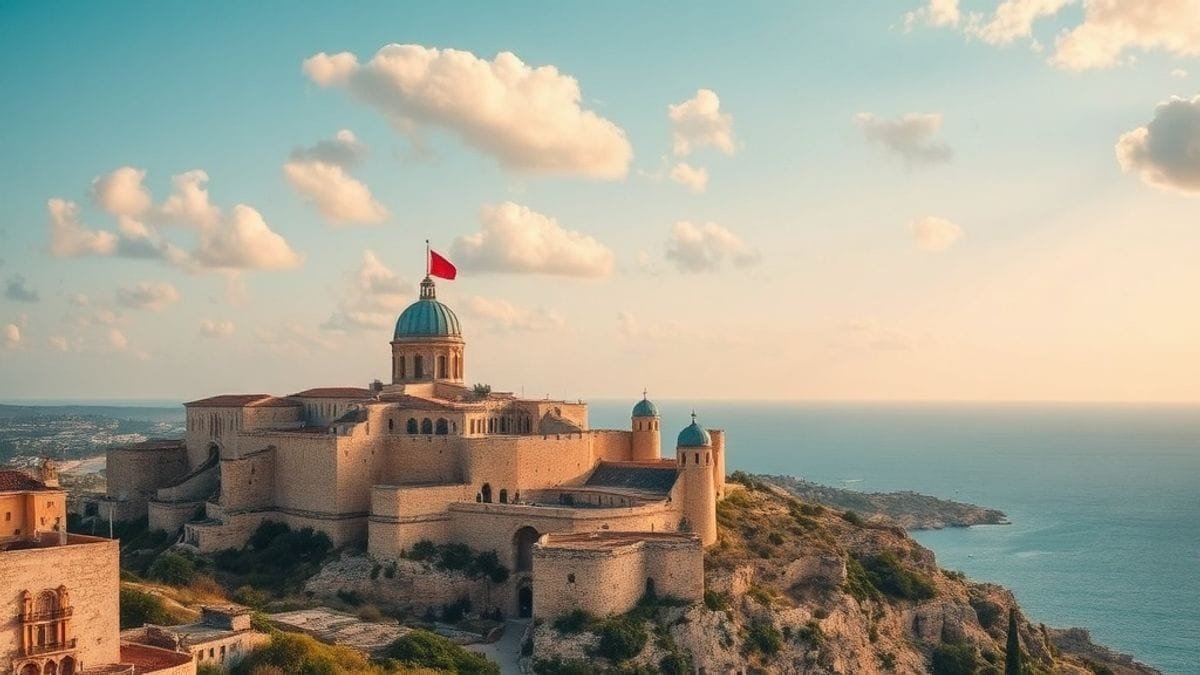
The Citadel, a monumental fortress perched atop the highest point of Victoria, stands as Gozo's most emblematic landmark and a testament to over five millennia of history. Locally known as the Cittadella, this fortified complex has evolved from a prehistoric settlement and Roman administrative center into a vital refuge, seat of governance, and spiritual heart of the island. Its strategic location and layered architectural heritage make it a cornerstone of Gozo's cultural identity and a significant historical monument within Malta's broader tourism landscape.
A Bastion Through Millennia
The historical narrative of the Citadel stretches back over 5,000 years, reflecting Gozo's enduring strategic importance in the Mediterranean. Archaeological findings confirm its early inhabitation, predating the formal construction of fortifications. During the Roman era, the hilltop site served as the administrative hub of Gaulos, Gozo's precursor. As Roman influence waned, the elevated position of the Citadel became increasingly crucial for defense. By the medieval period, it had transformed into a fortified sanctuary where the Gozitan population sought refuge from frequent threats, including pirate raids and invading forces. Successive rulers continuously reinforced its walls and bastions, with significant enhancements undertaken by the Knights of St. John in the 16th and 17th centuries to create a formidable defensive structure. A devastating Ottoman raid in 1551 marked a pivotal moment, prompting further fortification and administrative restructuring. Over centuries, the Citadel transitioned from a purely military stronghold to a vibrant center of religious and civic life, a role it continues to embody today.
The Citadel's geographical placement at the zenith of Victoria offers unparalleled panoramic vistas across Gozo's varied landscape, from its bustling towns and fertile farmlands to its rugged coastline. This commanding vantage point historically served as an essential lookout and defensive stronghold, overseeing key island routes and settlements. The development of Victoria outward from the fortress has cemented a deep physical and symbolic connection between the Citadel and the island's urban fabric.
A Pillar of Gozitan Tourism and Heritage
For international travelers, the Citadel serves as an immersive introduction to Gozo's rich history, distinctive architecture, and unique cultural identity. Its imposing fortified walls, diverse museums, and sacred buildings are a major draw for those interested in medieval urbanism, military architecture, and the broader history of the Mediterranean region. The site significantly enhances Malta's reputation as a destination that successfully balances heritage preservation with public accessibility. Recognized as a component of Malta's heritage within a UNESCO framework, the Citadel actively supports sustainable tourism by fostering educational opportunities, raising conservation awareness, and encouraging extended visitor engagement.
The Citadel's architectural and cultural significance is evident in its robust limestone walls and bastions, a testament to evolving military engineering. At its core, the magnificent cathedral symbolizes the fortress's transformation into a spiritual and administrative nexus. Within its precincts, former barracks, prisons, and administrative buildings have been repurposed as museums dedicated to archaeology, folklore, and natural history. The bastions themselves offer some of the most expansive and breathtaking views in Malta, providing visitors with an immediate grasp of Gozo's geographical layout.
Navigating and Experiencing the Citadel
Reaching the Citadel is straightforward for international visitors, typically involving arrival at Malta International Airport followed by a ferry crossing to Gozo. From the Gozo ferry terminal, the Citadel is accessible via road. Public transportation options include buses that connect the ferry terminal and coastal villages to Victoria, with the Citadel being a manageable uphill walk from the main bus terminus. Visitors traveling by private vehicle will find parking facilities situated just outside the Citadel's walls, with roads from across Gozo leading to Victoria. For those staying in Victoria, the Citadel is easily reachable on foot, though the route involves inclines and historic stone pathways.
The Citadel holds broad appeal, attracting history and heritage enthusiasts, educational and academic groups, families, general tourists, photographers, and cultural explorers. Its extensive fortifications, engaging museums, and stunning viewpoints make it a compelling destination for visitors of all ages and interests. While the Citadel is accessible year-round, spring and autumn offer the most pleasant weather for exploration. Morning visits provide a more tranquil experience, while late afternoons are ideal for capturing softer light and dramatic sunset views. Occasional exhibitions and cultural events can further enrich the visitor experience without detracting from the site's historical ambiance.
Extensive restoration projects are ongoing, focusing on structural stabilization, enhancing accessibility, and ensuring responsible interpretation of the site. These conservation efforts meticulously balance public access with long-term preservation goals, guaranteeing the Citadel's integrity for future generations. The adaptive reuse of its historic structures ensures that the Citadel functions as a dynamic, living heritage site rather than a static monument.
The Citadel is far more than a historical fortress; it is an enduring symbol of Gozo's resilience and identity. Rising majestically above the island, it narrates a profound story of survival, adaptation, and continuity, shaped by centuries of challenges and rebirth. For travelers seeking a comprehensive understanding of Gozo’s past and present, the Citadel delivers an experience that is both visually striking and deeply enriching.




Comments 0
Only approved comments are shown here.