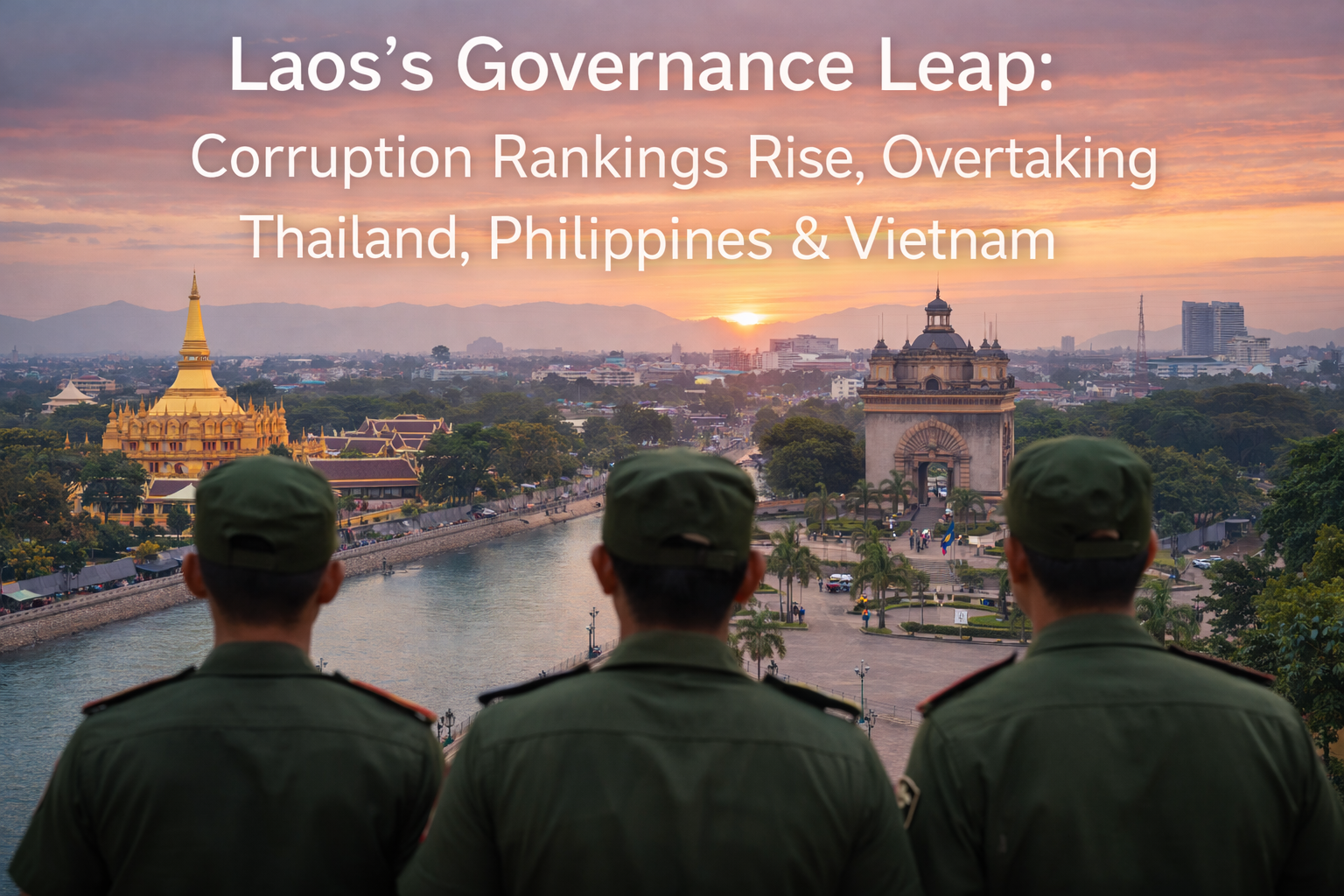
Laos Surpasses Regional Neighbors in Corruption Perceptions Index, Signaling Governance Reforms
Vientiane, Laos – Laos has achieved a notable milestone in its governance trajectory, surpassing Thailand, the Philippines, and Vietnam in the latest Corruption Perceptions Index (CPI) for 2025. This upward movement, reflecting significant government reforms and a concerted push for greater transparency, places Laos at 34 points, an increase from 33 in 2024 and a substantial leap from 28 in 2023. While this progress marks an encouraging shift, the country remains below the international benchmark of 50, underscoring the continued need for robust anti-corruption measures.
The enhanced score signifies Laos' commitment to systemic anti-corruption efforts, moving beyond superficial fixes to implement structural changes within its public sector. This focus on institutional strengthening and increased accountability is beginning to yield measurable results, positioning Laos as a regional example of persistent governance improvement. The nation's efforts also extend to addressing financial compliance concerns, a direct response to its placement on the FATF grey list in February 2025, aiming to bolster international financial integrity.
Regional Dynamics in Southeast Asia Governance
Laos' advancement occurs against a backdrop of shifting governance landscapes across Southeast Asia. While Singapore continues to lead the region and ranks third globally with an impressive 84 points, other nations present a mixed picture. Thailand experienced a slight decline following its February 2025 elections, highlighting the vulnerability of governance scores to political transitions. The Philippines now trails Laos with a score of 32, while Vietnam saw a modest increase to 41. Timor-Leste also shows moderate improvement, reaching 44 points.
Conversely, Cambodia's score dropped to 20, signaling ongoing challenges, and Myanmar remains critically low at 16, largely due to persistent political instability and limited civic participation. Brunei maintains a steady position with 63 points. Officials in Laos emphasize that their progress is rooted in a deliberate, long-term strategy to embed transparency and accountability into governmental operations, including enhanced oversight mechanisms and a growing openness to public discourse and media scrutiny.
Key Factors Driving Laos' Improvement:
- Score Progression: A consistent increase from 28 in 2023 to 34 in 2025.
- Regional Advancement: Overtaking Thailand and the Philippines in the CPI rankings.
- Structural Reforms: Implementation of strengthened oversight and institutional changes.
- Financial Integrity Initiatives: Measures to address international financial crime concerns.
- Public Engagement: Greater transparency in decision-making processes and increased media oversight.
Broader Implications and Future Outlook
The international context of the CPI reveals that corruption remains a significant global challenge, with top performers like Denmark (90) and Finland (88) demonstrating the continuous effort required to maintain high standards. Even established democracies face pressures that can impact governance, reinforcing the need for ongoing vigilance and commitment to anti-corruption measures.
Despite its positive momentum, Laos faces ongoing challenges. Remaining on the FATF grey list points to persistent risks related to financial crimes. Strengthening enforcement agencies with greater independence and authority, alongside protecting civic and media freedoms, is crucial for sustained transparency. Officials stress that long-term success hinges on a transition from reactive, case-by-case enforcement to comprehensive, systemic reforms.
As Laos prepares for its national elections on February 22, 2026, the government plans to integrate reform measures into the electoral process. These include enhanced oversight of campaign financing, greater accountability in procurement and administration, and initiatives to foster citizen trust through increased transparency. These steps are intended to solidify recent gains and ensure that improvements in governance are structural and enduring.
In conclusion, Laos' climb in the corruption rankings is a testament to the impact of sustained and deliberate governance reforms. While challenges persist, the focus on public sector transparency, robust anti-corruption measures, and systemic change signals a promising path toward more effective and accountable governance. This progress not only benefits Laos but also contributes to the broader discourse on Southeast Asia governance, potentially setting a precedent for regional improvement.




Comments 0
Only approved comments are shown here.