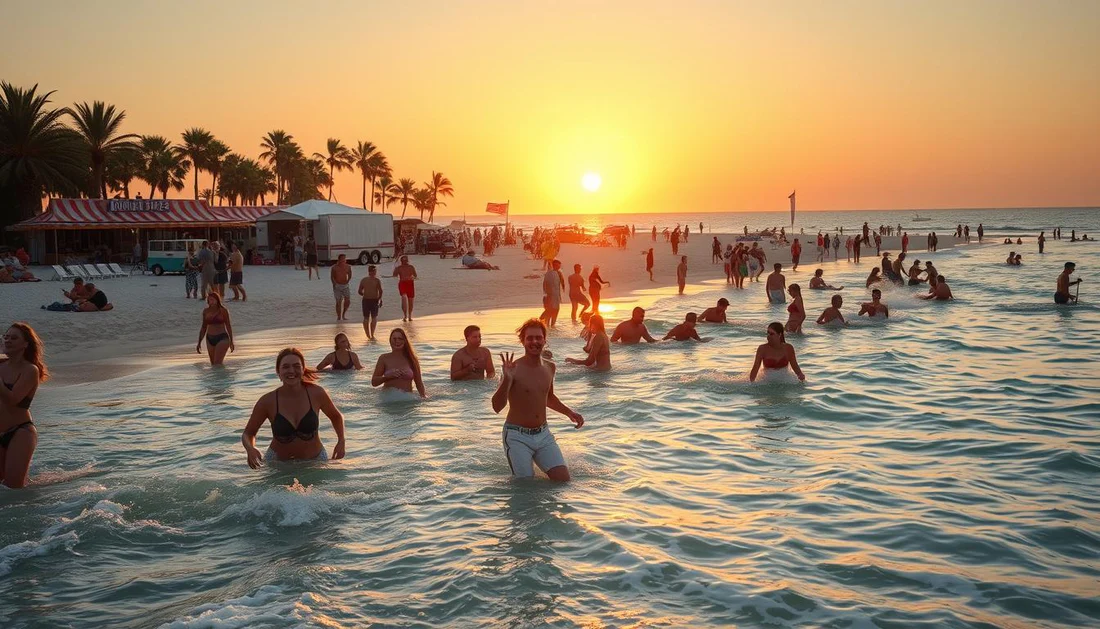
Los Angeles at Forefront of Surge in Last-Minute Spring Break Travel Demand for 2026
Los Angeles is emerging as a key driver of a significant uptick in last-minute travel bookings for Spring Break 2026. The city is joining established hotspots like Miami, Toronto, Cancun, Montreal, Orlando, Puerto Vallarta, and Fort Lauderdale in a trend where travelers are increasingly opting for flexible booking strategies. Data compiled by travel intelligence platform CheapOair indicates a notable shift, with families, couples, and leisure travelers delaying their decisions until the final weeks before departure. This move away from traditional early planning signals a fundamental change in how seasonal travel is being approached, with affordability, transparency, and convenience now at the core of traveler choices.
The Rise of the Late Booker
The traditional model of booking flights months in advance is rapidly losing relevance. Instead, families and leisure travelers are actively monitoring prices and availability in the weeks leading up to their desired travel dates. This strategic approach allows for greater adaptability to evolving schedules, shifting budgets, and the inherent unpredictability of travel costs. Consequently, last-minute planning has transitioned from a contingency option to a primary strategy for securing Spring Break getaways.
Analysis of booking windows reveals a consistent decline in advance reservations. Trips booked 61 to 90 days or more ahead now constitute less than a quarter of all bookings. In March 2024, this figure stood at just 23 percent, a percentage that saw a further dip in 2025. This sustained decline underscores a long-term behavioral shift among consumers rather than a fleeting market fluctuation. When compared to broader industry patterns, where more than a third of travelers still book two to three months in advance, the difference is stark. This suggests that travelers seeking optimal value are gravitating towards platforms that cater to deal-hunting and flexible timelines, moving away from rigid early-bird commitments.
Mid-Term Stability Amidst Last-Minute Momentum
While long-range planning wanes, mid-term booking behavior has remained relatively stable. Reservations made 31 to 60 days prior to departure consistently account for approximately 32 percent of total bookings. This window appeals to travelers who desire a degree of certainty without entirely sacrificing adaptability. However, this segment has not expanded its influence, maintaining its role as a secondary planning option rather than a dominant force.
Industry-wide data shows a similar distribution, with roughly one-third of travelers booking within this timeframe. Nevertheless, the dominance of mid-range bookings is increasingly being overshadowed by the surge in close-in reservations, which are now redefining peak travel seasons. The strongest momentum clearly lies in bookings made within 0 to 30 days of departure. Nearly 45 percent of Spring Break trips were finalized within this window in both 2024 and 2025, a figure that significantly outpaces the broader market average of about 30 percent for bookings made so close to travel dates.
Confidence in Last-Minute Value
This observed shift indicates a growing confidence among travelers that affordable fares are still attainable at the last minute. Booking late is no longer perceived as a compromise leading to limited choices or inflated prices. Instead, it is viewed as a calculated approach that maximizes flexibility while preserving value, especially when supported by platforms that offer transparent pricing and real-time deals. Looking ahead to Spring Break 2026, travel is expected to follow this established trajectory. Booking trends observed consistently since 2023 suggest that close-in decision-making will continue to be dominant, potentially with an increase in last-minute reservations as travelers become even more comfortable delaying commitments. This behavior reflects a more informed and price-aware consumer base, rather than indecision.
Destination Demand: A Blend of Sun and Culture
Destination demand for the upcoming Spring Break season highlights a mix of popular leisure hotspots and culturally engaging cities. Beach and activity-driven travel continues to be a strong draw for destinations such as Cancun, Puerto Vallarta, Punta Cana, Santo Domingo, Kingston, Orlando, Fort Lauderdale, Miami, Los Angeles, and San Diego. These locations maintain their appeal due to accessibility, diverse entertainment options, and reliable vacation experiences.
Concurrently, there is growing interest in destinations offering rich cultural experiences, varied scenic beauty, and family-oriented activities. Cities experiencing increased attention include Mexico City, Guadalajara, San Salvador, Guatemala City, Lima, Bangkok, Manila, Ho Chi Minh City, London, Paris, Vancouver, Toronto, and Montreal. This broadening variety reflects evolving traveler priorities, where immersive experiences and overall value carry significant weight alongside relaxation.
Competitive airfare continues to be a pivotal factor supporting flexible booking behavior, making spontaneous trips financially viable. Sample spring fares available through platforms like CheapOair reinforce the appeal of delayed booking, with roundtrip prices noted such as Vancouver from $134, San Salvador from $233, Cancun from $268, and London from $388.
As Spring Break 2026 approaches, the travel planning landscape is undeniably entering a more adaptable phase. Travelers are prioritizing flexibility, affordability, and informed decision-making. With last-minute bookings now firmly established as a dominant trend, Spring Break travel is evolving into a more responsive and value-driven experience, mirroring the changing expectations of modern travelers.




Comments 0
Only approved comments are shown here.