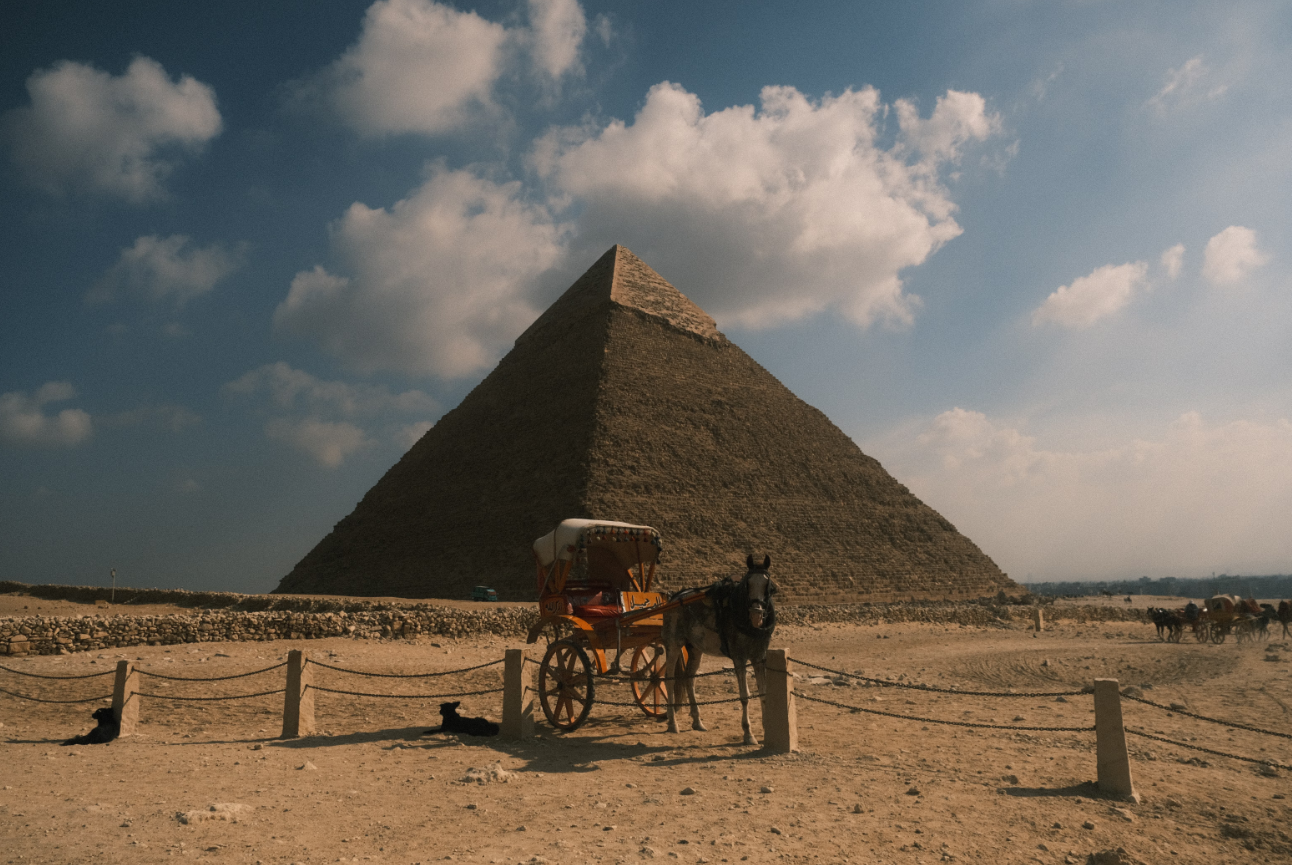
The Grand Gallery Great Pyramid is one of the most extraordinary architectural features inside the Great Pyramid of Giza, the monumental tomb built for Pharaoh Khufu during Egypt’s Fourth Dynasty. Rising through the pyramid toward the King’s Chamber, this remarkable passage demonstrates the precision and engineering knowledge achieved by ancient Egyptian builders more than 4,500 years ago.
For travelers wondering how tall is the Great Pyramid, its original height was approximately 146.5 meters (481 feet), making it the tallest human-made structure in the world for around 3,800 years.
The impressive Great Pyramid dimensions extend beyond its height. Each side of its original square base measures approximately 230 meters, while estimates suggest around 2.3 million stone blocks were required for its construction.
Also Read - Best Hotels in Cairo Egypt: 15 Top Places to Stay Across Cairo City
This post contains affiliate links. If you choose to book through them, a small commission may be earned at no additional cost to you. Your support genuinely helps keep the blog running and allows continued creation of high-quality travel guides. Thank you for being here and supporting this journey.
1. The Grand Gallery Is Nearly 47 Meters Long
The Grand Gallery Great Pyramid stretches approximately 46.68 meters (153 feet) through the interior of Khufu’s pyramid. It continues upward from the Ascending Passage toward the King’s Chamber and represents one of the monument’s most sophisticated internal spaces. The gallery rises at an angle and is constructed primarily from carefully finished limestone. Instead of conventional vertical walls, its upper sections gradually project inward through a technique known as corbelling.
Seven successive courses narrow the space toward the ceiling. The gallery eventually leads toward an antechamber and then into the King’s Chamber. Its enormous scale, particularly considering its position deep within millions of tonnes of masonry, continues to demonstrate the extraordinary planning and stoneworking abilities of ancient Egyptian architects.
2. How Tall Is the Great Pyramid Originally?
Anyone asking how tall is the Great Pyramid should distinguish between its original and present-day measurements. When completed, the monument stood approximately 146.5 meters, or around 481 feet, above the Giza Plateau. Egypt’s Ministry of Tourism and Antiquities states that this extraordinary height allowed it to remain the world’s tallest structure for approximately 3,800 years.
Today, the pyramid is shorter because its pyramidion and much of its smooth outer casing have disappeared over centuries. Other measurements place its present height at roughly 138 meters. Its extraordinary vertical scale becomes even more impressive when considering that construction took place during the third millennium BC without modern cranes, powered machinery or surveying technologies. The pyramid remains the tallest of the three principal pyramids at Giza.
3. The Great Pyramid Has an Enormous Square Base
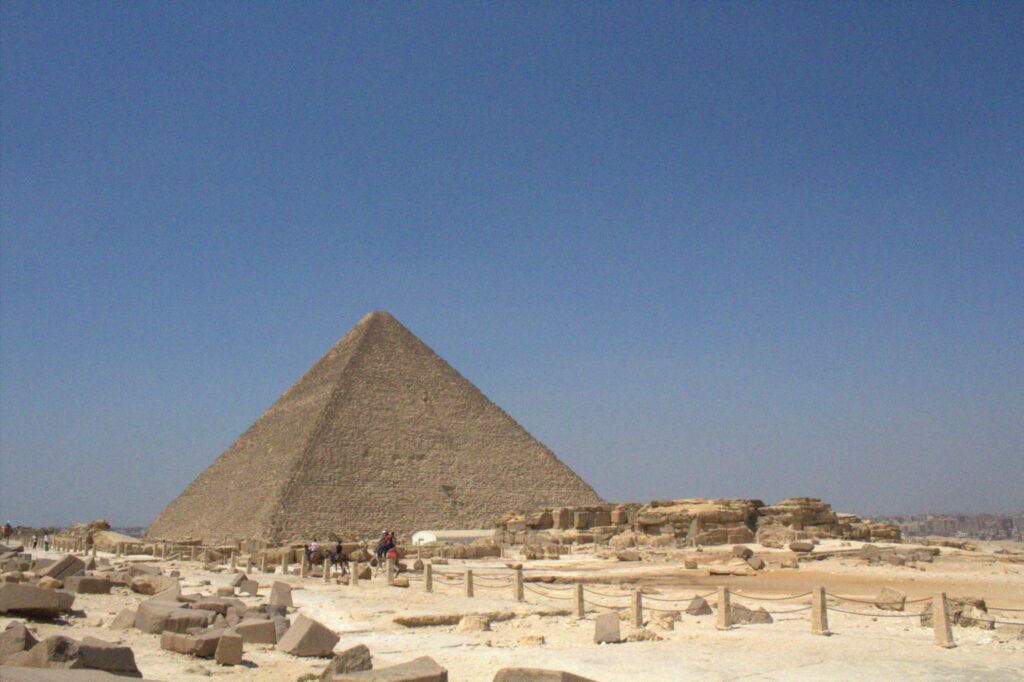
Among the most impressive Great Pyramid dimensions is its enormous square footprint. Each side originally extended approximately 230.4 meters, or about 755 feet, producing a base covering more than five hectares. Even more extraordinary is the precision achieved by its builders. Research summarized by Smarthistory notes that despite each side measuring more than 230 meters, the greatest difference between the lengths of the four sides is only about 4.4 centimeters.
The base is also remarkably level, with a reported variation of only approximately 2.1 centimeters. Such accuracy demonstrates sophisticated knowledge of surveying, geometry and construction management. The monument was also carefully aligned toward the cardinal directions, adding another remarkable element to an already extraordinary example of ancient engineering and architectural planning.
4. How Many Stones Are in the Great Pyramid?
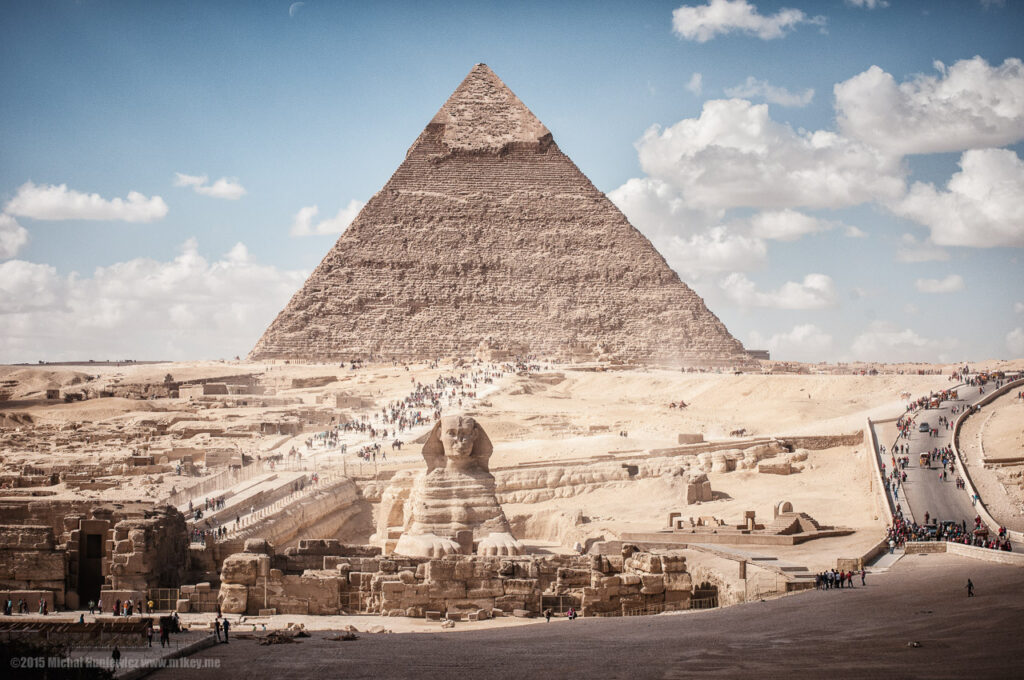
The question how many stones are in the Great Pyramid has fascinated archaeologists, engineers and travelers for generations. A widely cited estimate places the number at approximately 2.3 million blocks. Most of the enormous monument consists of limestone, although different materials were selected for particular structural purposes. Granite, transported from the Aswan region hundreds of kilometers south of Giza, was notably used within important internal areas such as the King’s Chamber.
The individual blocks vary considerably in size and weight, meaning the frequently quoted 2.3-million figure should be understood as an estimate rather than an exact archaeological count. Nevertheless, the sheer quantity of material demonstrates the remarkable organizational challenge involved in quarrying, transporting, shaping and positioning millions of stones during the Fourth Dynasty.
5. The Grand Gallery Reaches About 8.6 Meters High
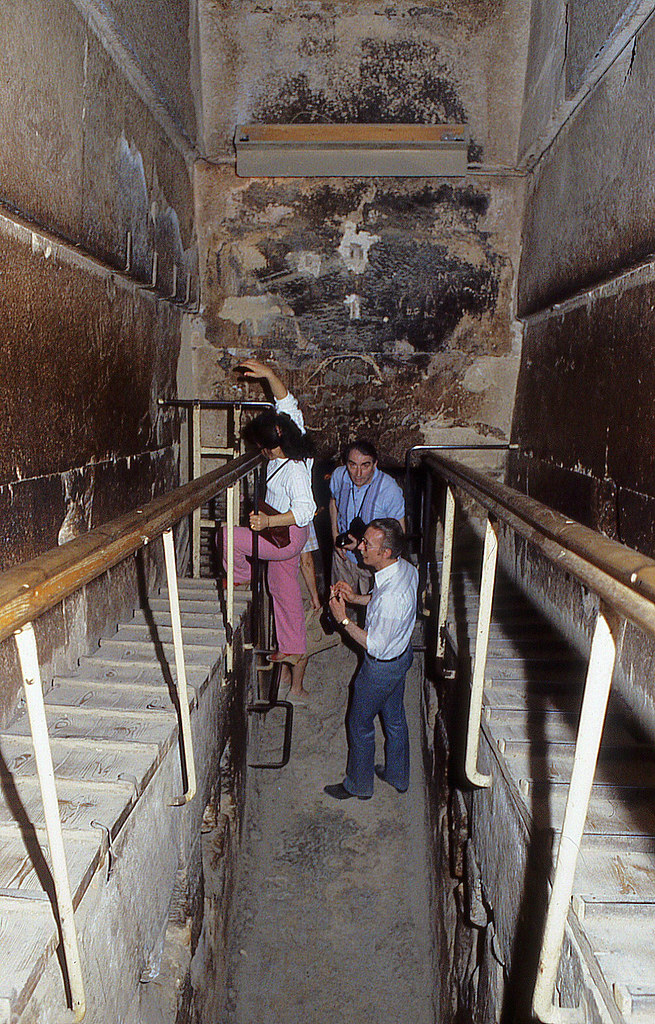
Height is one of the defining characteristics of the Grand Gallery Great Pyramid. The corridor reaches approximately 8.6 meters, or just over 28 feet, making it dramatically taller than the narrow passages visitors encounter elsewhere inside the monument. Its imposing height is enhanced by corbelled walls that gradually narrow toward the ceiling.
At the lower level, the gallery is around four royal cubits wide, while successive courses project inward until the upper portion becomes considerably narrower. The floor incorporates raised shelves along both sides with a lower central section continuing between them. Archaeologists have documented slots and niches associated with these features, although their precise original purpose continues to be discussed. The result is an interior space unlike almost anything else surviving from Egypt’s Old Kingdom.
6. Its Original Height Equalled a Modern 40-Storey Building
Understanding how tall is the Great Pyramid becomes easier when its approximately 146.5-meter original height is compared with a modern building. Its scale is roughly comparable to a contemporary structure of around 40 storeys, depending on individual floor heights. What makes this achievement exceptional is that Khufu’s builders created the monument more than four and a half millennia ago.
The pyramid rises from an enormous square foundation while its four triangular faces converge toward a central summit. Although the original summit and much of the polished outer limestone casing have disappeared, the underlying structure continues to dominate the Giza Plateau. Its enormous height was not surpassed by another known human-made structure for roughly 3,800 years, highlighting the unprecedented scale of Fourth Dynasty Egyptian architecture.
7. The Pyramid’s Base Measures About 230 Meters Per Side
The remarkable Great Pyramid dimensions include a base measuring more than 230 meters along each of its four sides. This means that walking once around its perimeter involves covering approximately 920 meters—close to one kilometer. The faces were carefully oriented toward the cardinal directions, demonstrating an impressive level of astronomical observation and surveying precision.
The original exterior was covered by smooth casing stones that would have created a much more polished appearance than visitors see today. Most of those stones were removed over subsequent centuries, leaving the stepped core masonry exposed. The monument’s enormous footprint was necessary to support its immense height and mass while distributing the load across the underlying plateau. Its combination of monumental scale and extraordinary geometric accuracy remains one of its most impressive engineering characteristics.
8. Millions of Blocks Created an Enormous Monument
Understanding how many stones are in the Great Pyramid also helps reveal the enormous scale of the construction project. The commonly cited figure of around 2.3 million blocks means the ancient builders had to coordinate quarrying, transportation, preparation and placement on an extraordinary scale. The core primarily consists of limestone, while higher-quality limestone was historically used for the smooth outer casing and granite was incorporated into important internal spaces.
Individual stones were not identical, and their weights varied significantly depending on their location and purpose. Consequently, describing construction simply in terms of an “average block” can hide the complexity of the project. What remains certain is that organizing millions of tonnes of stone required an exceptionally sophisticated workforce, logistical system and construction plan for the Old Kingdom period.
9. A Mysterious Void Exists Above the Grand Gallery
Modern scientific research has made the Grand Gallery Great Pyramid even more intriguing. In 2017, researchers participating in the ScanPyramids project reported the discovery of a previously unknown large void situated above the gallery. Instead of physically drilling through the ancient monument, scientists used muon radiography, which detects cosmic-ray particles passing through stone and can reveal differences in density.
The newly detected space extends for at least 30 meters and has a cross-section comparable to that of the gallery below it. Multiple independent detection technologies confirmed its presence with high confidence. Researchers called it the ScanPyramids Big Void, but its precise purpose and architectural function remain uncertain. The discovery demonstrated that even after centuries of investigation, significant questions about Khufu’s pyramid remain unanswered.
10. Its Dimensions Remain an Ancient Engineering Marvel
The extraordinary Great Pyramid dimensions represent much more than impressive numbers. Its original height of approximately 146.5 meters, base sides exceeding 230 meters and exceptionally accurate alignment reveal a sophisticated combination of architectural planning, surveying and large-scale construction management. Even small inaccuracies at the foundation level could have produced substantial problems as the structure rose, yet the surviving monument demonstrates remarkable geometric precision.
The pyramid was constructed as the tomb of King Khufu and became the defining monument of his pyramid complex on the Giza Plateau. It is also the only surviving monument traditionally included among the Seven Wonders of the Ancient World. More than 4,500 years after its construction, its scale and precision continue to inspire architects, archaeologists, engineers and millions of visitors.
Final Thoughts
The Great Pyramid remains extraordinary not simply because of its age, but because its enormous scale is combined with remarkable precision. Its vast foundation, towering original profile, complex internal passages and sophisticated stonework reveal the exceptional capabilities of ancient Egyptian architects and craftspeople. The soaring Grand Gallery is particularly impressive, creating a dramatic transition through the monument toward the King’s Chamber.
Modern investigations have added another dimension to the mystery. The detection of a substantial previously unknown void above the gallery demonstrates that important questions about the pyramid’s internal architecture remain unresolved.
For visitors to Giza, understanding these measurements and engineering details makes the monument even more remarkable. It transforms the pyramid from an iconic silhouette into evidence of one of antiquity’s most ambitious construction achievements.




Comments 0
Only approved comments are shown here.