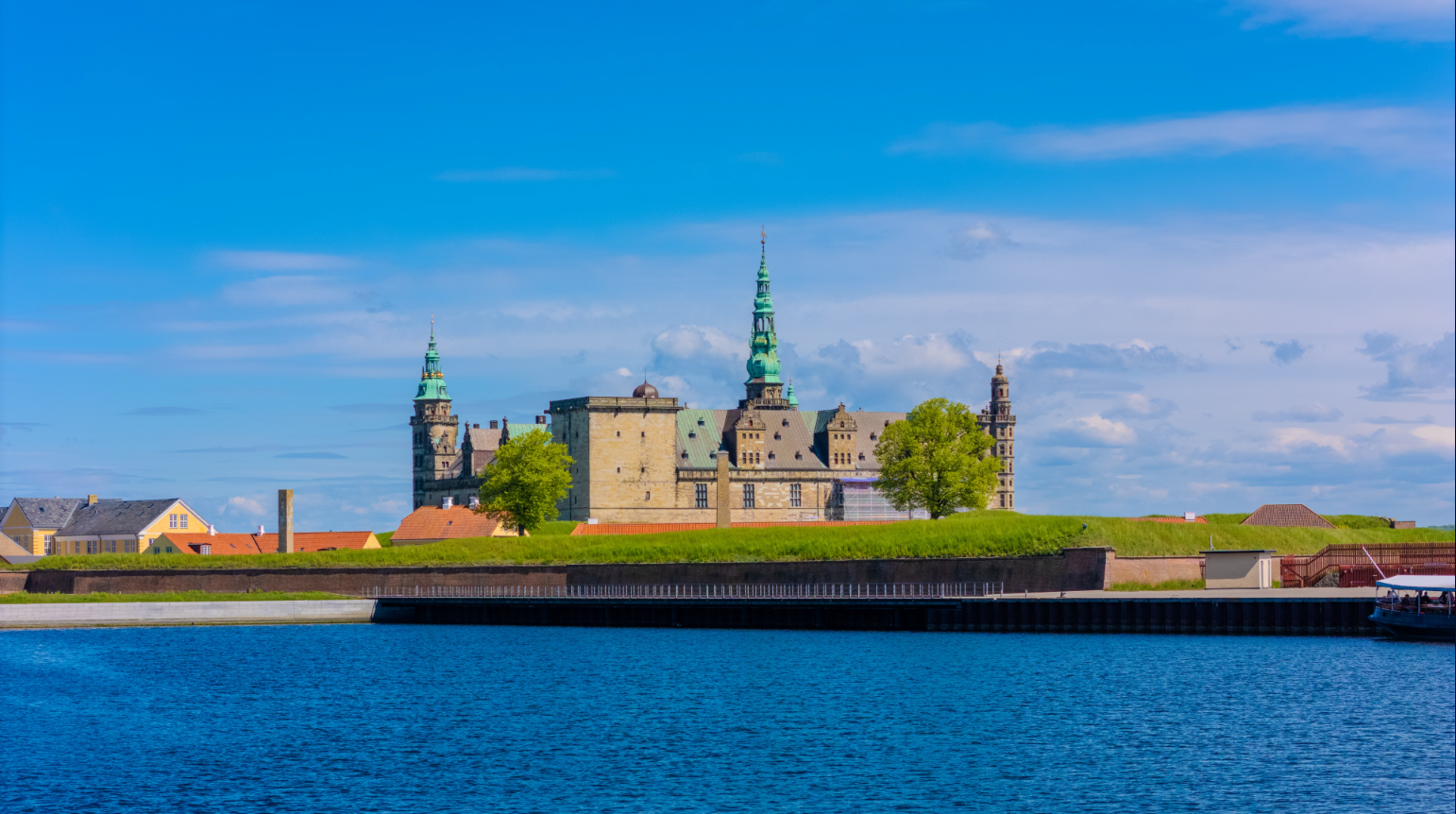
Denmark’s identity is reflected in an extraordinary collection of royal palaces, Viking monuments, medieval castles, colorful waterfronts and distinctive works of architecture. Many Danish landmarks tell stories extending hundreds or even thousands of years into the country’s past, while others have become internationally recognized symbols of modern Danish culture.
Some of the most famous Danish landmarks are concentrated in Copenhagen, including the Little Mermaid, Nyhavn, Amalienborg Palace and the Round Tower. Yet traveling beyond the capital reveals UNESCO-listed castles, Viking sites, dramatic chalk cliffs and historic cathedrals that provide a broader understanding of Denmark.
These 15 landmarks offer an excellent starting point for discovering the country's history, architecture and landscapes.
Also Read - Things to Do in Denmark: 15 Unmissable Denmark Attractions for Your Trip
This post contains affiliate links. If you choose to book through them, a small commission may be earned at no additional cost to you. Your support genuinely helps keep the blog running and allows continued creation of high-quality travel guides. Thank you for being here and supporting this journey.
1. The Little Mermaid – Copenhagen
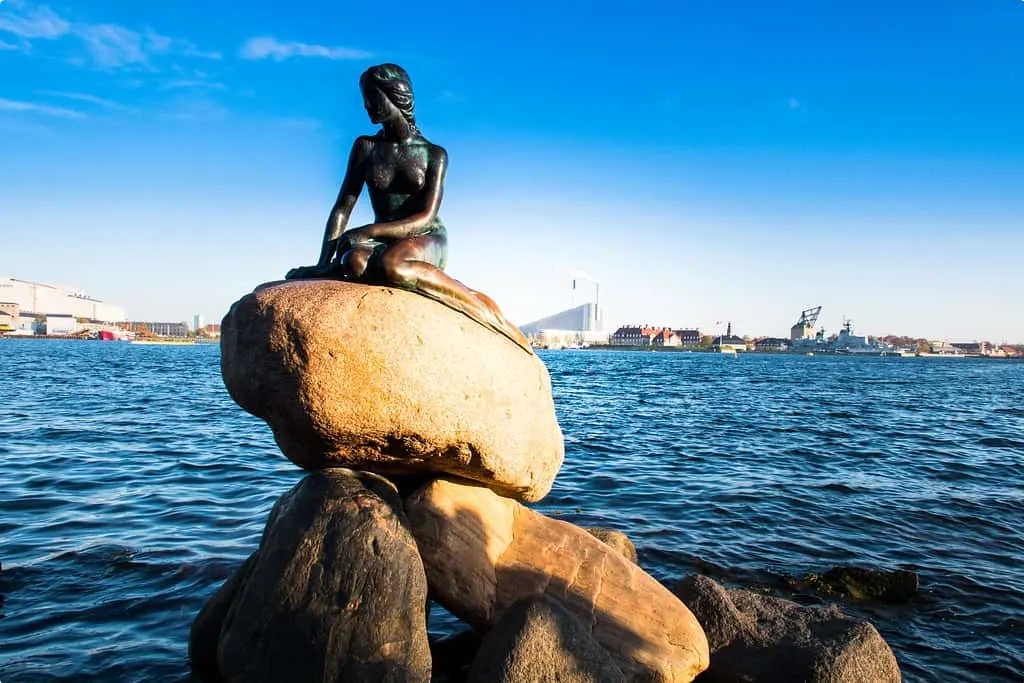
Among the most instantly recognizable Danish landmarks, the Little Mermaid has watched over Copenhagen's waterfront from Langelinie Pier since 1913. Sculptor Edvard Eriksen created the bronze figure, which was gifted to Copenhagen by brewer Carl Jacobsen and inspired by Hans Christian Andersen's famous fairy tale.
Although surprisingly small compared with many national monuments, the sculpture has become an enduring symbol of Copenhagen. Its waterfront setting makes it easy to incorporate into a walking route alongside Kastellet and other harbor attractions. Visitors interested in photography may prefer arriving early, when the area is generally quieter. More than a century after its installation, the statue remains one of Denmark's most internationally recognized cultural symbols.
2. Nyhavn – Copenhagen
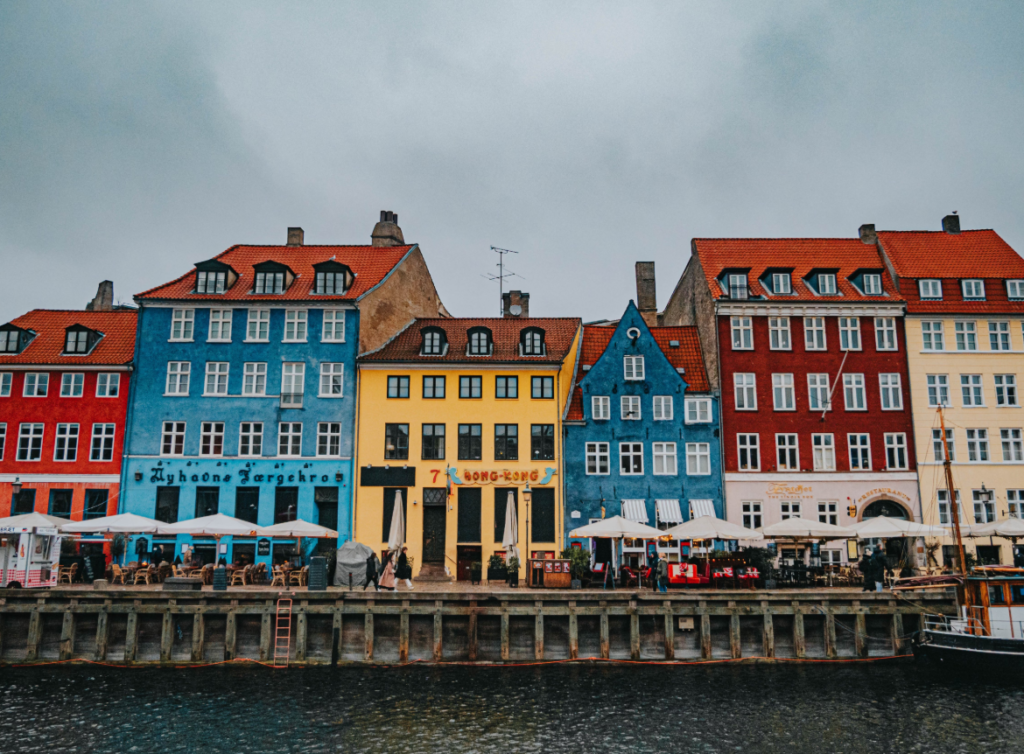
Nyhavn is one of the most photographed famous Danish landmarks, distinguished by colorful historic townhouses lining a canal filled with boats. Today, restaurants and cafés occupy much of the waterfront, creating one of Copenhagen's liveliest visitor districts.
The area is particularly attractive because it combines visual appeal with genuine historical connections. Hans Christian Andersen lived at several Nyhavn addresses during his life, strengthening the district's association with Danish literary heritage.
Visitors can walk along both sides of the canal, enjoy a waterfront meal or use Nyhavn as a starting point for a Copenhagen canal tour. Evening brings a different atmosphere as restaurants become busier and lights reflect across the water.
3. Kronborg Castle – Helsingør
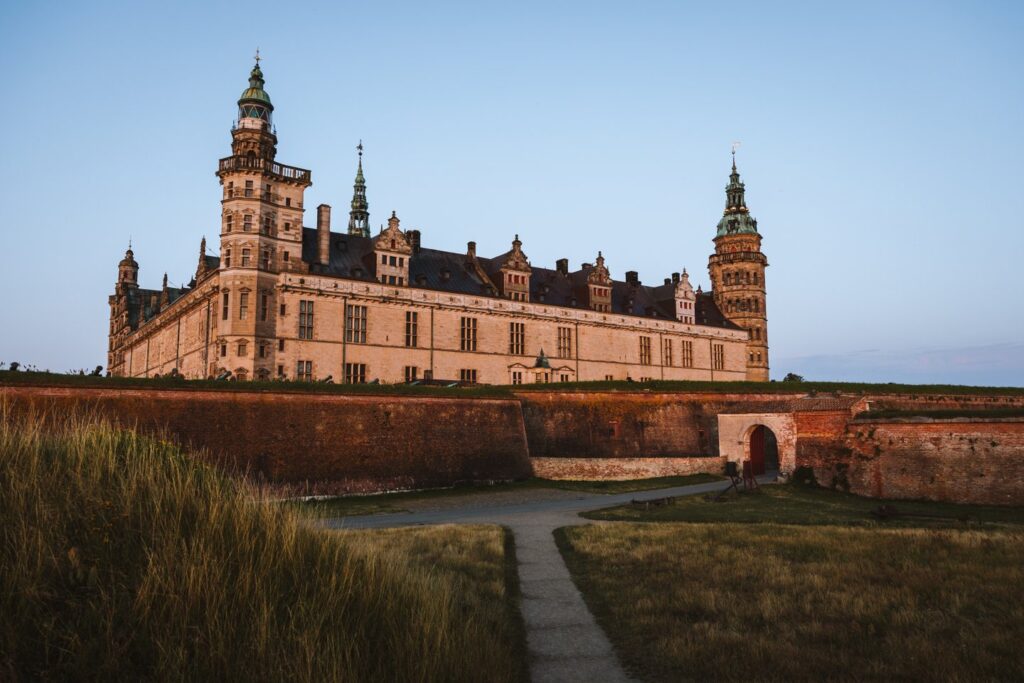
Kronborg Castle represents the grandeur of Renaissance-era Danish landmarks and occupies a strategically important position beside the Øresund between Denmark and Sweden. The fortress is internationally known as Elsinore, the setting associated with Shakespeare's Hamlet.
Beyond its literary fame, Kronborg played an important role in Denmark's control of maritime traffic through the Øresund. Today, visitors can explore royal chambers, fortifications and atmospheric underground spaces while looking across the water toward Sweden.
Its combination of architecture, military history and Shakespearean associations makes Kronborg one of Denmark's most rewarding castles. VisitCopenhagen describes it as one of Northern Europe's finest Renaissance castles, and it is recognized as a UNESCO World Heritage property.
4. Amalienborg Palace – Copenhagen
Amalienborg is one of the most important famous Danish landmarks connected with Denmark's monarchy. Four elegant palace buildings surround an octagonal square in Copenhagen's Frederiksstaden district, creating one of the capital's most impressive architectural ensembles.
The complex remains closely associated with Denmark's royal family, distinguishing it from historical palaces preserved exclusively as museums. Visitors frequently gather in the square to watch the Royal Guard, while parts of the complex provide opportunities to explore royal history.
Amalienborg is conveniently positioned close to Frederik's Church and Copenhagen's waterfront, making these attractions easy to combine during a walking itinerary. VisitCopenhagen identifies the palace as one of the highlights of Copenhagen's city center.
5. Christiansborg Palace – Copenhagen
Christiansborg is unique among Danish landmarks because of its long association with both royal and political power. The palace occupies Slotsholmen in central Copenhagen and today houses the Danish Parliament while also containing important royal spaces.
The present structure was built between 1907 and 1928 following earlier palaces destroyed by fire. Its tower rises 106 meters, making it Copenhagen's highest palace tower and providing extensive views over the capital.
Visitors can explore different parts of the complex and experience centuries of royal history. The location is also convenient for reaching other central attractions, including Nyhavn and the National Museum, making Christiansborg particularly easy to incorporate into a Copenhagen sightseeing itinerary.
6. The Round Tower – Copenhagen
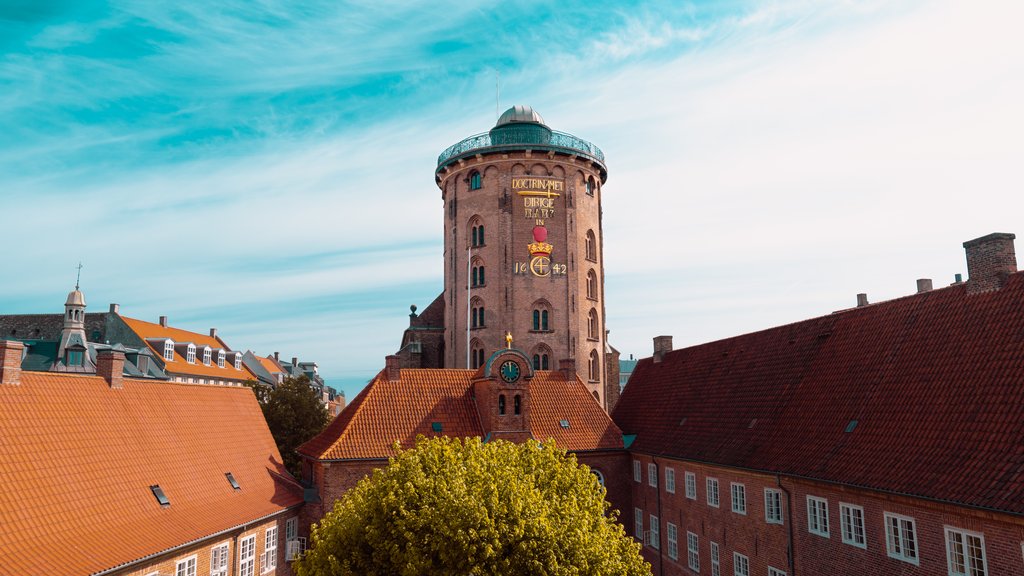
The Round Tower, or Rundetårn, is one of Copenhagen's most distinctive famous Danish landmarks. Completed in 1642 under King Christian IV, the structure was originally created as part of the Trinitatis Complex and became closely associated with Danish astronomy.
Instead of an ordinary staircase, much of the ascent follows a remarkable spiral ramp winding approximately 7½ times around the tower's hollow center. At the top, visitors reach an observation platform offering a panoramic view across Copenhagen's rooftops and spires.
The tower also contains Europe's oldest functioning observatory building. Its combination of science, architecture and city views makes it much more than simply an observation tower and demonstrates Denmark's long-standing interest in astronomy.
7. Rosenborg Castle – Copenhagen
Rosenborg Castle represents another royal chapter among Copenhagen's Danish landmarks. King Christian IV had the castle constructed between 1606 and 1634 as a pleasure palace, and its Renaissance architecture provides a striking contrast to the surrounding greenery.
The castle is especially important because it contains some of Denmark's most significant royal treasures. Visitors can explore historic interiors filled with decorative objects, portraits and furnishings before seeing the Danish Crown Jewels and royal crowns preserved in the basement.
Rosenborg's location beside the King's Garden makes it particularly enjoyable during spring and summer. Visitors can explore the castle before walking through one of Copenhagen's most historic green spaces.
8. Jelling Stones and Mounds – Jelling
Few famous Danish landmarks carry as much historical significance as the Jelling monuments. The archaeological complex includes monumental runestones, burial mounds and a church and is closely associated with Denmark's Viking Age and emergence as a unified kingdom.
The famous larger Jelling Stone was commissioned by King Harald Bluetooth and records his achievements, including the Christianization of the Danes. Because of its importance to Danish national history, it is sometimes popularly described in terms resembling Denmark's "birth certificate."
The surrounding burial mounds and church help visitors understand the transition between pagan Viking traditions and Christianity. For anyone interested in Denmark before its castles and Renaissance palaces, Jelling provides one of the country's most important historical experiences.
9. Roskilde Cathedral – Roskilde
Roskilde Cathedral stands among Denmark's most significant religious and royal Danish landmarks. Its soaring brick architecture dominates the historic city of Roskilde, west of Copenhagen.
The cathedral has an especially important connection with Denmark's monarchy because numerous Danish kings and queens are buried there. Centuries of additions have created an architectural record that reflects changing styles and royal traditions over time.
Roskilde itself makes an excellent historical excursion from Copenhagen. Visitors can combine the cathedral with the Viking Ship Museum, creating a day that moves from Viking maritime culture to centuries of Danish royal history. This concentration of nationally significant heritage makes Roskilde one of the most worthwhile destinations outside the capital.
10. Møns Klint – Møn
Not all famous Danish landmarks were created by architects. Møns Klint demonstrates the dramatic side of Denmark's natural landscape, with brilliant white chalk cliffs rising above the Baltic Sea.
Visitors can follow woodland trails to elevated viewpoints or descend toward the shoreline, where the contrast between white cliffs, green forest and blue water creates one of Denmark's most striking landscapes. The cliffs also preserve important geological evidence, making the area valuable for far more than its appearance.
Møns Klint is especially appealing to hikers, nature enthusiasts and photographers. Travelers should wear suitable footwear because exploring the cliffs can involve significant walking and steep stairways.
11. Frederik's Church – Copenhagen
Frederik's Church, commonly called the Marble Church, is among the most visually impressive religious Danish landmarks in Copenhagen. Its enormous dome forms an essential part of the city's skyline and creates a striking architectural relationship with nearby Amalienborg Palace.
The church is located within Copenhagen's elegant Frederiksstaden district, making it easy to visit alongside Amalienborg and the waterfront. VisitCopenhagen describes it as one of the city's most impressive churches and highlights the views available from its upper areas.
Inside, visitors encounter a vast domed space that feels markedly different from Copenhagen's castles and palaces. Its central location and distinctive architecture make it a worthwhile stop even on relatively short visits to the Danish capital.
12. Church of Our Saviour – Copenhagen
The Church of Our Saviour is one of the most unusual famous Danish landmarks, primarily because of its spectacular serpentine spire. The church stands in Christianshavn and has become one of the most recognizable elements of Copenhagen's historic skyline.
For adventurous visitors, the highlight is climbing toward the top. Approximately 400 steps lead upward, with the final section following the exterior spiral around the spire. The elevated position provides impressive views across Copenhagen. VisitCopenhagen notes that climbing the serpentine spire has been popular since it was inaugurated in 1752.
Travelers uncomfortable with heights should be aware that the exterior portion becomes increasingly exposed near the top, but the experience is memorable for confident climbers.
13. Tivoli Gardens – Copenhagen
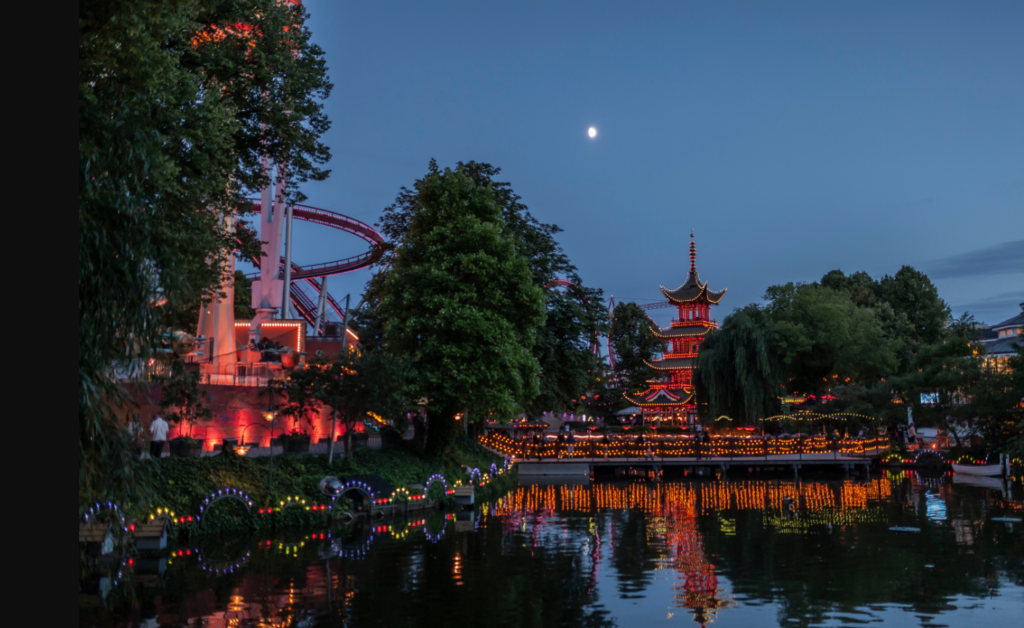
Tivoli Gardens differs from conventional historic Danish landmarks, yet it has become one of Denmark's defining visitor attractions. Located in central Copenhagen, Tivoli combines amusement rides, architecture, landscaped gardens, restaurants and live entertainment.
The attraction dates to the 19th century and has become deeply embedded in Copenhagen's cultural identity. VisitDenmark highlights it alongside Nyhavn and the Little Mermaid as one of Copenhagen's most beloved attractions.
Tivoli is particularly atmospheric after dark when thousands of lights illuminate the gardens and rides. Seasonal programs around Halloween and Christmas also transform its appearance, meaning repeat visitors can experience a noticeably different atmosphere depending on when they travel.
14. The Øresund Bridge
Connecting Denmark and Sweden, the Øresund Bridge represents a modern counterpart to Denmark's castles and Viking famous Danish landmarks. The combined bridge-and-tunnel connection links the Copenhagen region with Malmö in southern Sweden and has become a powerful visual symbol of Scandinavian connectivity.
For travelers, the crossing also makes a two-country itinerary remarkably straightforward. Malmö can be reached from Copenhagen without requiring a flight or lengthy ferry journey.
The bridge's enormous scale is particularly impressive when viewed from the Danish coastline or experienced during the journey between the two countries. Its contemporary engineering demonstrates how Denmark's modern landmarks can be just as significant to national identity as its historic towers and royal palaces.
15. The Black Diamond – Copenhagen
The Black Diamond provides a contemporary conclusion to Denmark's remarkable collection of Danish landmarks. This striking waterfront extension of the Royal Danish Library is distinguished by its dark, reflective exterior and angular modern design.
Its appearance changes with the weather and light as the polished façade reflects the harbor and surrounding cityscape. Inside, the building combines library functions with cultural and public spaces, demonstrating Denmark's reputation for integrating architecture, design and everyday civic life.
The waterfront position also makes the Black Diamond particularly easy to include in a Copenhagen harbor walk or canal journey. VisitDenmark's Copenhagen sightseeing guidance includes it among the notable buildings seen from the city's waterways.
Final Thoughts
Denmark's landmarks reveal a country shaped by Viking heritage, monarchy, literature, religion, maritime history and contemporary Scandinavian design. Copenhagen contains an extraordinary concentration of recognizable sights, from the Little Mermaid and colorful Nyhavn to Rosenborg, Christiansborg and the Round Tower.
Yet exploring beyond the capital adds essential depth to the experience. Kronborg introduces travelers to Renaissance history and the world associated with Hamlet, while Jelling reveals Denmark's Viking foundations and Møns Klint showcases the country's natural heritage.
The most rewarding itinerary therefore combines several types of Danish landmarks rather than focusing exclusively on castles or Copenhagen. Exploring both historic monuments and famous Danish landmarks of more recent centuries provides a richer picture of how Denmark developed from a Viking kingdom into the modern Scandinavian nation visitors experience today.

Comments 0
Only approved comments are shown here.