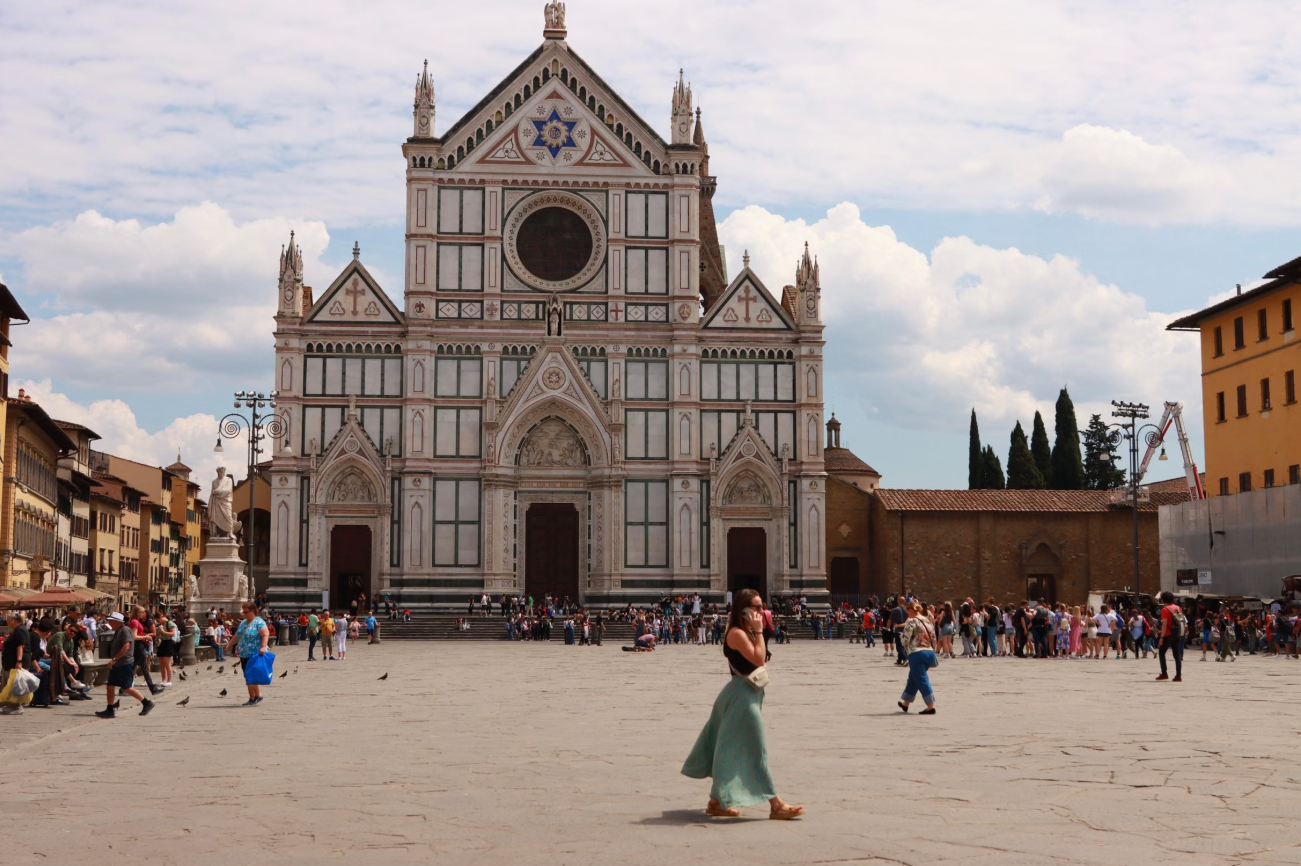
Santa Croce Florence is one of the most remarkable historic and cultural attractions in Tuscany’s capital. Located in the atmospheric Piazza di Santa Croce, this monumental Franciscan complex combines Gothic architecture, Renaissance masterpieces, historic chapels, monumental tombs and centuries of religious and intellectual history. For visitors interested in art, architecture and Italian culture, the Basilica of Santa Croce in Florence offers an exceptional opportunity to experience several important periods of European history within one site.
Often described as the “Pantheon of Italian glories”, the complex contains memorials to celebrated figures including Michelangelo, Galileo Galilei, Machiavelli, Rossini, Foscolo and Alfieri. It also contains important works connected with Giotto, Donatello, Cimabue and Brunelleschi. Beyond the main church, visitors can explore the Pazzi Chapel, cloisters, Refectory and Museo dell’Opera di Santa Croce.
This post contains affiliate links. If you choose to book through them, a small commission may be earned at no additional cost to you. Your support genuinely helps keep the blog running and allows continued creation of high-quality travel guides. Thank you for being here and supporting this journey.
Also Read - Gardens in Florence: 15 Best Gardens & Botanical Gardens
History of Santa Croce Florence
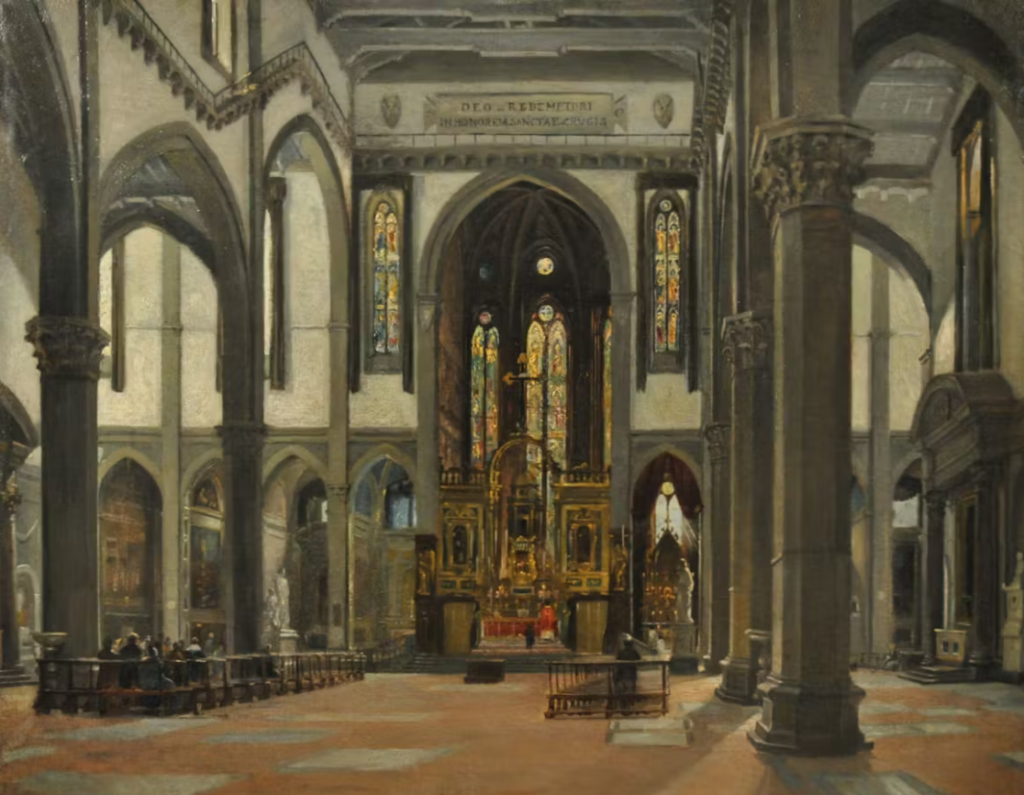
The history of Santa Croce Florence is closely connected with the arrival and expansion of the Franciscan order in the city. According to the Opera di Santa Croce, followers of Saint Francis reached Florence around 1209. The Franciscans settled north of the Arno, in an area outside the older city centre that was prone to flooding.
An earlier Franciscan church was constructed between 1252 and 1267, but the rapidly growing religious community soon needed a much larger building. The foundation of the present church dates to 1294 or 1295, with the celebrated Florentine architect Arnolfo di Cambio associated with its design. Construction continued throughout the fourteenth century, and the church was eventually consecrated in 1443 by Pope Eugene IV.
The building was subsequently modified several times. During the sixteenth century, Giorgio Vasari carried out major alterations as Florentine churches were adapted following the Council of Trent. The present exterior façade, meanwhile, is substantially nineteenth-century. It was completed in the 1860s in a neo-Gothic style, giving the building the distinctive appearance visitors see today.
Architecture of the Basilica of Santa Croce in Florence
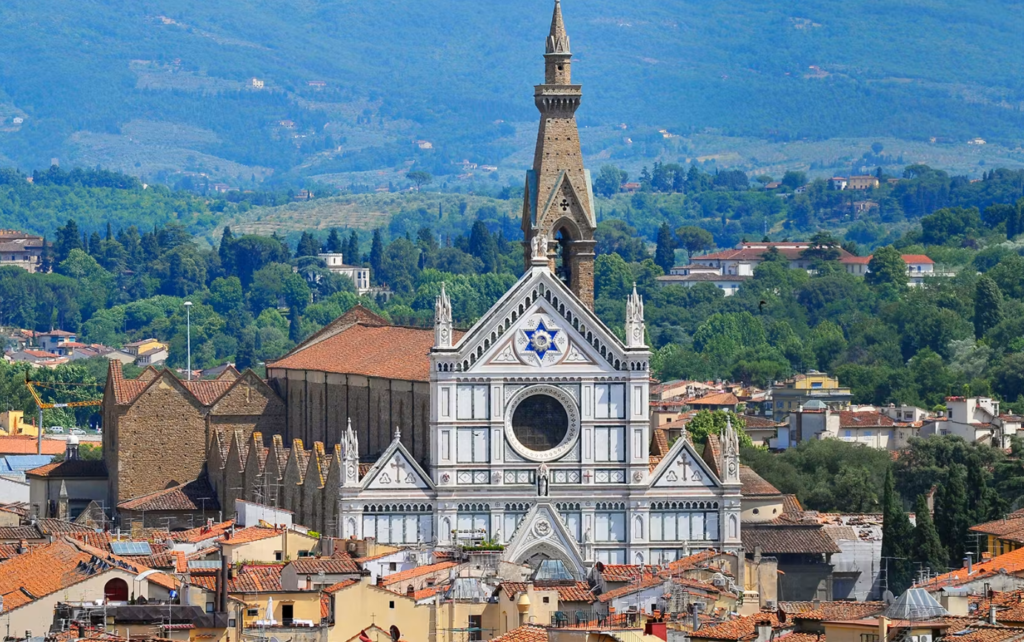
The Basilica of Santa Croce in Florence is one of Italy’s major Gothic churches. Its expansive interior features a long nave, pointed arches, side aisles, timber roof structures and numerous chapels. The scale reflects the needs of the Franciscan community and the large congregation that developed around it.
One of the most interesting aspects of the basilica is the way different historical periods coexist. The Gothic architectural structure provides the foundation, while medieval frescoes, Renaissance sculptures, later memorials and nineteenth-century alterations demonstrate how the building continually evolved.
This makes the Basilica of Santa Croce in Florence more than a static historical monument. It is effectively a visual record of Florence’s changing religious, artistic and social priorities.
Giotto’s Frescoes
For many art lovers, one of the principal reasons to visit Santa Croce Florence is the extraordinary collection of fourteenth-century frescoes associated with Giotto.
The Bardi and Peruzzi Chapels are particularly significant. Giotto’s innovative approach to storytelling, spatial representation and human emotion helped transform European painting. The Bardi Chapel illustrates episodes from the life of Saint Francis, while the Peruzzi Chapel contains scenes associated with Saint John the Baptist and Saint John the Evangelist.
These frescoes are important not simply because of their age. They demonstrate a major transition in Western art, with figures presented with greater physical presence, emotional expression and narrative clarity.
The Bardi Chapel has also undergone a major restoration programme. Florence’s official tourism information states that it is scheduled to reopen permanently to visitors on 12 September 2026 following restoration work that began in 2022.
Michelangelo, Galileo and Other Famous Tombs
Santa Croce Florence is internationally famous for its monumental tombs and memorials. The church contains more than 200 tombs, making it one of the most important burial and commemorative sites in Italy. Among the most famous are monuments dedicated to Michelangelo, Galileo, Machiavelli, Rossini, Foscolo and Alfieri.
Michelangelo’s tomb is particularly impressive because of its elaborate sculptural design. Galileo’s monument commemorates one of history’s most influential scientists, while Machiavelli’s memorial connects the basilica with Florence’s political and intellectual heritage.
It is important to distinguish between actual burials and memorials. Dante Alighieri, for example, is commemorated by a cenotaph in the basilica, although his actual burial place is Ravenna.
This collection of memorials explains why the Basilica of Santa Croce in Florence has acquired its famous association with the “Pantheon of Italian glories.” The building functions not only as a religious space but also as a place of national cultural memory.
Also Read - Art Museums in Italy: 15 Famous Art Museums to Visit
Donatello and Cimabue
The artistic importance of Santa Croce Florence extends well beyond Giotto. The complex contains important works associated with Donatello, including the Annunciation and Crucifix.
Another major highlight is Cimabue’s famous Crucifix. The work was severely damaged during Florence’s devastating 1966 flood and is now displayed in the sacristy. Its history demonstrates both the vulnerability of cultural heritage and the enormous effort required to preserve historic artworks.
The combination of medieval painting, Gothic architecture and Renaissance sculpture allows visitors to understand Florence’s artistic development rather than viewing individual masterpieces in isolation.
The Pazzi Chapel
The Pazzi Chapel is one of the essential attractions within the Basilica of Santa Croce in Florence complex. Designed by Filippo Brunelleschi, it is regarded as an important masterpiece of Renaissance architecture.
The chapel contrasts dramatically with the large Gothic church. Its design emphasises mathematical proportion, symmetry, geometric clarity and restrained decoration. These qualities reflect the Renaissance fascination with classical architecture and harmonious proportions.
For architecture enthusiasts, the Pazzi Chapel is particularly valuable because it demonstrates how Renaissance designers developed a different visual language from the medieval Gothic tradition surrounding it.
Cloisters and the Museo dell’Opera di Santa Croce
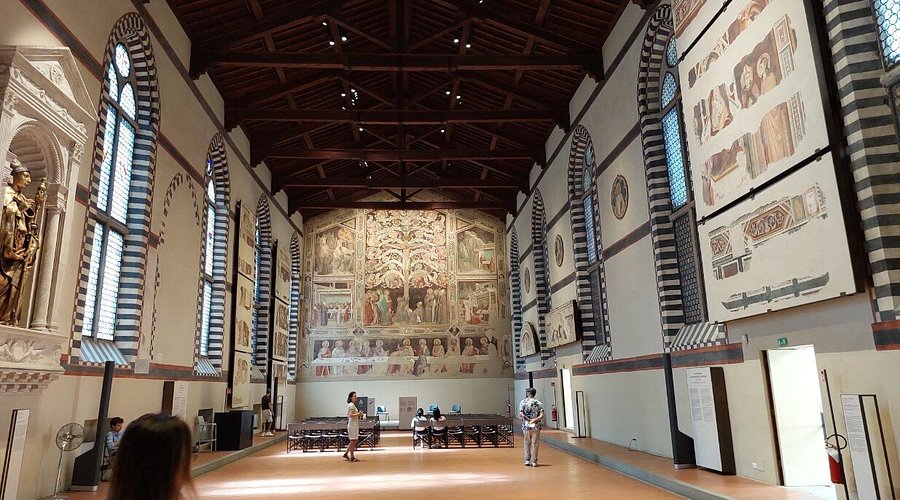
A visit to Santa Croce Florence should not stop at the main nave. The monumental complex also includes two cloisters and the Museo dell’Opera di Santa Croce.
The museum is built around these cloister spaces and includes the historic Refectory. One of its principal artistic features is Taddeo Gaddi’s large fresco depicting the Last Supper and Tree of Life. The collection also contains works associated with Donatello, Orcagna and Domenico Veneziano.
The cloisters provide a quieter atmosphere and help visitors understand the relationship between the church, convent and Franciscan community. They are especially worthwhile for travellers who want to explore the complex beyond its most famous memorials.
Santa Croce and the 1966 Florence Flood
One of the most important chapters in the modern history of Santa Croce Florence is the catastrophic flood of 4 November 1966.
Floodwater devastated numerous buildings, artworks and historic collections throughout Florence. At Santa Croce, Cimabue’s Crucifix suffered particularly severe damage. The disaster subsequently became a major catalyst for international cooperation in art conservation.
Today, restoration remains part of the story of Santa Croce. Visitors are therefore seeing not only medieval and Renaissance heritage but also the outcome of decades of conservation science and painstaking restoration.
Piazza Santa Croce
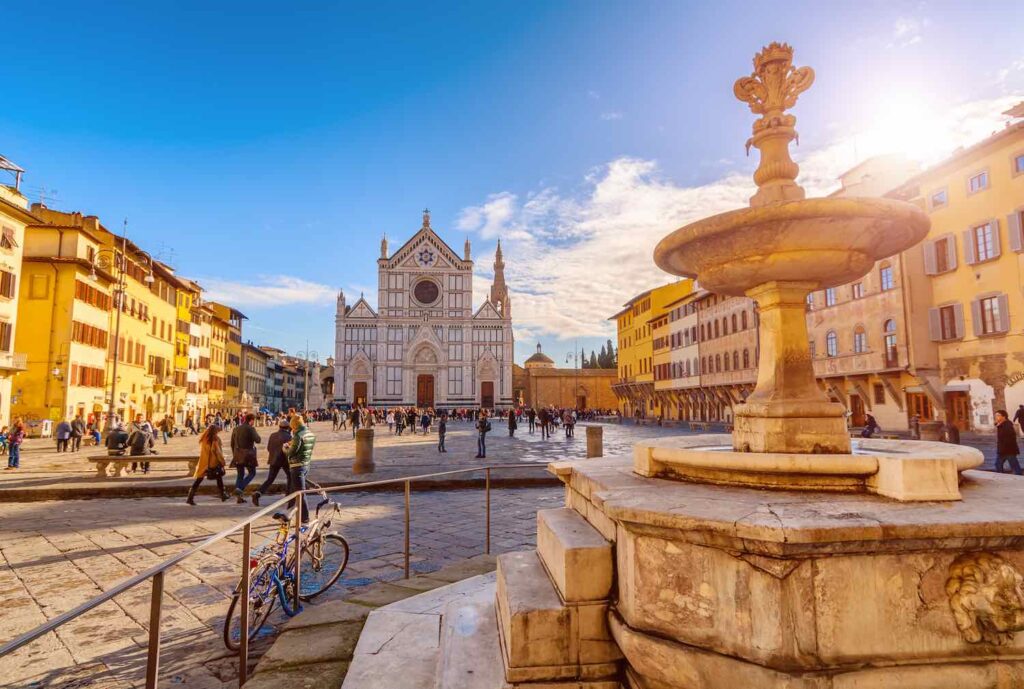
The experience of the Basilica of Santa Croce in Florence begins before entering the building. Piazza Santa Croce is one of the city’s most recognisable public squares and has a history extending back to the medieval period.
The square developed alongside the enlargement of the Franciscan church. Historically it hosted preaching, public gatherings, horse rides and tournaments. The buildings surrounding it gradually acquired their present character between the sixteenth and seventeenth centuries. The neo-Gothic church façade and the nineteenth-century monument to Dante contribute to its current appearance.
Today, the piazza is also a lively meeting point surrounded by cafés, restaurants and historic streets.
Visiting the Basilica of Santa Croce in Florence
Current official visitor information lists opening hours from Monday to Saturday as 9:30 am to 5:30 pm, with final admission at 5:00 pm. On Sundays and religious holidays, the complex generally opens from 2:00 pm to 5:30 pm. Christmas Day is listed as a closure. Because religious services and special events can affect access, visitors should check the official schedule immediately before travelling.
The current standard admission price listed by Florence’s official tourism portal is €10. Online booking is recommended by the Opera di Santa Croce, with a €1 booking fee for each online ticket.
Visitors attending worship can enter without paying admission through the designated entrances. The basilica continues to function as an active religious site, so visitors should dress respectfully and be aware that religious activities can occasionally influence the visitor route.
Accessibility
The Basilica of Santa Croce in Florence provides accessibility through Largo Bargellini, where a ramp connects the pavement with the church entrance. The cloisters, Pazzi Chapel and museum use a separate route, and visitors with mobility requirements should check the latest arrangements before arrival. A wheelchair is also available on request from the ticket office.
How Long Should You Spend at Santa Croce?
Allow at least 60 to 90 minutes for a meaningful visit. Art and architecture enthusiasts may prefer two hours or longer, particularly if they want to explore the museum, cloisters and Pazzi Chapel in addition to the church.
A useful route begins with the main nave and major memorials before continuing to the Giotto chapels. From there, explore the Pazzi Chapel, cloisters and museum. Reading the information panels can add considerable depth because many works are connected to particular families, religious orders and historical events.
What to See Near Santa Croce Florence
The location makes Santa Croce Florence easy to include within a wider walking itinerary. Piazza della Signoria, the Uffizi Gallery, the Bargello Museum and Florence Cathedral are all within reasonable walking distance.
The surrounding Santa Croce neighbourhood is also worth exploring independently. Smaller streets lead to cafés, restaurants, artisan businesses and less crowded corners of the historic centre. This makes the area particularly suitable for combining cultural sightseeing with lunch or an evening meal.
Why Visit Santa Croce?
The Basilica of Santa Croce in Florence is exceptional because it brings together religion, art, architecture, science and national memory in one monumental complex.
Its Giotto frescoes reveal the development of medieval painting. Brunelleschi’s Pazzi Chapel demonstrates Renaissance architectural principles. Donatello and Cimabue represent different stages in Florentine artistic development, while the tombs of Michelangelo, Galileo and other celebrated figures connect the building with Italy’s intellectual and cultural history.
Ultimately, Santa Croce Florence should not be treated simply as another church on a Florence sightseeing list. It is a living historical complex whose architecture and artworks document centuries of change. For anyone interested in Renaissance Florence, Gothic architecture, Italian art or the personalities who shaped European culture, the Basilica of Santa Croce in Florence deserves a prominent place on any Florence itinerary.

Comments 0
Only approved comments are shown here.