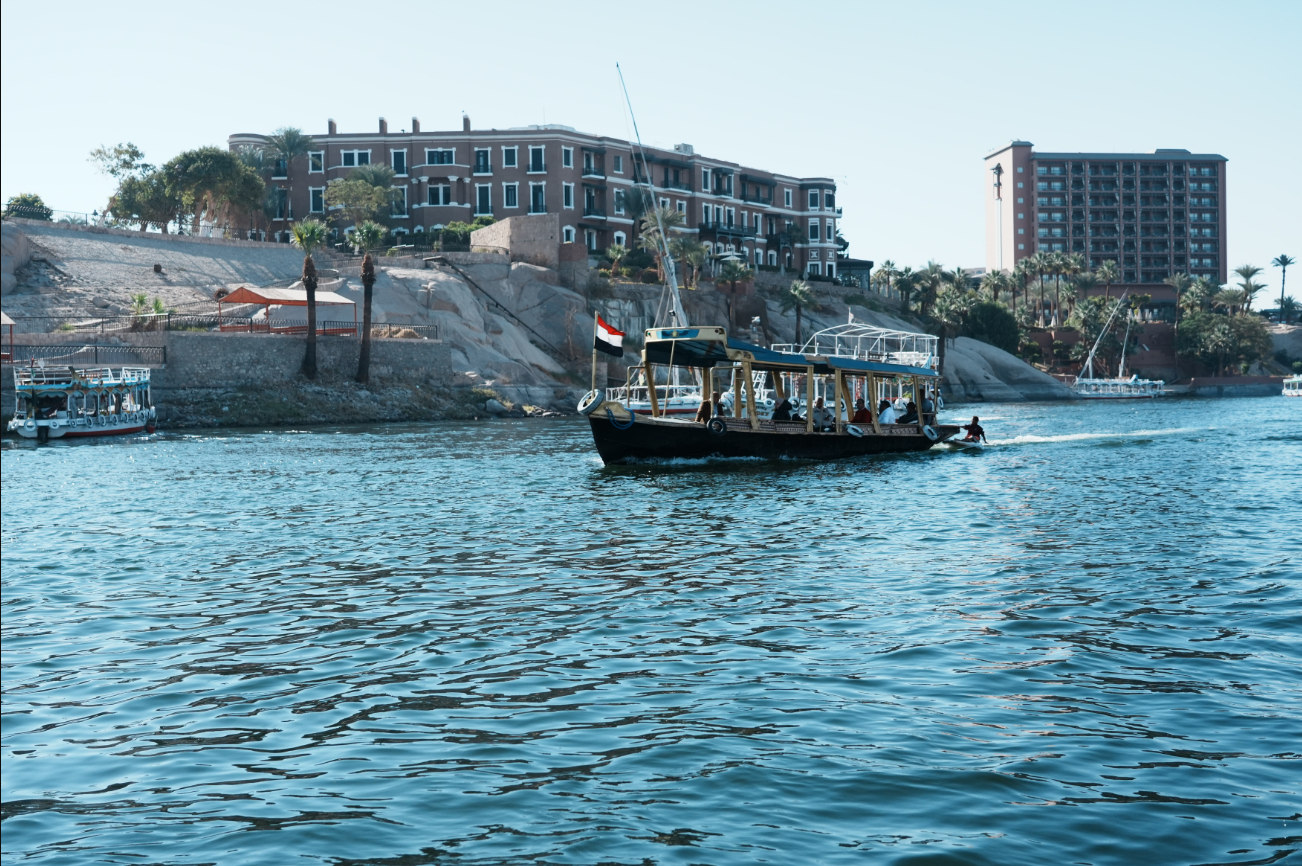
A Nile cruise is one of the most memorable ways to experience Egypt, combining spectacular ancient monuments with the slower rhythm of life along the country’s legendary river. Rather than constantly changing hotels and traveling long distances by road, passengers can unpack once and sail between archaeological destinations while enjoying views of palm trees, farmland, desert landscapes and traditional communities.
The classic Nile river cruise operates between Luxor and Aswan, where many of Upper Egypt’s greatest historical treasures are concentrated. Egypt's official tourism platform states that these journeys generally take four or five days depending on the direction of travel, with most conventional vessels providing swimming pools and sundecks.
For history lovers, a Nile river cruise Egypt itinerary can bring together Karnak, Luxor Temple, the Valley of the Kings, Edfu, Kom Ombo and Aswan within one carefully organized journey.
Also Read - Things to Do in Cairo Egypt: 15 Unmissable Cairo Egypt Attractions
This post contains affiliate links. If you choose to book through them, a small commission may be earned at no additional cost to you. Your support genuinely helps keep the blog running and allows continued creation of high-quality travel guides. Thank you for being here and supporting this journey.
1. The Classic Route Runs Between Luxor and Aswan
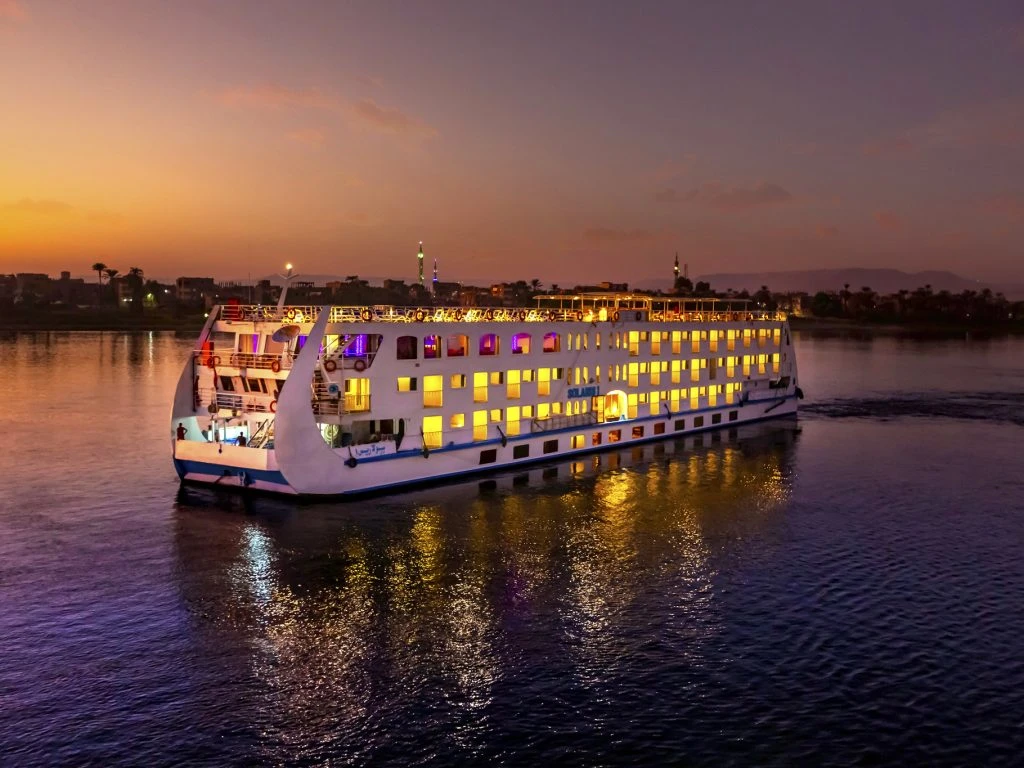
The most popular Nile cruise route connects Luxor with Aswan in Upper Egypt. This stretch of river is particularly attractive because many extraordinary archaeological sites are positioned in or near the cities and communities along the route. According to Egypt's official tourism platform, cruises between Luxor and Aswan normally require four to five days, depending on the direction of travel.
A typical journey may begin with Luxor's East and West Bank monuments before sailing south toward Edfu and Kom Ombo and eventually reaching Aswan. Travelers can also complete the journey in the opposite direction. The relatively compact itinerary makes this route ideal for visitors wanting to experience several important historical locations without repeatedly packing, checking into hotels and arranging lengthy road transfers.
2. Luxor Provides an Extraordinary Starting Point
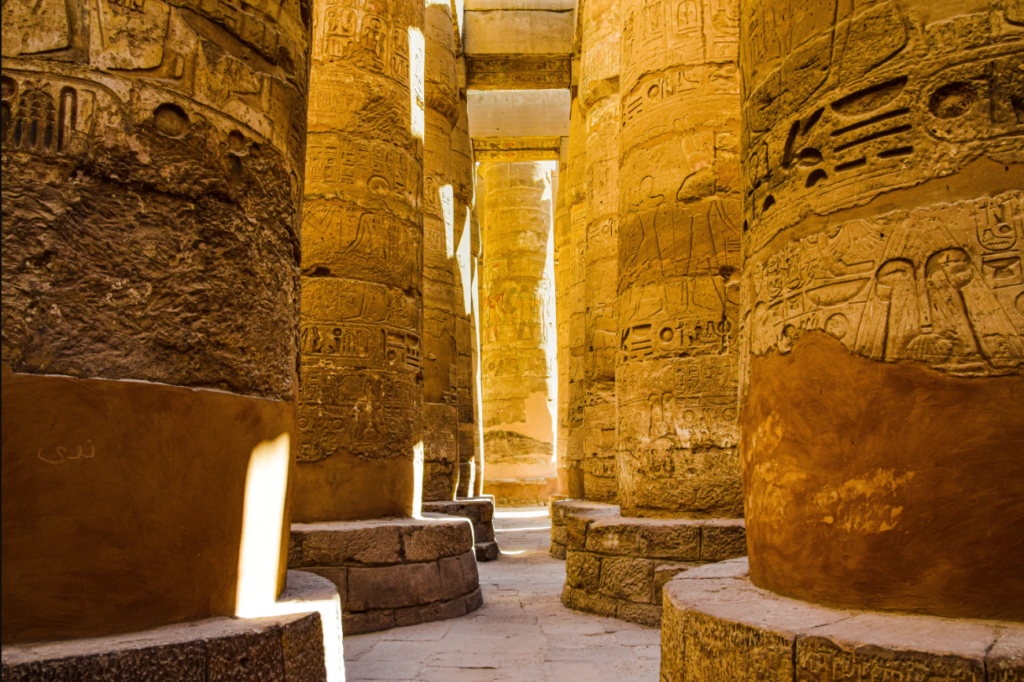
Beginning a Nile river cruise in Luxor places travelers within one of Egypt's richest archaeological landscapes. Ancient Thebes was once one of the most important cities of pharaonic Egypt, and its surviving monuments are divided between the eastern and western sides of the Nile.
Typical cruise excursions can include the vast Karnak Temple complex and Luxor Temple on the East Bank. Across the river, the West Bank contains the Valley of the Kings, the mortuary temple associated with Queen Hatshepsut and the famous Colossi of Memnon.
Many organized itineraries incorporate these attractions before or during embarkation. Spending an additional night in Luxor before boarding can be worthwhile for travelers who prefer exploring these enormous archaeological sites at a less hurried pace.
3. Edfu Is One of the Journey's Major Highlights
A Nile river cruise Egypt itinerary commonly includes Edfu, situated between Luxor and Aswan. Its principal attraction is the Temple of Horus, one of Egypt's most impressive surviving ancient temple complexes. Dedicated to the falcon-associated god Horus, the monument dates largely from Egypt's Ptolemaic period. Its monumental pylons, courtyards, columns, reliefs and enclosed sanctuary provide travelers with an opportunity to appreciate the scale and complexity of an ancient Egyptian religious complex.
Many cruise schedules arrange an excursion while the ship is docked nearby before continuing along the river. Because sailing schedules and lock crossings can influence exact arrival times, daily itineraries occasionally change. Travelers should therefore treat published cruise schedules as general plans rather than expecting every stop to occur at precisely the advertised hour.
4. Kom Ombo Offers an Unusual Double Temple
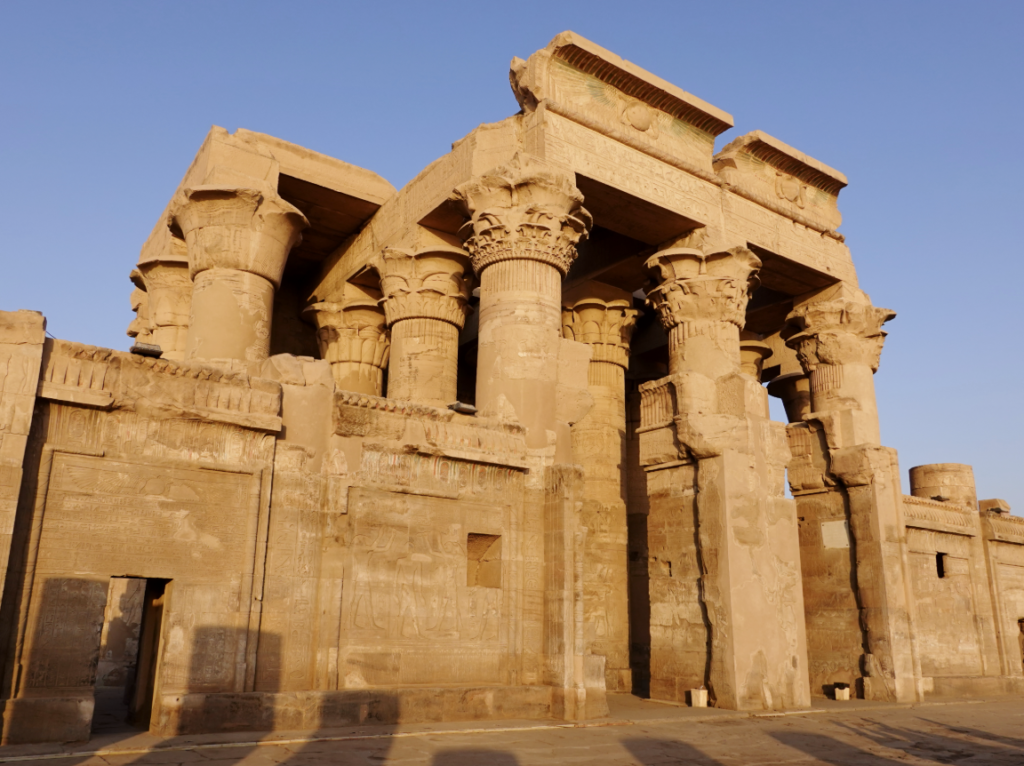
Another fascinating stop on a typical Nile cruise is Kom Ombo, where an extraordinary temple occupies an elevated position beside the river. What distinguishes the site is its unusual double design. Different sections were associated with Sobek, the crocodile god, and Haroeris, a form of Horus. This architectural arrangement resulted in duplicated entrances, halls and sacred areas that give the complex a distinctive symmetrical character. Its location close to the Nile also makes approaching or leaving the site by boat particularly memorable.
Many standard Luxor-Aswan itineraries combine Edfu and Kom Ombo as major intermediate archaeological stops. Visitors should look carefully at the temple's wall reliefs and inscriptions rather than viewing it only as a brief stop between the larger destinations of Luxor and Aswan.
5. Aswan Brings a More Relaxed Atmosphere
Reaching Aswan provides a noticeably different atmosphere during a Nile river cruise. The river landscape becomes especially beautiful around rocky islands, granite formations and traditional sailing boats. Typical sightseeing can include Philae Temple, which was relocated to Agilkia Island during the international campaign to protect Nubian monuments threatened by rising waters associated with the Aswan High Dam. Travelers may also explore other attractions around the city or take a traditional felucca trip.
Aswan is closely associated with Nubian heritage, adding another cultural dimension to an itinerary heavily focused on pharaonic monuments. Travelers with additional time can extend their journey southward toward Abu Simbel or take a Lake Nasser cruise. Egypt's official Luxor guide notes that three-to-four-night Lake Nasser cruises from Aswan can visit Nubian monuments on the way toward Abu Simbel.
6. Choose Between Cruise Ships and Dahabeyas
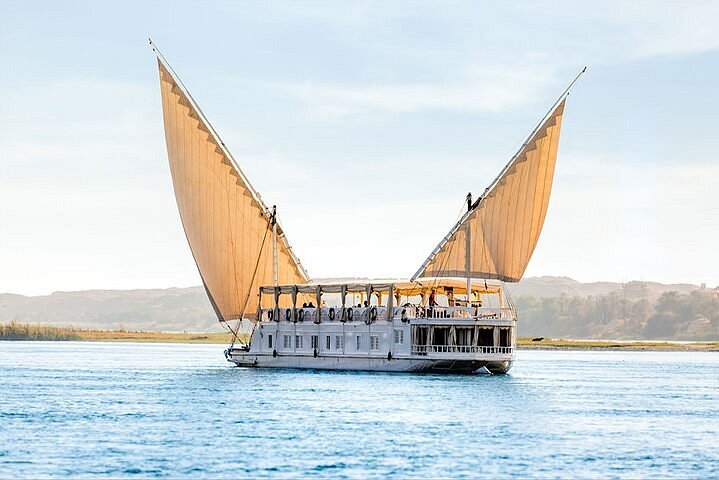
Selecting the right vessel can significantly influence a Nile river cruise Egypt experience. Conventional cruise ships generally accommodate more passengers and typically provide comfortable cabins, restaurants, lounges, swimming pools and sundecks. Egypt's official tourism authority notes that most standard Nile cruise vessels have pools and sundecks, creating opportunities to relax between archaeological excursions.
Travelers wanting something smaller can consider a dahabeya, a traditional-style sailing vessel offering a quieter and more intimate journey. Egypt's tourism authority specifically describes private dahabeyas as an option for travelers seeking an exclusive experience between Luxor and Aswan, with opportunities to make less conventional stops. Dahabeyas are particularly attractive to couples and slow-travel enthusiasts, while larger ships can provide more extensive onboard facilities.
7. October to April Offers Comfortable Sightseeing Weather
Weather is an important consideration when planning a Nile cruise, particularly because many excursions involve walking through large archaeological complexes with limited shade. October through April is generally regarded as the most comfortable period for cruising and sightseeing in Upper Egypt, with temperatures considerably more manageable than during peak summer. Multiple specialist travel sources identify this cooler period as particularly suitable for Nile itineraries.
December and the Christmas-New Year period can attract substantial visitor demand, while shoulder periods such as October-November and March-April can provide an appealing combination of comfortable weather and somewhat different crowd levels. Summer travel is still possible and can sometimes provide lower prices, but daytime temperatures in Luxor and Aswan can become extremely demanding during prolonged outdoor archaeological visits.
8. Most Cruises Include Meals and Guided Excursions
A conventional Nile river cruise typically combines transportation, accommodation and meals, while many packages also include guided sightseeing. Exact inclusions vary substantially between cruise operators, so travelers should examine booking conditions carefully. Some packages include an Egyptologist guide and admission to scheduled attractions, whereas others charge separately for entrance tickets or optional excursions. Onboard meals frequently use buffet-style service and combine Egyptian dishes with international choices. Evening entertainment may also be offered on certain vessels.
Travelers should specifically check whether beverages, Wi-Fi, airport or railway transfers, tipping, premium tomb admissions and excursions such as Abu Simbel are included. Comparing only the headline cruise price can therefore be misleading. A seemingly inexpensive booking can ultimately become considerably more expensive when sightseeing and other essential services are added separately.
9. Cruise Lengths Vary According to Direction and Style
A typical Nile river cruise Egypt journey does not require several weeks. Egypt's official tourism information states that the Luxor-Aswan journey generally takes around four to five days depending on direction. Some commercial itineraries commonly operate for five days and four nights from Luxor toward Aswan, while the reverse journey can be structured as four days and three nights. Longer itineraries are available for travelers who want additional relaxation or more extensive sightseeing.
Dahabeya journeys may also follow slower schedules because the experience places greater emphasis on traditional sailing and quieter stops. When comparing packages, count actual sightseeing days rather than looking only at the advertised number of nights, since embarkation and disembarkation days can contain relatively limited cruising time.
10. A Nile Journey Combines History with Slow Travel
What ultimately distinguishes a Nile cruise from an ordinary sightseeing tour is the transition between intense archaeological exploration and peaceful time on the water. In the morning, travelers might walk through a temple complex built thousands of years ago; several hours later, they can sit on deck watching agricultural fields, palm-lined riverbanks and small settlements pass by.
The journey therefore becomes more than transportation between Luxor and Aswan. It recreates, in a modern form, the relationship between travel and the river that has shaped Egyptian civilization for millennia. Travelers who prefer an even slower experience can choose a dahabeya, which Egypt's tourism authority recommends for a more intimate journey with opportunities for less conventional stops. This balance between monumental history and relaxed sailing makes the experience particularly memorable.
What Does a Typical Nile Cruise Itinerary Look Like?
A standard Luxor-to-Aswan journey may follow a structure similar to this:
| Day | Typical Experience |
|---|---|
| Day 1 | Embark in Luxor; Karnak and Luxor Temple |
| Day 2 | Valley of the Kings, Hatshepsut Temple and West Bank |
| Day 3 | Edfu Temple and sailing toward Kom Ombo |
| Day 4 | Kom Ombo and arrival in Aswan |
| Day 5 | Aswan sightseeing and disembarkation |
The exact sequence varies by operator, vessel, sailing conditions and embarkation direction. Commercial itineraries commonly include Edfu and Kom Ombo between Luxor and Aswan.
What Should You Pack?
Lightweight and breathable clothing is important for daytime excursions, while a light jacket can be useful during cooler winter evenings. Comfortable walking shoes are essential because temple floors and archaeological sites can involve uneven surfaces.
Travelers should also consider packing:
- Sun hat and sunglasses
- High-SPF sunscreen
- Reusable water bottle
- Comfortable walking footwear
- Lightweight modest clothing
- Small day bag
- Camera or smartphone
- Portable power bank
- Light evening layer during winter
- Personal medication and basic travel essentials
Respectful clothing is particularly advisable when excursions include religious or community locations.
Final Thoughts
Traveling through Upper Egypt by river provides an experience that is difficult to replicate through road trips alone. The greatest attraction is not simply reaching Luxor, Edfu, Kom Ombo or Aswan, but watching the landscape gradually change between these historic destinations.
Days can begin among colossal columns and ancient tombs before ending on an open deck as villages, farmland and desert scenery pass quietly along the riverbanks. Choosing between a larger modern vessel and an intimate dahabeya allows travelers to tailor the experience according to their preferred level of comfort, privacy and pace.
For first-time visitors, the classic Luxor-Aswan route provides an especially practical introduction. It brings together many of Upper Egypt's defining monuments while leaving enough time between excursions to appreciate the river itself. Egypt's official tourism platform confirms that this classic journey generally takes only four to five days, making it relatively easy to combine with Cairo, Giza, Abu Simbel or a Red Sea stay.

Comments 0
Only approved comments are shown here.