
Thailand is home to some of the most incredible National Parks in Thailand, where the beauty of nature meets diverse ecosystems. From lush jungles in the north to pristine beaches in the south, these parks offer everything from trekking and wildlife spotting to snorkeling in crystal-clear waters. Whether you're an adventurer seeking thrills or someone looking to unwind in serene surroundings, the National Parks in Thailand are the perfect escape. With unique flora and fauna, each park promises an unforgettable experience, allowing you to explore the heart of Thailand's natural beauty. Ready to discover these natural wonders? Let’s dive into the top 8 national parks that will leave you in awe!
This post contains affiliate links. If you choose to book through them, a small commission may be earned at no additional cost to you. Your support genuinely helps keep the blog running and allows continued creation of high-quality travel guides. Thank you for being here and supporting this journey.
1. Ao Phang Nga National Park

Ao Phang Nga National Park is one of Thailand's most stunning marine parks, offering a magical escape into nature. Located in the Phang Nga province, nestled between Phuket and Krabi in Southern Thailand, this park is famous for its 42 karst islands, limestone hills, caves, and crystal-clear lagoons. Among its many highlights is Ko Khao Phing Kan, better known as 'James Bond Island,' made famous by the 1974 film The Man With the Golden Gun. The striking Ko Tapu Rock, an iconic symbol of the park, rises dramatically out of the water.
This national park is a haven for wildlife, including reptiles like Bengal monitor lizards, flying lizards, and banded sea snakes. Visitors can also spot various mammals, such as crab-eating macaques and dusky langurs. For a truly immersive experience, kayaking and sea-canoeing are highly recommended to explore hidden mangrove swamps and inaccessible islands.
The park is also home to Ko Panyi, a unique Muslim village built entirely on stilts. Entrance fees are as follows: THB 300 for non-Thai adults, THB 100 for non-Thai children, THB 60 for Thai adults, and THB 30 for Thai children.
Also Read - National Parks in China: A Complete Guide to China's Most Spectacular Natural Landscapes
2. Mu Ko Similan National Park

Mu Ko Similan National Park, established in 1982, is one of the most stunning National Parks in Thailand, located off the coast of Phang Nga Province in the Andaman Sea. This marine national park is made up of eleven beautiful islands, with "Similan" meaning the number nine in a Malayan dialect, a nod to its original nine islands. The park expanded in 1998 to include two additional islands, making it a must-visit destination for nature lovers and adventure seekers.
Thailand adventure is known for its incredible marine life, and Mu Ko Similan is no exception. It is famous for scuba diving, snorkeling, and exploring vibrant coral reefs teeming with life. White sharks, octopuses, and lionfish are among the many species you'll encounter underwater. For those seeking land-based activities, hiking through the lush rainforest or relaxing on white-sand beaches are also popular options.
Visitors to the park can also explore nearby Khao Lak for overnight stays in resort villages. The entrance fee for Mu Ko Similan National Park is THB 500 for non-Thai adults, THB 300 for non-Thai children, THB 100 for Thai adults, and THB 50 for Thai children.
3. Khao Sok National Park

Khao Sok National Park, established by the Royal Forest Department in 1980, is one of the most unique Phuket National Parks in Thailand, offering a captivating mix of lush virgin forests, towering limestone formations, and the stunning Cheow Lan Lake. Located in Surat Thani Province in Southern Thailand, this national park is easily accessible from popular coastal areas like Phuket, Khao Lak, Krabi, and Koh Samui. Khao Sok is renowned for its diverse wildlife, including rare species like the Malayan tapir, wild boars, gibbons, macaques, and even the Asian elephant.
However, the real showstopper is the Bua Phut, or Rafflesia Kerrii, the world’s largest flower, which blooms right here. Khao Sok National Park also features impressive waterfalls, caves, and water streams, creating the perfect backdrop for outdoor adventures. Visitors can stay in safari-style floating houses on Cheow Lan Lake, an artificial marvel created in 1987 during the construction of the Ratchaprapha Dam.
For those wanting to dive deeper into the park’s charm, a boat tour across Cheow Lan Lake offers a tranquil and scenic way to explore. Entrance fees are THB 300 for non-Thai adults, THB 150 for non-Thai children, THB 40 for Thai adults, and THB 20 for Thai children, with additional charges for tent rentals starting at THB 250.
4. Khao Yai National Park

Khao Yai National Park, established in 1962 as Thailand's first national park, is not only the third-largest national park in the country but also a UNESCO World Heritage site since 2005. This extraordinary park, located in central Thailand, spans across the Nakhon Ratchasima province, with portions extending into Prachinburi, Saraburi, and Nakhon Nayok. Khao Yai is home to over 300 species of mammals, birds, and reptiles, including the majestic Asian elephants, Asiatic black bears, deer, wild pigs, and porcupines.
The National Parks in Thailand are famous for their stunning landscapes, and Khao Yai is no exception. The park features expansive grasslands, dense forests, and awe-inspiring waterfalls, such as the Haew Narok Waterfall, one of Thailand's tallest. There are hiking trails ranging from 30-40 kilometers long, leading through some of the park’s most scenic areas, including the famous Khao Luk Chang Bat Cave.
Khao Yai National Park offers more than just natural beauty—it also provides camping facilities with tent rentals available for THB 250. Entry fees are THB 400 for adults and THB 200 for children, making it a must-visit destination for nature lovers.
5. Erawan National Park
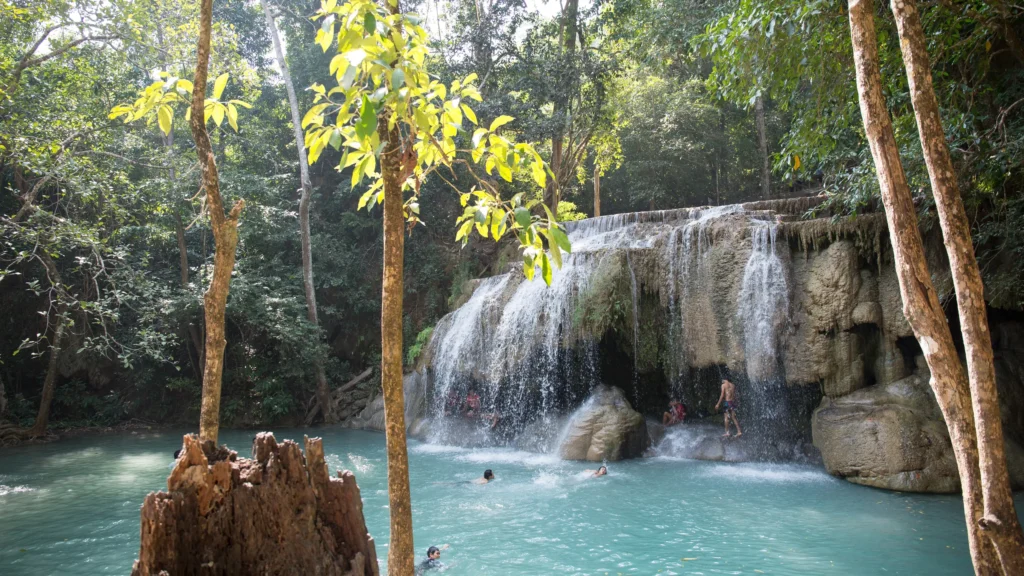
Erawan National Park, located in Kanchanaburi Province, is a true gem among the National Parks in Thailand, offering a stunning blend of lush forests, dramatic caves, and the world-famous Erawan Falls. Established in 1975, this park is part of the Tenasserim Hills and is known for its varied landscapes, ranging from mixed deciduous forests to dry evergreen forests. The park’s limestone hills rise between 165 to 199 meters above sea level, creating a breathtaking backdrop for its natural beauty.
Erawan National Park Tour is mostly famous for the iconic Erawan Falls, a seven-tiered waterfall with emerald green waters. Named after the Hindu elephant god, the falls’ top tier is said to resemble the head of the god itself. The falls stretch over 1.5 kilometers from base to top, and picnic spots near the first two tiers make it a family-friendly destination.
While wildlife is more abundant in the deeper parts of the park, visitors may spot wild elephants, wild boars, and a variety of bird species like the crested serpent eagle and kalij pheasant.
Entrance Fee: For non-Thai adults, the entry fee is THB 300, while non-Thai children can enter for THB 200. Thai adult citizens pay THB 100, and Thai children are charged THB 50. Tent rentals start at THB 150 for two adults, with additional charges for sleeping bags, pillows, and other bedding items. Renting a bicycle or motorbike begins at THB 20, and other vehicles can be rented for THB 30.
6. Kaeng Krachan National Park

Kaeng Krachan National Park, established in 1981, is not only the largest national park in Thailand but also one of the most captivating natural wonders in the country. Spanning across Phetchaburi and Prachuap Khiri Khan provinces, this park offers a unique opportunity to explore Thailand's stunning wildlife and diverse ecosystems. With over 400 species of birds, including rare sightings like the white-fronted scops owl and giant pitta, Kaeng Krachan is a birdwatcher’s paradise. It also serves as one of the top destinations for butterfly enthusiasts, with more than 300 species fluttering through its lush rainforest.
Kaeng Krachan National Park is home to tigers, elephants, gibbons, and leopards, making it one of the most biodiverse National Parks. For those looking to connect with nature, the park also offers a breathtaking view of mist-covered hilltops and a variety of outdoor activities such as hiking, boating, and camping.
The entrance fee for non-Thai adults is THB 300, while non-Thai children pay THB 200. Thai adults can enter for THB 100, and Thai children for THB 40. Additional charges of THB 30 are applicable for vehicles, and camping costs THB 30 per night.
7. Khao Sam Roi Yot National Park

Khao Sam Roi Yot National Park, Thailand’s first marine national park, is one of the country’s most scenic and diverse National Parks. Nestled in Prachuap Khiri Khan province, this stunning park is famous for its limestone hills, freshwater marshes, and rich wildlife. As Thailand's largest freshwater marsh, it's also a recognized Ramsar site, highlighting its importance as a wetland habitat.
The park’s most iconic attraction is the Phraya Nakhon Cave, a mystical spot where sunlight filters through sinkholes to illuminate a historic pavilion—a sight you won’t want to miss. In addition to this, the park offers pristine beaches like Sam Phraya Beach, Laem Sala Beach, and lush mangrove forests, all ideal for hiking and boat tours.
Entry costs THB 200 for adults and THB 100 for children, with accommodation options ranging from tents (THB 150) to bungalows (THB 1,000 for five). Boat tours are also available for THB 500 per group, making Khao Sam Roi Yot a must-visit in the list of Thailand's National Parks for your next adventure.
8. Thrill of Wildlife in Kui Buri National Park

Kui Buri National Park, located in Prachuap Khiri Khan province, is one of the most renowned National Parks in Thailand for wildlife enthusiasts. Established in 1999, this park is the ultimate destination to spot Thailand's majestic elephants and gaurs in their natural habitat. The park’s vast open spaces and diverse ecosystems are perfect for wildlife viewing, with a variety of animals like golden jackals, leopards, bantengs, langurs, and deer roaming freely. Birdwatchers will also be in paradise, with species such as the crested fireback, Indian roller, and the Asian Openbill making appearances.
In addition to wildlife watching, Thailand adventure boasts the stunning Huai Luek Wildlife Watching Area and the 15-tiered Dong Ma Fai Waterfalls, which are perfect spots for hiking and photography. Guided safari tours are available to enhance your experience. And for those looking to stay overnight, Kui Buri National Park offers affordable camping and bungalow options.
The park’s entrance fee is THB 200 for non-Thai adults and THB 100 for non-Thai children. Thai citizens pay THB 40 for adults and THB 20 for children. Camping starts at THB 270 per night, and bungalows are available for THB 1,800 per night. Bring your own tent for just THB 30 per night.
Frequently Asked Questions (FAQs)
1. What is the best time to visit the National Parks in Thailand?
The ideal time to explore most National Parks in Thailand is between November and April, when the weather is cooler and drier. However, some marine parks, including the Similan Islands, close seasonally from mid-May to mid-October for conservation and safety during the monsoon.
2. Do I need to book national park tickets in advance?
Many of Thailand's most popular national parks now support or encourage advance reservations through the government's QueQ e-ticketing system, especially during weekends and public holidays. Walk-in tickets are still available at many parks, subject to visitor capacity.
3. Which national park is best for wildlife spotting?
Kui Buri National Park is widely regarded as one of Thailand's best places to see wild Asian elephants, while Khao Yai National Park is famous for elephants, gibbons, hornbills, deer, and a rich variety of birdlife. Kaeng Krachan is another excellent destination for birdwatching and butterflies.
4. Which national park is best for hiking?
Khao Sok National Park and Khao Yai National Park offer some of Thailand's finest hiking experiences, with trails passing through ancient rainforest, limestone cliffs, waterfalls, and diverse wildlife habitats. Guided hikes are recommended for longer or more challenging routes.
5. Are camping facilities available inside Thailand's national parks?
Yes. Many national parks provide campsites, tent rentals, bungalows, and basic visitor facilities. Popular parks such as Khao Yai, Khao Sok, Kaeng Krachan, and Khao Sam Roi Yot offer overnight accommodation, although reservations are advisable during peak travel seasons.
6. What should I pack when visiting Thailand's national parks?
Essentials include lightweight hiking shoes, breathable clothing, rain protection, insect repellent, sunscreen, a reusable water bottle, binoculars for wildlife viewing, a dry bag for electronics, and a camera. If visiting marine parks, bring reef-safe sunscreen to help protect coral ecosystems.
Conclusion
Exploring the National Parks in Thailand is one of the best ways to experience the country's incredible natural diversity beyond its famous beaches and cities. From kayaking through the limestone cliffs of Ao Phang Nga and diving in the crystal-clear waters of the Similan Islands to spotting wild elephants in Kui Buri and trekking ancient rainforests in Khao Sok, each park offers a unique adventure. Many parks have introduced improved visitor management, including advance e-ticketing through Thailand's QueQ system and seasonal conservation closures to help protect fragile ecosystems.
Planning ahead, respecting park regulations, and visiting during the recommended seasons will ensure a safer and more rewarding trip. Whether you're a wildlife enthusiast, photographer, hiker, or family traveler, the National Parks in Thailand promise unforgettable landscapes, remarkable biodiversity, and authentic outdoor experiences that showcase the country's extraordinary natural heritage.

Comments 0
Only approved comments are shown here.