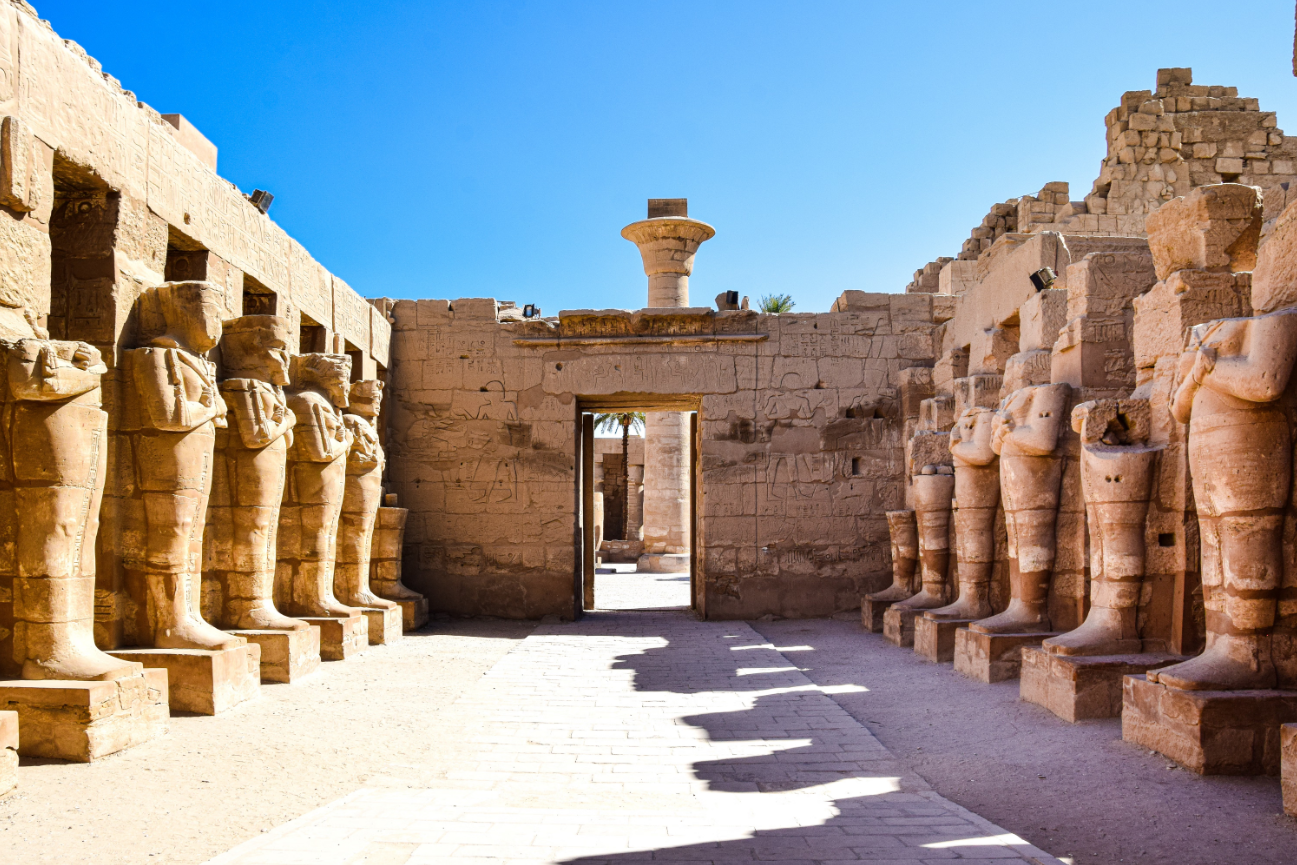
The magnificent Egyptian ancient temples are among the world's greatest archaeological treasures, representing more than 3,500 years of religious devotion, architectural innovation, and royal power. Ancient Egyptians considered each Egyptian temple the earthly home of a god or goddess, where priests performed sacred rituals and preserved religious knowledge.
Temples were not only places of worship but also centers of education, administration, and economic activity. Some of the most famous examples, including Karnak, Luxor, and Abu Simbel, continue to attract millions of visitors every year and remain among Egypt's most important cultural landmarks.
Also Read - Pyramid Cheops Egypt: Location, Interior, and Secrets of the World's Great Pyramid
This post contains affiliate links. If you choose to book through them, a small commission may be earned at no additional cost to you. Your support genuinely helps keep the blog running and allows continued creation of high-quality travel guides. Thank you for being here and supporting this journey.
1. Karnak Temple
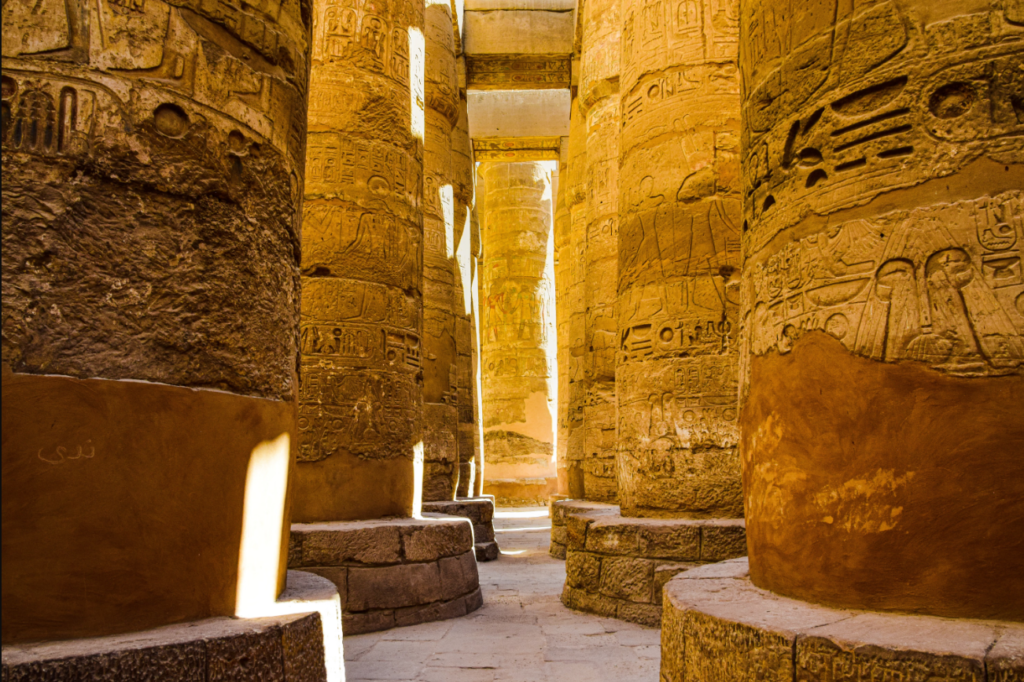
Karnak is the largest of all Egyptian ancient temples and one of the biggest religious complexes ever built. Located on the east bank of Luxor, construction began around 2000 BC and continued for nearly 2,000 years under several pharaohs.
The complex covers more than 100 hectares and was dedicated primarily to Amun-Ra, the chief god of Thebes. Its Great Hypostyle Hall contains 134 colossal sandstone columns, some reaching 21 meters in height. Visitors can also see towering obelisks, sacred lakes, and massive pylons. The temple is connected to Luxor Temple by the Avenue of Sphinxes, a 2.7-kilometer ceremonial road used during the annual Opet Festival.
2. Luxor Temple
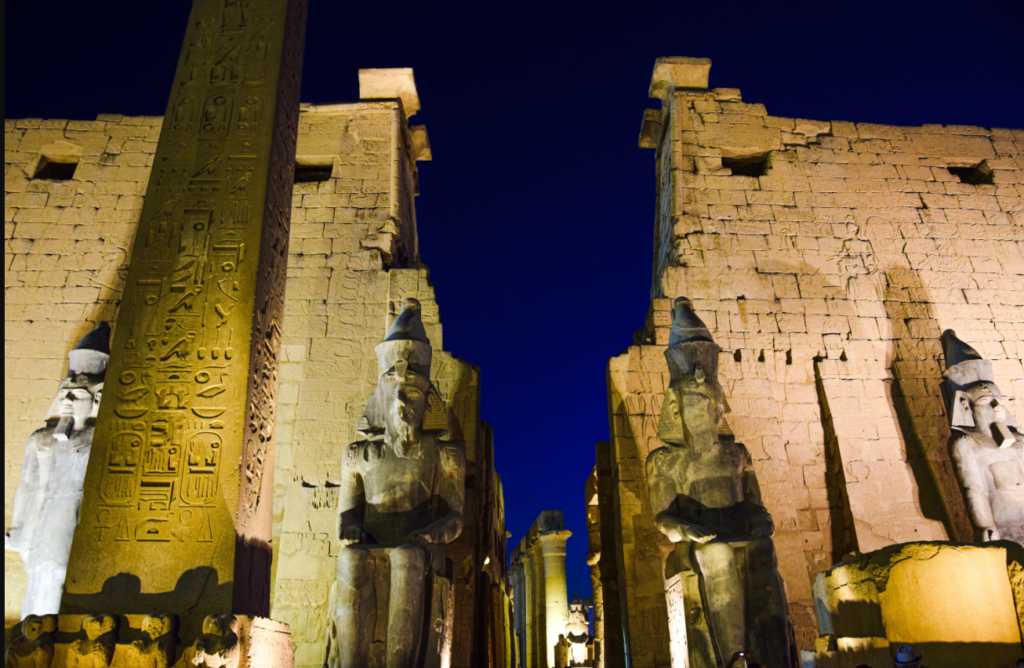
Luxor Temple is one of the most beautiful examples of an Egyptian temple, situated in the heart of modern Luxor beside the Nile River. Built primarily by Amenhotep III around 1400 BC and later expanded by Ramesses II, the temple was dedicated to the rejuvenation of kingship rather than a specific deity. The entrance features six colossal statues of Ramesses II and a 25-meter-high obelisk, whose twin now stands in Paris. Unlike many Egyptian monuments, Luxor Temple remained in continuous use for thousands of years and later became a Roman sanctuary, church, and mosque. The illuminated temple at night is among Egypt's most spectacular archaeological experiences.
3. Abu Simbel Temples
The magnificent Abu Simbel complex is among the most famous Egyptian ancient temples. Located near Egypt's southern border with Sudan, the twin rock-cut temples were built by Ramesses II between 1274 and 1244 BC. Four colossal statues of the pharaoh, each around 20 meters tall, guard the entrance. The larger temple is dedicated to Amun-Ra, Ra-Horakhty, and Ptah, while the smaller temple honors Queen Nefertari and the goddess Hathor. The temples were relocated in the 1960s during an international UNESCO rescue project to prevent flooding caused by the Aswan High Dam. Twice each year, sunlight perfectly illuminates the inner sanctuary.
4. Philae Temple
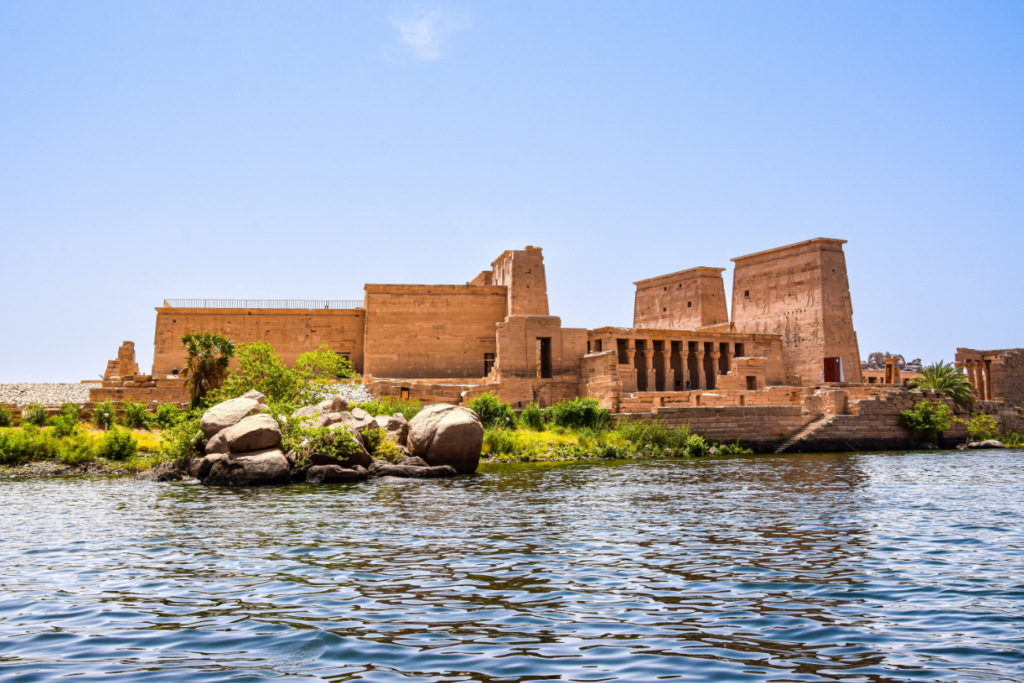
Philae is one of the most enchanting examples of an Egyptian temple, located on Agilkia Island near Aswan. Dedicated to Isis, the goddess of motherhood and magic, the temple complex was built mainly during the Ptolemaic period between the fourth and first centuries BC. The temple was one of the last places where ancient Egyptian religion was actively practiced before Christianity spread across Egypt. Following the construction of the Aswan High Dam, UNESCO moved the entire complex stone by stone to protect it from rising waters. Today, visitors arrive by boat and admire its elegant columns, reliefs, and stunning riverside setting.
5. Temple of Hatshepsut
The Temple of Hatshepsut is one of the most architecturally unique temples. Built during the fifteenth century BC at Deir el-Bahari near Luxor, it served as the mortuary temple of Queen Hatshepsut, one of Egypt's most successful female rulers. Designed by her architect Senenmut, the temple consists of three terraced levels connected by ramps and backed by dramatic limestone cliffs. The walls depict Hatshepsut's famous expedition to the Land of Punt and scenes celebrating her divine birth. Its elegant design and natural setting make it one of the most photographed monuments in Egypt and a UNESCO World Heritage Site.
6. Edfu Temple
The Temple of Edfu is one of the best-preserved examples of an Egyptian temple. Located between Luxor and Aswan, it was dedicated to Horus, the falcon-headed god of kingship and protection. Construction began in 237 BC during the reign of Ptolemy III and was completed nearly 180 years later. The temple's massive entrance pylon rises approximately 36 meters high and leads into a courtyard, hypostyle halls, and a sacred sanctuary. Remarkably preserved inscriptions describe religious ceremonies and myths concerning the battle between Horus and Seth. Its exceptional condition allows visitors to experience what many ancient Egyptian temples originally looked like.
7. Kom Ombo Temple
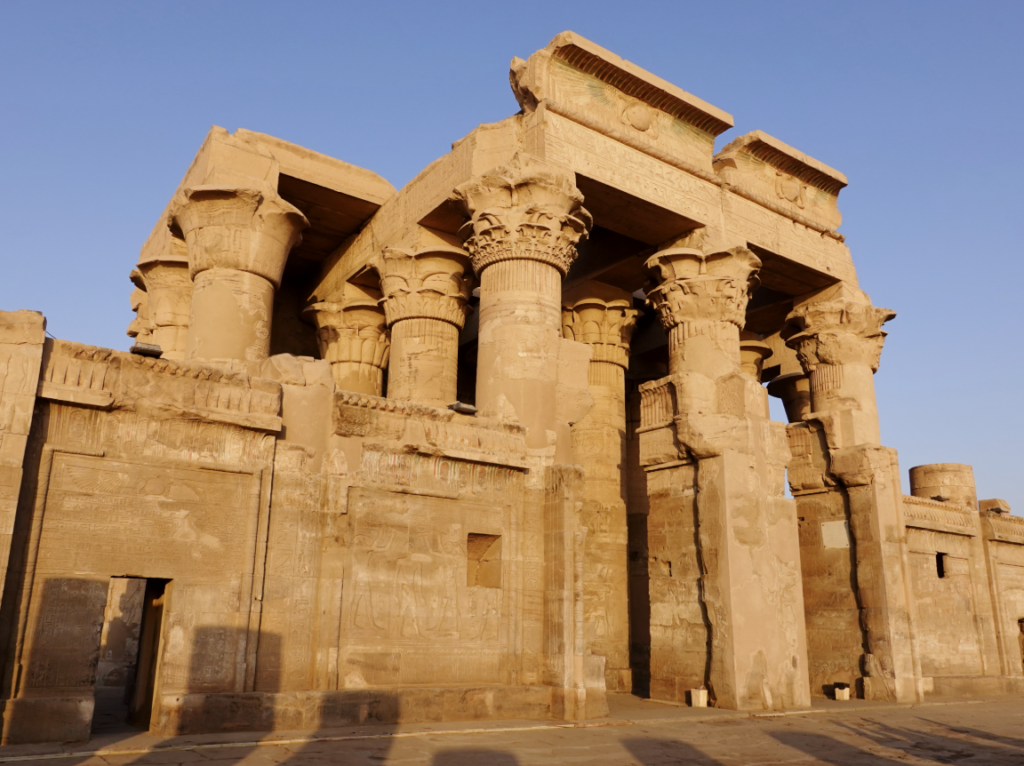
Kom Ombo is one of the most unusual Egyptian ancient temples because of its perfectly symmetrical design. Situated on the banks of the Nile north of Aswan, it was built during the Ptolemaic period between 180 and 47 BC. The temple is uniquely dedicated to two gods: Sobek, the crocodile god, and Horus the Elder. As a result, it features twin entrances, halls, and sanctuaries. Particularly fascinating are its medical reliefs, which depict ancient surgical instruments, and the nearby Crocodile Museum displaying mummified crocodiles discovered in the area. The temple's riverside location makes it a popular stop on Nile cruises.
8. Dendera Temple
Dendera Temple is among the finest examples of an Egyptian temple, located approximately 60 kilometers north of Luxor. Dedicated to Hathor, the goddess of love, beauty, and music, the temple complex was primarily built during the Ptolemaic and Roman periods. It is renowned for its exceptionally preserved ceilings featuring vibrant astronomical scenes and zodiac carvings. Unlike many Egyptian monuments, much of the original color remains visible inside the temple. The structure also contains underground crypts and rooftop chapels used for sacred rituals. Because of its outstanding preservation, Dendera provides one of the best insights into the artistic splendor of ancient Egyptian religious architecture.
9. Medinet Habu
Medinet Habu is one of the lesser-known yet impressive Egyptian ancient temples, situated on Luxor's west bank. Built by Ramesses III during the twelfth century BC, the temple served both religious and administrative purposes. Its enormous walls, massive pylons, and beautifully preserved reliefs depict military victories and ceremonial scenes. The complex covers more than 66,000 square meters and was once one of the most important religious centers in Thebes. Many of its painted carvings remain exceptionally well preserved, allowing visitors to appreciate the vivid colors that originally adorned Egyptian temples.
10. Temple of Seti I
The Temple of Seti I at Abydos is one of the most historically significant examples of an Egyptian temple. Constructed during the reign of Pharaoh Seti I and completed by his son Ramesses II, it is dedicated to Osiris, the god of the afterlife. The temple is particularly famous for the Abydos King List, an inscription naming many Egyptian pharaohs and providing invaluable information for historians. The temple's reliefs are among the finest examples of New Kingdom artistry, displaying extraordinary detail and craftsmanship. Abydos was regarded as one of Egypt's holiest pilgrimage destinations because it was associated with the burial place of Osiris.
11. Temple of Hibis
The Temple of Hibis is one of the best-preserved Egyptian ancient temples in Egypt's Western Desert. Located in the Kharga Oasis, it was built during the Persian period around the sixth century BC and later expanded under the Ptolemies and Romans. The temple is dedicated primarily to the Theban triad of Amun, Mut, and Khonsu. Its sandstone walls contain remarkable inscriptions and reliefs depicting Persian King Darius I making offerings to Egyptian deities. Surrounded by palm groves and desert landscapes, the temple offers a unique glimpse into religious life far from the Nile Valley.
12. Ramesseum
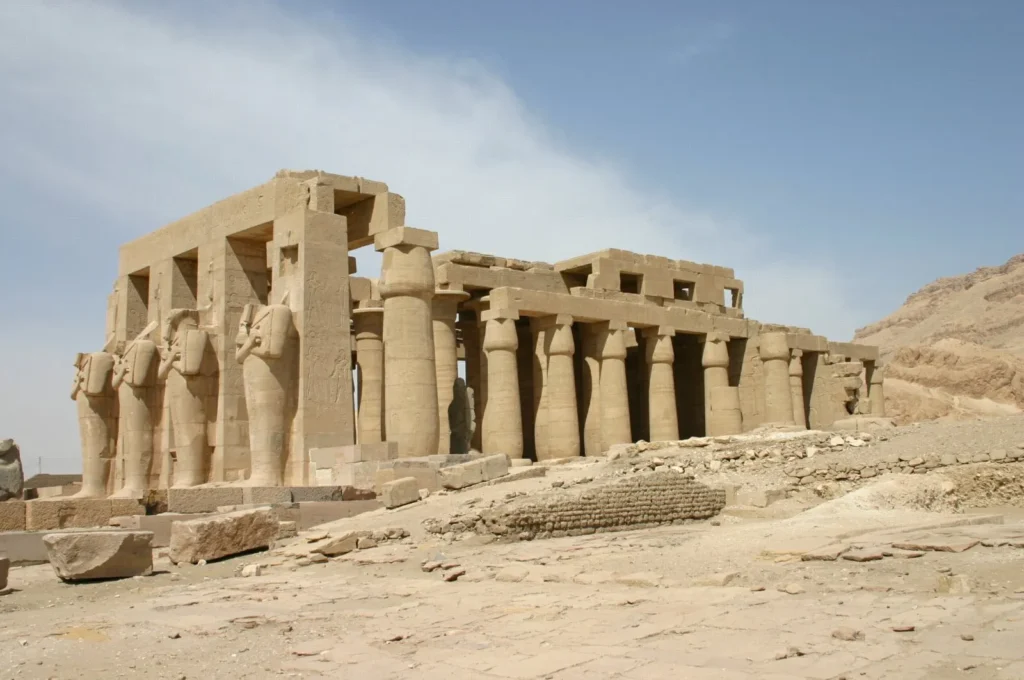
The Ramesseum is an extraordinary Egyptian temple located on Luxor's west bank and served as the mortuary temple of Ramesses II. Built during the thirteenth century BC, the complex once contained one of Egypt's largest seated statues, fragments of which still lie scattered around the site. The temple's walls depict scenes from the Battle of Kadesh, one of the ancient world's most famous military campaigns. The vast courtyards, colossal columns, and storerooms illustrate the temple's former grandeur. It inspired Percy Shelley's famous poem "Ozymandias," symbolizing the impermanence of earthly power.
13. Temple of Khnum
The Temple of Khnum at Esna is one of the most interesting Egyptian ancient temples, located about 55 kilometers south of Luxor. Dedicated to Khnum, the ram-headed creator god associated with the Nile's annual flooding, the temple was built mainly during the Roman period. The structure is famous for its beautifully decorated hypostyle hall, whose colorful astronomical ceiling has undergone extensive restoration in recent years. The detailed reliefs depict Roman emperors dressed as Egyptian pharaohs, demonstrating the blending of Egyptian and Roman traditions. The temple's exceptional carvings make it one of Upper Egypt's hidden architectural treasures.
14. Temple of Montu
The Temple of Montu is a fascinating Egyptian temple situated at Medamud, northeast of Luxor. Dedicated to Montu, the ancient Egyptian god of war, the temple's origins date back to the Middle Kingdom and it was later rebuilt during the Ptolemaic and Roman periods. Although much of the structure is now in ruins, archaeologists have uncovered significant remains, including gateways, sanctuaries, and statues. The temple played an important role in the religious landscape of ancient Thebes and was closely associated with military power and royal authority. Its lesser-known status makes it an intriguing destination for travelers seeking sites beyond the major tourist attractions.
15. Temple of Satet
The Temple of Satet on Elephantine Island is one of the oldest Egyptian ancient temples and was dedicated to Satet, the goddess associated with the Nile's annual inundation. Archaeological evidence suggests that worship at the site dates back to the Early Dynastic Period, more than 4,500 years ago. The temple underwent multiple phases of reconstruction under various pharaohs and remained an important religious center throughout Egyptian history. Situated near Aswan, the temple complex provides spectacular views of the Nile and neighboring islands. Excavations have revealed numerous artifacts that offer valuable insights into ancient Egyptian religious practices and the importance of the Nile in daily life.
Final Thoughts
The extraordinary Egyptian ancient temples offer a fascinating journey into one of history's greatest civilizations. Every Egyptian temple tells a story of powerful pharaohs, sacred rituals, and remarkable engineering achievements that have survived for thousands of years. From the colossal columns of Karnak and the riverside beauty of Philae to the magnificent rock-cut temples of Abu Simbel, these monuments provide invaluable insights into ancient Egyptian religion, art, and daily life. Recent archaeological discoveries near Luxor and other regions continue to deepen our understanding of temple culture and prove that Egypt's ancient heritage still holds many secrets waiting to be uncovered.


Comments 0
Only approved comments are shown here.